


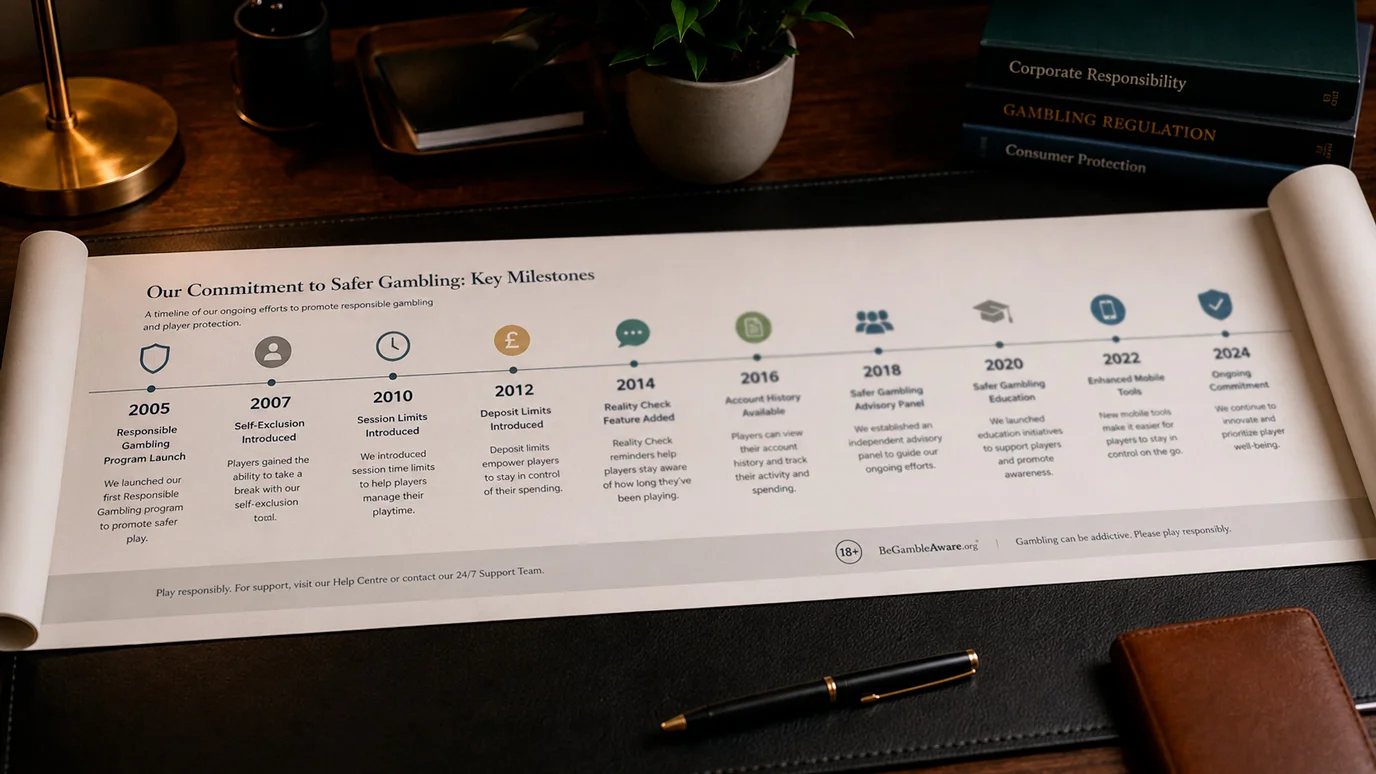
I keep a printed timeline taped above my desk. It starts with the Gambling Act 2005 and ends with whatever the UKGC announced most recently — at this point, the paper runs nearly two metres long. Every time someone asks me why UK online casinos operate the way they do, I point at that timeline. No single rule exists in isolation. Each restriction, each licence condition, each tax change was a reaction to something that came before. Understanding the sequence matters more than memorising individual dates, because the sequence reveals the regulatory logic — and where it is heading next.
The limits it produced: the £5 and £2 stake caps.
The 2005 Gambling Act: Building the Foundation
Before 2005, UK gambling law was a patchwork stitched together from legislation dating back to the 1960s. The Gambling Act 2005, which came into full effect on 1 September 2007, replaced everything. It created the Gambling Commission, established the three licensing objectives (preventing gambling from being a source of crime, ensuring gambling is conducted fairly, and protecting children and vulnerable persons), and introduced the framework that still governs every UKGC-licensed operator today.
What the 2005 Act did not anticipate was the speed at which online gambling would grow. The legislation was drafted primarily with land-based casinos and betting shops in mind. Online gambling existed, but it was a fraction of the market. The Act treated remote gambling as a subcategory rather than the dominant format it would become. That structural gap — legislation designed for physical venues applied to a digital product — has driven nearly every regulatory patch since.

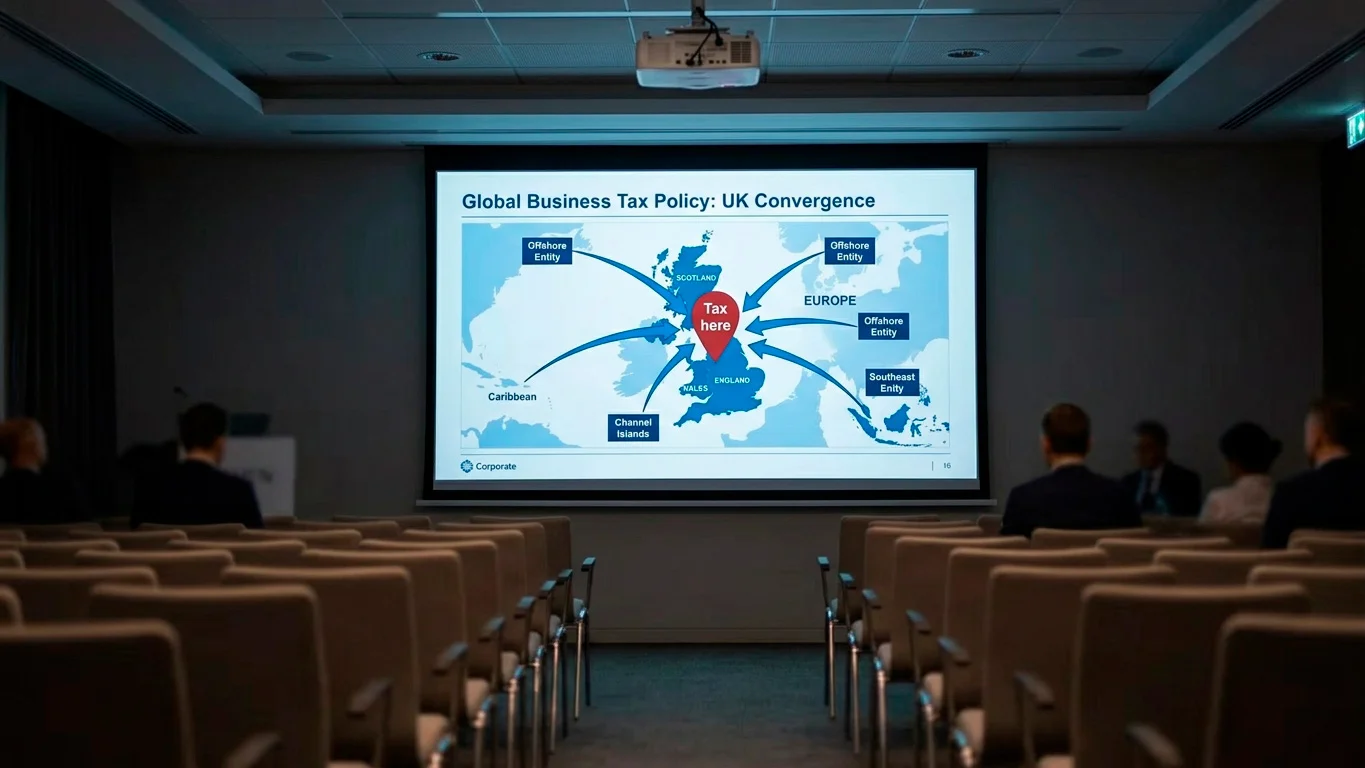
The Act also established the point-of-consumption principle, though this would not be fully implemented until nearly a decade later. The idea was simple: operators serving UK customers should hold UK licences regardless of where their servers are located. In practice, many operators based themselves in jurisdictions like Gibraltar, Alderney, or Malta and served UK players under those jurisdictions’ licences. The Gambling (Licensing and Advertising) Act 2014 closed that gap, requiring all operators advertising to or transacting with UK consumers to hold a UKGC licence from 1 November 2014 onward.
2014 to 2019: Tightening the Framework
I remember the weeks leading up to the 2014 point-of-consumption deadline. Operators scrambled to secure UKGC licences, compliance teams tripled in size overnight, and several smaller brands simply withdrew from the UK market rather than bear the regulatory cost. The licensing change was the first signal that the Commission intended to regulate aggressively rather than permissively.
The period from 2014 to 2019 saw a cascade of incremental tightening. In April 2017, the Commission published updated licence conditions requiring operators to provide customers with clearer information about their spending and loss history. Reality check prompts became mandatory — periodic notifications during play sessions reminding players how long they had been playing and how much they had spent or lost. These prompts were crude by current standards (often just a small pop-up) but represented the first structural intervention in the online play experience.
Credit card gambling was banned in April 2020, following a review that found 22% of credit card gamblers were classified as problem gamblers — a rate dramatically higher than among other payment methods. The ban applied to all online gambling products and land-based gaming machines, removing a payment mechanism that allowed players to gamble with borrowed money and accumulate debt outside their immediate financial means. It remains one of the clearest and least controversial regulatory interventions in the timeline.
GAMSTOP, the national online self-exclusion scheme, launched in April 2018 and became mandatory for all UKGC-licensed online operators by March 2020. For the first time, a player could self-exclude from every licensed online gambling site with a single registration rather than contacting each operator individually. Over 600,000 people have now registered — a figure that speaks both to the system’s utility and to the scale of the problem it addresses.
The full picture is in our guide to UK real-money online casinos.

The 2023 White Paper: A Regulatory Turning Point
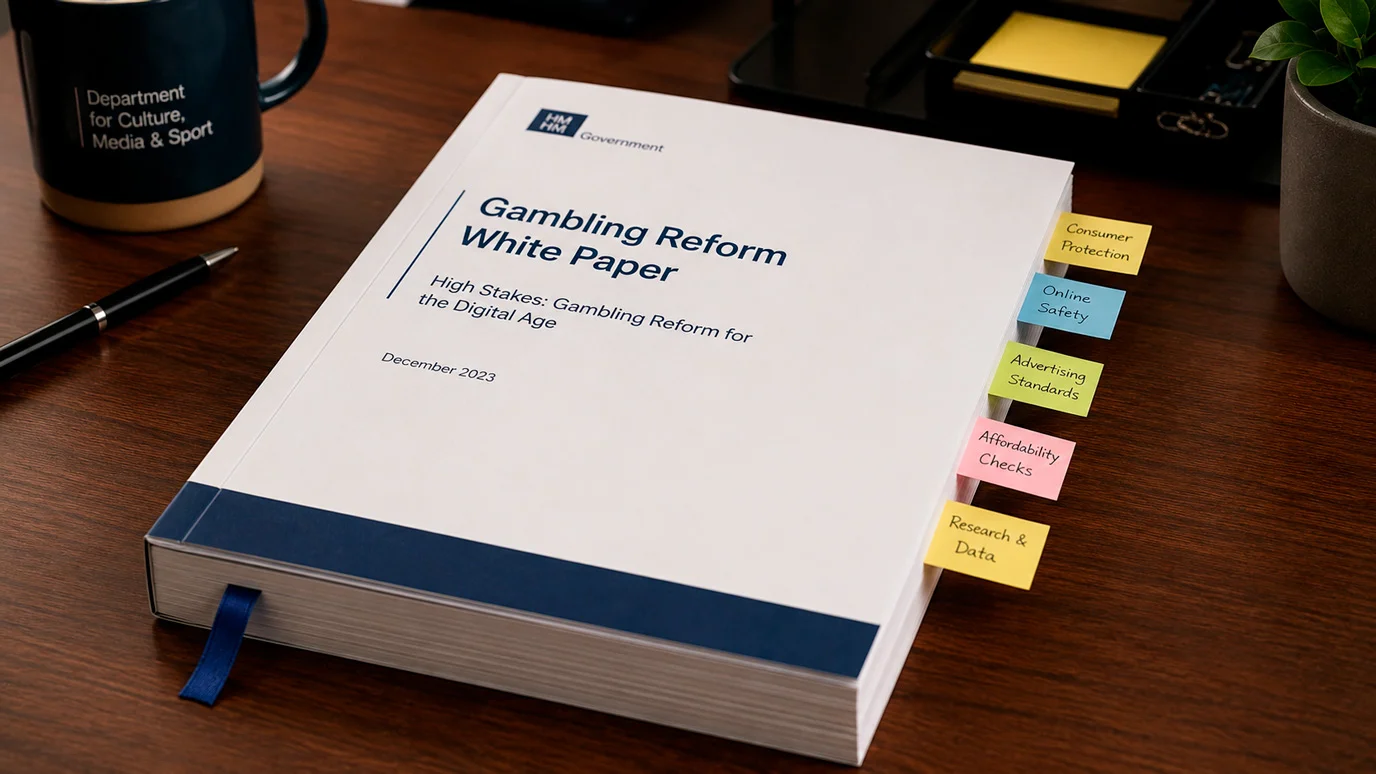
The government published its review of the Gambling Act — formally titled “High Stakes: Gambling Reform for the Digital Age” — in April 2023. After years of consultation, delay, and political turnover (three different Secretaries of State oversaw the review), the White Paper laid out the most comprehensive set of reforms since the Act itself.
The key proposals included online slot stake limits, a statutory levy on operators to fund treatment and research, mandatory financial risk assessments, enhanced affordability checks, and the creation of a gambling ombudsman. Not all proposals have been implemented at the same pace — the ombudsman, for instance, remains under development — but the White Paper established the reform agenda that the UKGC has been executing since.
What made the White Paper different from previous reviews was its explicit recognition that online gambling had become the dominant segment. With UK online casino gross gaming yield reaching approximately £7.8 billion in the year to March 2025, the scale of the digital market demanded regulation designed specifically for digital products rather than analogue rules adapted for screens.
2025-2026: Stake Limits, Financial Assessments, and the Tax Shock
Andrew Rhodes, then CEO of the Gambling Commission, framed the post-White-Paper reforms as an effort to make consumer protection the foundation of online gambling, not an afterthought bolted onto a commercial framework. The reforms landing in 2025 and 2026 have been the most operationally disruptive in the industry’s history.
In May 2025, online slot stake limits came into force: £5 maximum per spin for players aged 25 and over, £2 for those aged 18 to 24. The autoplay ban and bonus buy removal accompanied the stake caps, restructuring how players interact with the slot format that generates more revenue than any other segment. The age-based differentiation was unprecedented, driven by data showing higher problem gambling prevalence among younger adults and a 44% year-on-year increase in GAMSTOP registrations among the 16-to-24 age group.

Financial risk assessments arrived in August 2025, with the UKGC mandating checks when a player’s net deposits reach £150 within a rolling 30-day period. The threshold was set lower than the industry expected, and a YouGov survey found 65% of UK adults would refuse to provide financial documents to a gambling operator if asked — a figure that suggests a significant portion of recreational players may reduce or cease their activity rather than submit to affordability scrutiny. The detailed breakdown of financial risk assessments covers the mechanics and player impact data.
In January 2026, the wagering cap at 10x took effect, limiting how aggressively operators could structure bonus turnover requirements. And on 1 April 2026, the Remote Gaming Duty rose from 21% to 40% of gross gaming yield — a near-doubling of the tax burden that Grainne Hurst, CEO of the Betting and Gaming Council, warned could push more activity to the unregulated black market while reducing the industry’s capacity to invest in safer gambling measures.
Where the Regulatory Direction Points From Here
Sitting with that two-metre timeline, the trajectory is unmistakable. Each phase of regulation has been more interventionist than the last, and each has specifically targeted the online sector. The Commission’s focus has moved from licensing (who can operate) to conduct (how they can operate) to product design (what the product can look like). Stake limits and autoplay bans regulate the product itself, not just the operator offering it.
The gambling ombudsman, still under development, will add a statutory dispute resolution mechanism that currently does not exist outside voluntary alternative dispute resolution schemes. The statutory levy, once implemented, will shift the funding model for gambling treatment and research from voluntary industry contributions to a mandatory charge — removing the awkwardness of treatment services funded by the industry whose product creates the need for treatment.

The UK’s 9.4% share of the global online gambling market means that UKGC regulatory decisions carry outsized influence on product development globally. Game providers design for the UK market first and adapt for other jurisdictions second, which means UK regulations set de facto global standards for slot design, player protection, and bonus mechanics. The timeline on my wall is not just a record of UK policy. It is a roadmap for how online gambling regulation develops worldwide.
Articles
Prepared by the onlinecasinorealmoneyuk.com editorial staff.