

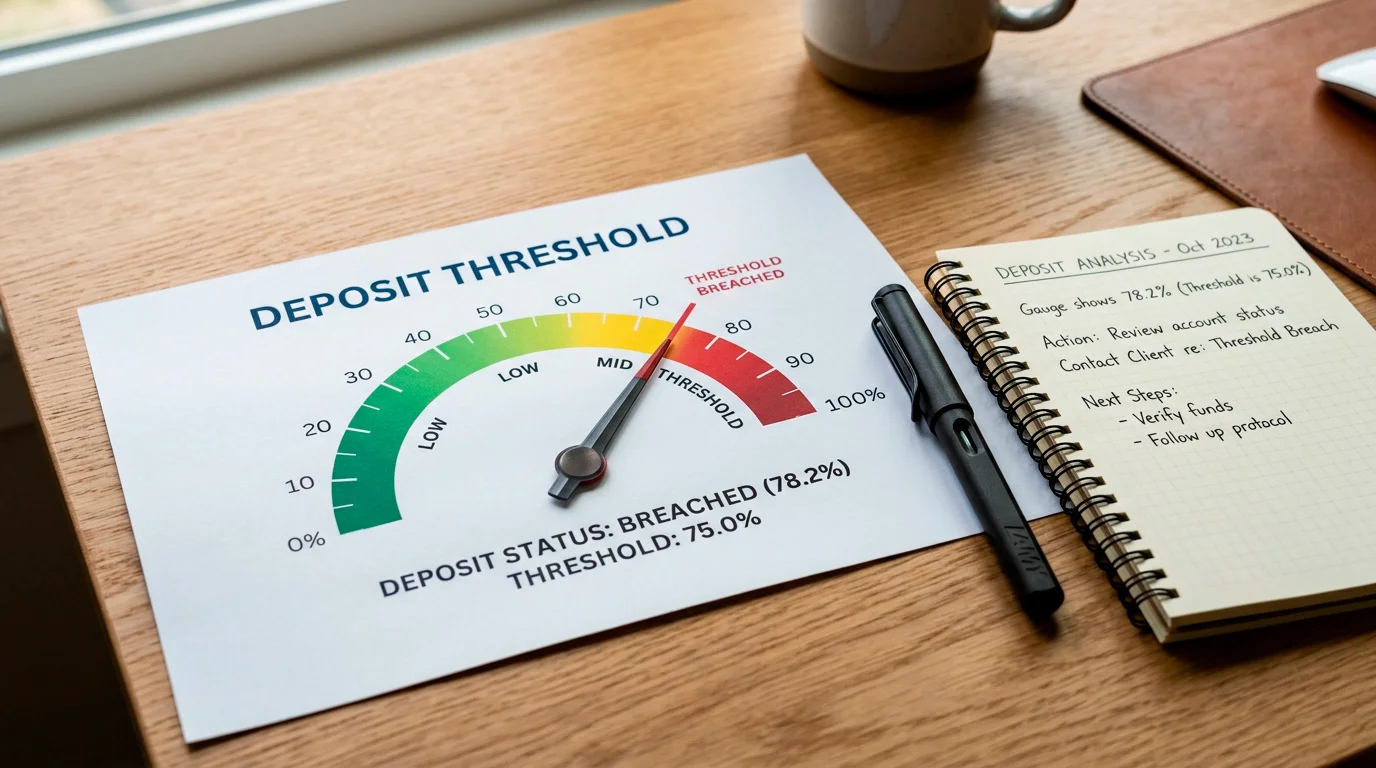
No topic in UK online gambling generates more confusion than financial risk assessments. Players call them “affordability checks.” Operators call them “frictionless checks.” The Gambling Commission has its own terminology, and it has explicitly pushed back against the conflation. After years of working within UKGC compliance frameworks, I can confirm that the gap between what players expect, what operators implement, and what the regulator intended is wider than on almost any other issue in the industry. The £150 net deposit threshold — lowered from £500 in August 2025 — is the trigger point that most players encounter, and understanding what happens when you cross it is the practical question this piece answers.
The checks that follow: casino verification.
FRA vs “Affordability Checks”: Why the Distinction Matters
The UK Gambling Commission has been unambiguous on this point: financial risk assessments are a proposed way of identifying high-spending remote gambling customers who may be in financial difficulties, in order to help support them — and this is explicitly not the same as “affordability checks.” That distinction is not semantic. It reflects a fundamental difference in what the system is designed to do.
An “affordability check” implies that the operator is evaluating whether you can afford to gamble — making a judgement about your personal finances and deciding whether your spending level is acceptable. That framing is what provokes the strongest public backlash. A YouGov survey commissioned by the Betting and Gaming Council found that 65% of British gamblers would refuse to provide personal financial documents if this were required. The resistance is visceral: the idea of handing over bank statements to a betting company feels invasive in a way that handing the same documents to a mortgage lender does not.
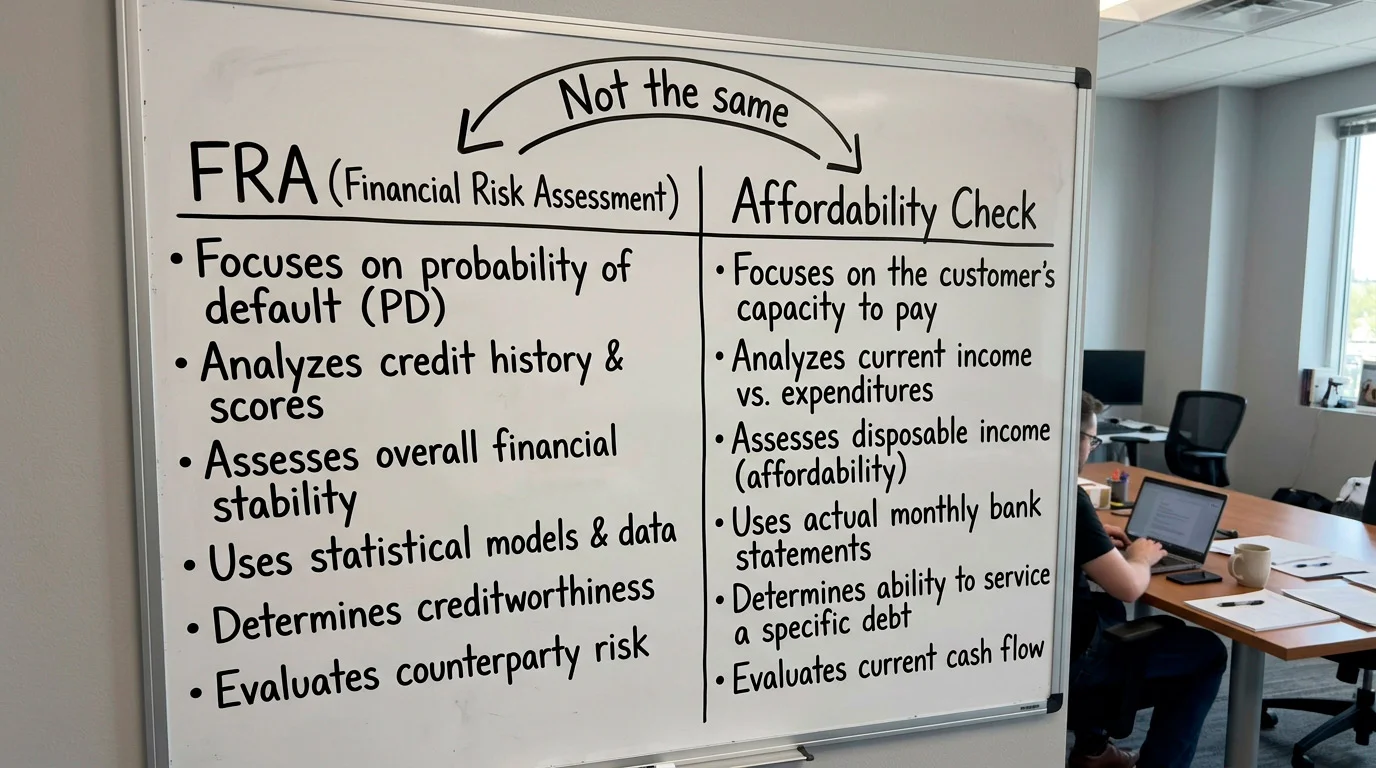
A “financial risk assessment,” as the UKGC defines it, is different in scope. It is not about affordability in the household-budgeting sense. It is about risk indicators — patterns of behaviour that correlate with financial distress among gambling customers. The system looks for signals: rapidly escalating deposits, deposits funded by credit (despite the credit card ban, workarounds exist), erratic patterns that differ from the customer’s established behaviour, and — at the basic level — crossing the net deposit threshold that triggers an automated check.
The practical difference for the player may feel minimal in the moment. Whether you call it an affordability check or a financial risk assessment, the outcome can involve friction — delays, document requests, or temporary account restrictions. But the design intent matters for how the system evolves. The UKGC is optimising for risk identification, not spending permission. That is a narrower and more defensible regulatory goal.

The £150 Net Deposit Threshold: When and How It Triggers
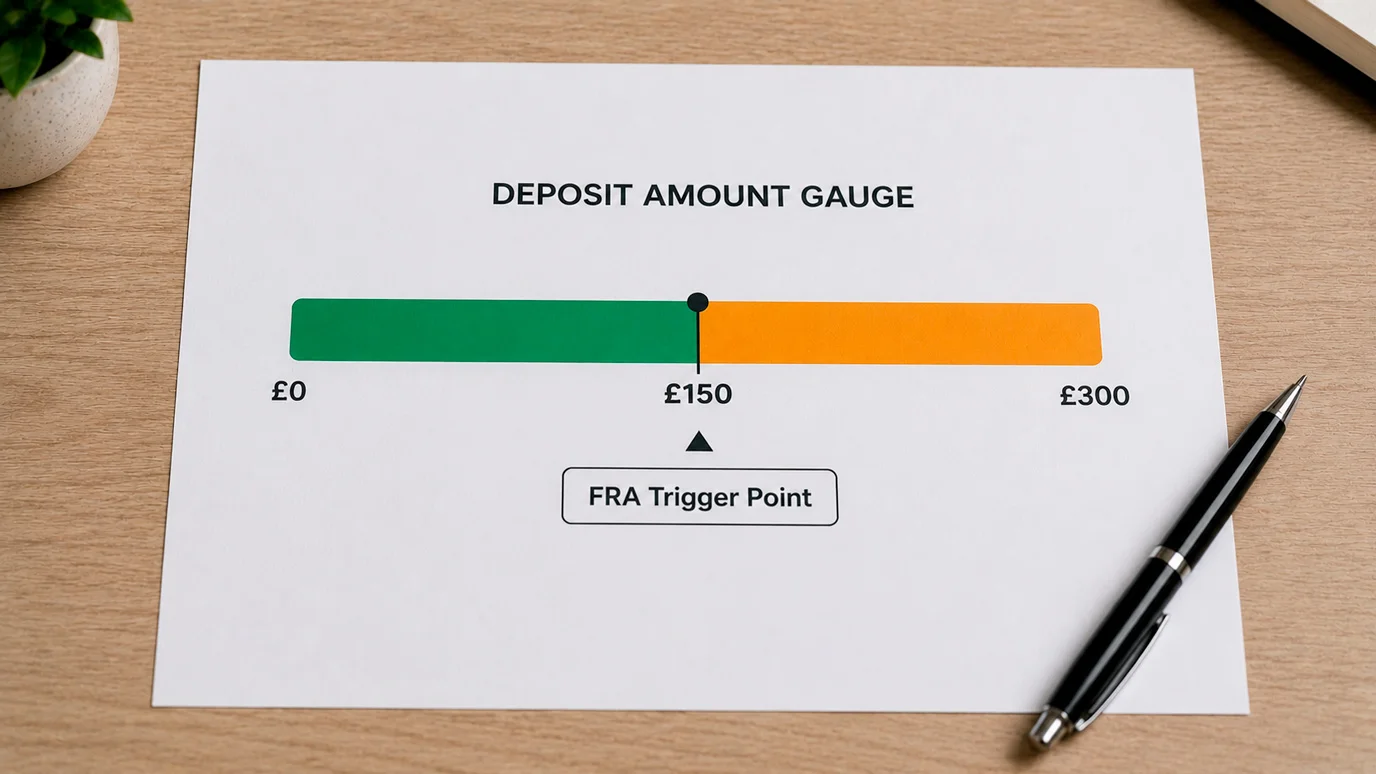
Since August 2025, the baseline trigger for a financial vulnerability check is £150 in net deposits over a rolling 30-day period. “Net deposits” means deposits minus withdrawals — if you deposit £200 and withdraw £60, your net deposit is £140, which is below the threshold. If you deposit £200 with no withdrawals, you cross it.
The £150 figure replaced an earlier £500 threshold, a reduction that tripled the number of players subject to these checks. The UKGC’s rationale was that the lower threshold captures more players at an earlier stage of potential financial risk, allowing intervention before significant harm occurs. The industry’s counterargument — voiced repeatedly by the Betting and Gaming Council — is that the low threshold catches overwhelmingly ordinary recreational players and creates friction that drives customers toward unlicensed operators where no checks exist at all.
The full picture is in our guide to UK real-money online casinos.

When you cross the threshold, the operator runs what is typically an automated, non-intrusive data check. The most common implementation uses open banking data or credit reference agency information to assess financial risk indicators without requiring the player to submit documents. The check might take seconds and produce no visible friction at all — many players cross the threshold without realising a check has occurred. The system flags only those cases where the automated data returns a risk signal: indicators of financial distress, insolvency markers, or inconsistencies between deposit levels and estimated income.
If the automated check returns a flag, the operator escalates. This is where friction becomes visible. The player may be asked to provide documentation — bank statements, payslips, or a declaration about the source of funds. The account may be temporarily restricted until the documentation is reviewed. Processing times for document-based reviews range from same-day to several days depending on the operator’s compliance team capacity.

Higher thresholds — typically at £500, £2,000, and £5,000 in net deposits — trigger progressively more detailed assessments. These higher-level checks are more likely to involve document requests and manual review, regardless of what the automated check returns. The exact thresholds and escalation procedures vary by operator, as the UKGC sets the baseline (£150) but allows operators discretion in their enhanced due diligence frameworks above it.
What to Expect During a Financial Risk Assessment
The experience varies dramatically between operators, and I have seen the full spectrum — from entirely invisible automated checks to heavy-handed processes that feel more like a bank mortgage application than a gambling compliance step.
At the lighter end, the automated check runs in the background. You deposit, you play, and the system processes the assessment without interrupting your session. The only evidence that anything happened is a line in your account history or a confirmation email that a check was completed. This is the experience the UKGC is pushing operators toward — “frictionless” in the genuine sense of the word.
At the heavier end, a risk flag leads to an email or on-site notification asking you to provide documentation within a specified timeframe — often 14 to 30 days. During this period, your account may continue to function normally, or it may be restricted to existing balance only (no new deposits) until the documentation is reviewed. If you fail to provide documentation within the window, the operator may restrict or close the account entirely.

The documentation itself is typically less invasive than players fear. A single month’s bank statement showing regular income is often sufficient to clear a basic flag. Payslips, pension statements, or a screenshot of your balance serve the same purpose. The operator is not auditing your finances — they are checking whether your deposit level is grossly inconsistent with your visible income, which for the vast majority of players it will not be.
The UKGC’s pilot programme for standardised financial risk assessments, which ran through 2025 into 2026, tested automated data-sharing frameworks that would eliminate the need for document submission entirely. The long-term trajectory is toward invisible, data-driven assessments that identify at-risk players without creating friction for the majority. But the transition is not complete, and in the interim, the player experience depends heavily on which operator you are using and how they have implemented the framework. For related information on how deposit limits function as a player-controlled alternative to operator-imposed checks, the deposit limits guide covers the mechanics of setting and adjusting your own spending boundaries.
Articles
Created by the "onlinecasinorealmoneyuk.com" editorial team.