
iGaming Market Analysis
Online Casino Real Money UK: A Data-Driven Guide for 2026
 Available in US
Data-backed casino intelligence for UK players

Online Casino Real Money UK: A Data-Driven Guide for 2026
Online casino real money UK is a segment worth £7.8 billion in annual gross gambling yield — and yet the vast majority of guides written about it read like ad copy dressed up as advice. I have spent eight years auditing operator licence conditions, picking apart bonus mathematics, and watching regulatory proposals turn into enforceable rules. What I have seen consistently is a gap between what players actually need to know and what affiliate sites choose to tell them. This guide exists to close that gap.
The UK is Europe's largest regulated online gambling jurisdiction, and the numbers behind that status are not modest. Billions in annual yield, double-digit year-on-year growth in the online segment, and a regulatory apparatus that has responded with the most intensive reform programme the industry has ever faced. Those dynamics shape every operator decision — from bonus generosity to withdrawal speed to game selection — and they are the reason this guide leads with market economics rather than a list of logos.

That competition, in theory, should benefit the people playing. More operators chasing the same audience means better payout rates, faster withdrawals, and more transparent bonus terms. In practice, it also means more noise — more "best of" lists that rank casinos by commission rate rather than player value, more vague reassurances about safety that skip over the enforcement data, and more outdated information recycled from year to year with nothing but a fresh date stamped on top.
I built SpinLedger around a different principle. Every claim in this guide traces back to a primary source: Gambling Commission market reports, UKGC licence condition updates, HM Treasury fiscal statements, operator earnings filings, or independently conducted surveys with verifiable sample sizes. Where I offer analysis, I show the data behind it. Where I identify a trend, I cite the numbers that support it. The goal is not to tell you where to play. It is to give you the information you need to evaluate any operator on your own terms — and to understand the regulatory environment that shapes every bonus, every withdrawal, and every game available to UK players right now.
What follows covers market economics, licensing mechanics, bonus structures after the January 2026 wagering cap, game categories by revenue share, payment processing realities, the full 2025-2026 regulatory timeline, and the state of problem gambling research. Each section links to a deeper analysis for readers who want granular detail on a specific topic.
Before diving into the data, here is a snapshot of what this guide delivers and why each number matters.
What This Guide Covers — and Why the Numbers Matter
- The UK online gambling market generated £7.8 billion in GGY in 2024-2025, growing 13.1% year on year — making it Europe's largest regulated online gambling jurisdiction and one where competitive pressure benefits informed players.
- Since January 2026, bonus wagering requirements are capped at 10x, transforming previously unprofitable promotions into offers with positive expected value — but only if ancillary terms (time limits, cashout caps, game restrictions) are clean.
- Remote Gaming Duty nearly doubled to 40% in April 2026, squeezing operator margins and directly reducing bonus generosity and, in some cases, available game selection.
- GAMSTOP registrations have surpassed 600,000, the GSGB identifies a 2.7% problem gambling rate from a 20,000-person sample, and treatment completion has dropped to 61% — data that most competing guides do not cite because they rely on outdated Health Survey figures.
- Every claim in this guide traces to a primary source: Gambling Commission reports, HM Treasury fiscal data, operator filings, or surveys with verifiable methodologies. No rankings, no scores, no affiliate-driven recommendations.
UK Online Gambling Market in 2026: Size, Growth, and Global Position
Three years ago, a senior compliance officer at a mid-tier operator told me the UK market was "mature and plateauing." I remember the conversation clearly because I had just finished reviewing Gambling Commission data showing double-digit online growth for the second consecutive quarter. The UK gambling market is not plateauing. It is expanding, restructuring, and being reshaped by regulation at a pace that makes most other European jurisdictions look static by comparison.
Gross Gambling Yield (GGY) — the total amount retained by operators after paying out winnings but before deducting operating costs, taxes, or levies. It is the industry's standard measure of market size.
The headline figure: £16.8 billion in total GGY across the entire UK gambling industry for the period April 2024 to March 2025. That covers everything — land-based betting shops, casinos, bingo halls, lotteries, and the full spectrum of online products. Within that total, the remote segment — online casino, online betting, and online bingo — generated £7.8 billion in GGY, representing a 13.1% increase over the prior year. Online is not just the growth engine; it is rapidly becoming the dominant revenue channel.
The trajectory continued into 2026. First-quarter online GGY reached £1.55 billion, a roughly 7% year-on-year increase with slots alone growing at approximately 12%, outpacing the broader online market. That slots growth is significant because it comes despite the introduction of stake limits in May 2025 — a point I will return to in the regulatory section. The fact that revenue climbed even after per-spin caps were imposed tells you something about the underlying demand dynamics.
The UK accounts for 9.4% of the global online gambling market, making it the single largest regulated online gambling jurisdiction in Europe by a significant margin.

Independent market research puts the UK online gambling sector at $9.0 billion for 2025, with forecasts projecting growth at a compound annual rate of 9.8% to reach $24.05 billion by 2035. A separate analysis estimates the compound annual growth rate for the 2025-2030 window at 12.8%, which is notably higher. The discrepancy reflects different methodologies and scope definitions, but both projections agree on the direction: sustained expansion. The online casino sub-segment alone — excluding sports betting and bingo — is valued at approximately $6.69 billion.
Why do these numbers matter to someone choosing where to play? Because market size directly correlates with competitive intensity. A £7.8 billion online market with dozens of licensed operators means those operators compete on terms that affect you: bonus generosity, payout speed, game variety, and the quality of customer support. A shrinking or stagnant market would mean consolidation, fewer choices, and less pressure on operators to differentiate. The UK market, by every available measure, is doing the opposite. It is growing, and that growth creates leverage for informed players who know what to look for.
The growth also explains the regulatory response. A market this large attracts political attention, and the reforms introduced across 2025 and 2026 — stake limits, wagering caps, tax increases, a statutory levy — are a direct consequence of the industry's scale. Regulators do not invest this level of effort in marginal sectors. The UK online gambling market is big enough to warrant its own dedicated enforcement budget, its own consumer protection framework, and its own tax regime. Understanding that context is the first step toward navigating it intelligently.
How SpinLedger Evaluates Real Money Casinos
I once reviewed a casino that marketed itself as having a 98% payout rate. The number was technically accurate — but only because it was calculated across every product on the platform, including sportsbook markets with razor-thin margins. The actual slot RTP averaged around 94.5%, and the live casino house edge was standard. The headline figure was not a lie. It was a carefully constructed truth designed to mislead. That experience crystallised something I had been thinking about for a while: the industry's self-reported metrics are often meaningless without context, and most review sites never provide that context.
SpinLedger's evaluation framework rests on data points that can be independently verified, not on subjective "testing" that amounts to playing a few rounds and writing up impressions. The average RTP across UK online slots sits at approximately 96%. That is a useful baseline, but it tells you almost nothing about a specific operator unless you understand how game mix, bonus contribution weighting, and provider selection interact to shape your actual experience.
Do
- Verify the operator's UKGC licence number against the Commission's public register before depositing.
- Check the published RTP for individual games you intend to play, not just the casino's aggregate figure.
- Read the full bonus terms — wagering contribution percentages, game restrictions, time limits, and maximum cashout caps — before claiming anything.
- Confirm withdrawal methods and processing times in the site's payment policy, not in marketing copy.
Don't
- Rely on "Top 10" lists that do not disclose ranking methodology or commercial relationships.
- Treat a Curacao or Anjouan licence as equivalent to a UKGC licence — the consumer protections are not comparable.
- Assume that a large game library means better quality; a casino with 800 vetted titles from licensed providers serves you better than one with 4,000 titles from unaudited sources.
- Ignore the operator's complaints history, which is publicly searchable through UKGC enforcement records and alternative dispute resolution providers.
Licence Status
Active UKGC remote operating licence — verified against the public register, not self-declared.
Game RTP
Individual game return-to-player percentages published and auditable, benchmarked against the 96% UK average.
Withdrawal Speed
Actual processing times by payment method, measured from request to cleared funds, not from marketing claims.
Bonus Terms
Wagering requirements, game contribution rates, time limits, maximum bet during wagering, and cashout caps — the full picture.

The framework I apply is not proprietary magic. It is a structured process of cross-referencing publicly available data: Gambling Commission licence records, operator terms and conditions, independent RTP audits, ADR decision histories, and financial filings where available. Any player with an internet connection can replicate it. My role is to do the work systematically and present findings in a format that is faster to consume than raw source data.
One thing I deliberately exclude is any form of ranking. SpinLedger does not publish "best casino" lists, award scores out of ten, or declare winners. Rankings are commercial instruments. They create the illusion of objectivity while embedding a recommendation that serves the publisher's affiliate relationships more than the reader's interests. What I offer instead is a framework: the criteria that matter, the data sources that are reliable, and the red flags that should prompt you to walk away.
Red Flags That Disqualify a Casino Immediately
The UK's unlicensed gambling market has grown to £16.6 billion in annual stakes — more than tripling since 2019. Sites operating outside UKGC oversight have no obligation to segregate player funds, enforce self-exclusion, or submit to independent game audits. Playing at one is not a calculated risk. It is an uninsured one.
Not every red flag is obvious. Some operators hold valid UKGC licences but exhibit patterns that suggest problems ahead. Repeated complaints about delayed withdrawals in ADR filings, for example, or terms and conditions that change retroactively during active bonus play. I have seen operators add new wagering requirements to promotions mid-campaign, relying on the fact that most players do not re-read terms after their initial deposit.
The clearest disqualifiers are structural. No verifiable UKGC licence number is an instant walkaway — no exceptions, no matter what other jurisdictions the operator claims to be licensed in. A missing or obscured complaints procedure is another. UKGC-licensed operators are required to provide access to an approved ADR service; if you cannot find one in the footer or terms, something is wrong. Similarly, any operator that does not appear on GAMSTOP's network is either unlicensed or non-compliant, and either status should end the conversation.
Less obvious but equally telling: operators that aggressively market to self-excluded players, offer "VIP" schemes with opaque qualification criteria, or resist providing clear information about fund segregation arrangements. These are not technical violations. They are indicators of an operator culture that treats compliance as a cost to be minimised rather than a framework to be respected.

UKGC Licensing: What It Guarantees and What It Doesn't
When Andrew Rhodes stepped down as CEO of the Gambling Commission in early 2026, he described his tenure as covering "an important period of change" — strengthened regulation, improved consumer protections, and a mandate to make gambling "safer and fairer." That language is measured and institutional, but the enforcement record behind it is anything but abstract. In the 2025-2026 financial year alone, the Commission issued 741 cease-and-desist notices, reported 397,527 URLs to search engines for removal, and disrupted 1,134 websites through takedowns or geo-blocking. Those are not symbolic gestures. They represent an enforcement apparatus with real operational capacity, backed by £26 million in additional funding specifically allocated to combat the unlicensed market.
To verify a casino's UKGC licence, visit the Gambling Commission's public register and search by operator name or licence number. Every licensed operator must display its licence number visibly on its website. A remote operating licence (not just a software or host licence) is required for any operator offering real-money gambling to UK customers. If the licence number does not return a valid, active result on the register, do not proceed.

A UKGC licence is the baseline, not the ceiling. It guarantees that an operator has met minimum standards for player fund protection, game fairness testing, anti-money-laundering procedures, and responsible gambling tools. It means the operator is subject to ongoing supervision, required to submit to regular audits, and bound by licence conditions that the Commission can amend at any time. It also means the operator participates in GAMSTOP, the national self-exclusion scheme, and provides access to an approved alternative dispute resolution service.
What a licence does not guarantee is a good experience. Licences are granted to operators that meet regulatory thresholds, but those thresholds leave plenty of room for variation in withdrawal speed, customer support quality, game selection, and bonus generosity. Two operators holding identical licence types can offer dramatically different player experiences. The licence filters out the dangerous; it does not curate the excellent.
The Gambling Commission's interim chair, Charles Counsell, noted that the outgoing CEO left "a strong legacy" of strengthened regulation with consumer protection "at the heart" of the Commission's work. That institutional commitment matters, but it operates at the level of market-wide rules, not individual operator quality.
I have reviewed operators with spotless licence records that nonetheless had convoluted withdrawal processes, and operators that had received regulatory warnings but subsequently improved their player-facing services significantly. The licence is a necessary filter, not a sufficient one. For a deeper examination of how UKGC licensing mechanics work, how to verify operator credentials, and what the Commission's enforcement record reveals about the current state of player protection, the dedicated analysis of safe online casinos in the UK covers each of those layers in detail.
Casino Bonuses After the 2026 Wagering Cap: A New Landscape
On 19 January 2026, the UKGC's new bonus rules took effect and rewrote the economics of casino promotions overnight. Wagering requirements — the number of times a player must bet through a bonus before withdrawing — are now capped at a maximum of 10x. Mixed-product promotions bundling betting and casino offers are prohibited. For anyone who spent the previous decade watching operators impose 40x, 50x, or even 70x wagering multiples, the change is seismic.
The maths tells the story. Under the old regime, a £50 bonus with 40x wagering required £2,000 in total bets before any withdrawal. At a 96% average slot RTP, a player could expect to lose roughly £80 in the process of clearing that wagering — more than the bonus itself. The bonus had negative expected value. Under the 10x cap, the same £50 bonus requires £500 in wagering. At 96% RTP, the expected loss drops to about £20, leaving the bonus with a positive expected value of approximately £30.
Wagering calculation: £50 bonus at 10x
Total wagering required: £50 x 10 = £500
Expected loss during wagering (at 96% RTP): £500 x 0.04 = £20
Net expected value of bonus: £50 - £20 = £30
Compare to 40x wagering: £50 x 40 = £2,000 wagering, £80 expected loss, -£30 net value

That shift fundamentally changes the player-operator dynamic. Bonuses that were previously mathematical traps can now deliver genuine value — provided the terms are otherwise clean. And that "provided" carries a lot of weight. The wagering cap addresses one variable, but bonus terms include game contribution percentages, maximum bet limits during active wagering, time limits for completion, and cashout caps on winnings derived from bonus play. A 10x wagering requirement paired with a 48-hour time limit and a £100 maximum cashout is a very different proposition from 10x with no time pressure and unlimited withdrawal.
Operators have responded in predictable ways. Headline bonus amounts have shrunk. Where a £200 match was common pre-cap, £100 or even £50 matches are now the norm. Grainne Hurst, CEO of the Betting and Gaming Council, described the Autumn Budget 2025 tax increases as "a devastating hammer blow" to the industry, and those tax changes — Remote Gaming Duty nearly doubling from 21% to 40% — compound the pressure on bonus budgets. Operators cannot absorb both a lower wagering multiplier and a higher tax rate without adjusting the generosity of their promotions somewhere. The result is smaller bonuses that are worth more per pound offered.
The 10x wagering cap made individual bonuses more valuable in expected-value terms, but operators reduced headline amounts and tightened ancillary terms to compensate. Evaluating a bonus now requires reading the full terms — not just the wagering multiplier — to determine whether the offer delivers real value. The detailed mechanics of bonus evaluation, including game contribution rates and time-limit traps, are covered in the UK casino bonus analysis.
Slots, Live Dealers, and Table Games: Where UK Players Spend
Every quarter, the Gambling Commission publishes participation data that tells you exactly where the money goes. The picture is consistent: online slots and casino games account for 41% of online gamblers in the UK — roughly 7.1 million people. Sports betting follows at 38%, around 6.6 million. But the most interesting story is not about the established leaders. It is about the segment that is growing fastest.
Online Slots
The dominant category by participation. 41% of UK online gamblers play slots, generating billions in annual GGY. Subject to £5 (over-25) and £2 (18-24) per-spin stake limits since May 2025, with autoplay and bonus buy features removed.
Live Casino
The fastest-growing segment at 19% market share, with year-on-year revenue growth of 31%. Live dealer tables streamed from purpose-built studios, dominated by a single provider holding 73.4% of the market.
Table Games
RNG-driven versions of blackjack, roulette, baccarat, and poker. Lower house edges than most slots — European roulette at 2.7%, blackjack as low as 0.5% with optimal strategy — but lower participation rates and no stake limit restrictions.
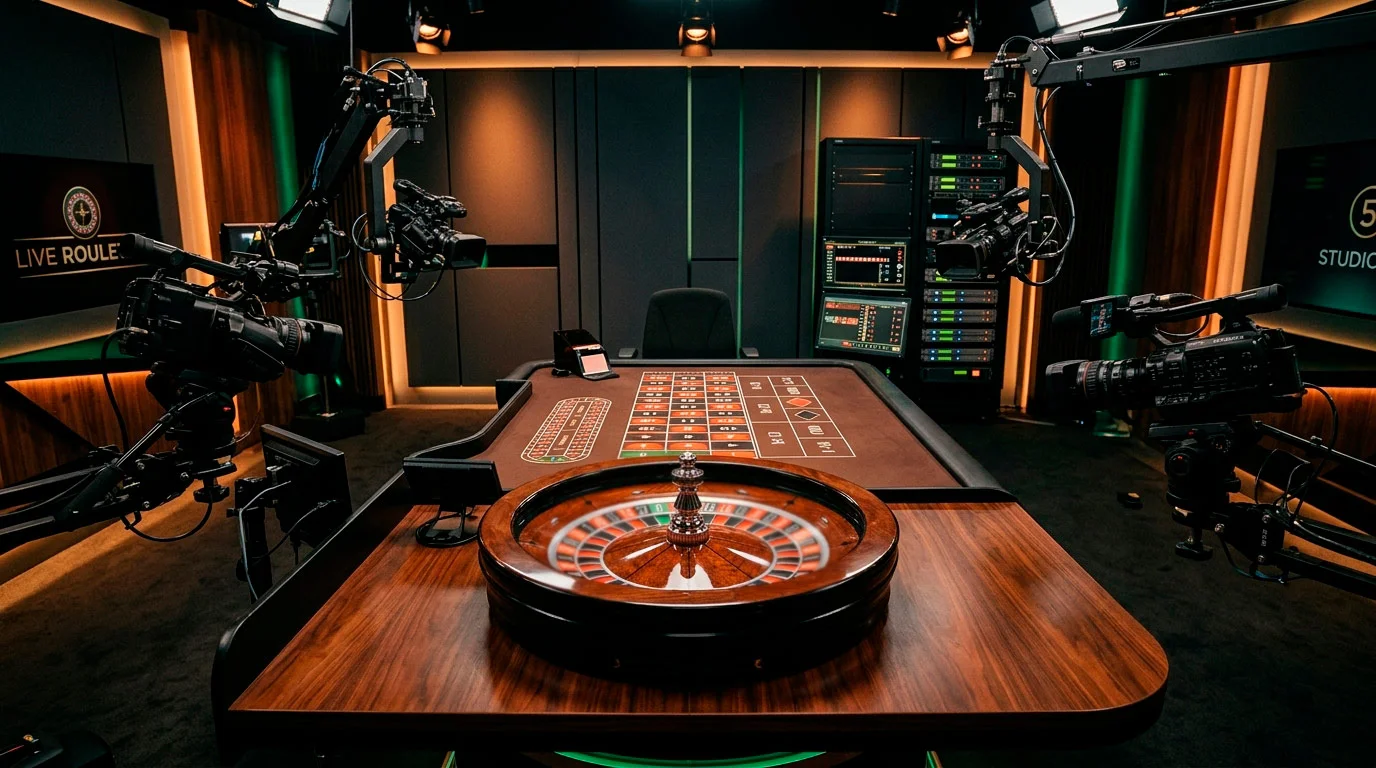
Live casino deserves particular attention because the data is striking. Evolution Gaming — the dominant live dealer provider — recorded a 31% year-on-year revenue increase in 2025 and holds a 73.4% share of the live dealer market. That level of concentration is unusual in any consumer-facing industry. It means that when you sit down at a live roulette, blackjack, or game show table at almost any UK-licensed operator, you are overwhelmingly likely to be playing on Evolution's infrastructure, dealt by Evolution's dealers, in Evolution's studios. The competitive dynamics of this sub-sector are explored in the live casino UK analysis, including what near-monopoly market share means for table variety and pricing.
| Category | UK Player Participation | Typical House Edge Range | Stake Limits (2026) |
|---|---|---|---|
| Online Slots | 41% (~7.1m players) | 2-8% (varies by RTP) | £5/spin (25+), £2/spin (18-24) |
| Live Casino | 19% and growing | 0.5-5.26% (varies by game) | Set by operator/provider |
| RNG Table Games | Lower than slots | 0.5-5.26% (varies by game) | Set by operator |
Slots remain the revenue engine, but the May 2025 stake limits reshaped the segment. The £5 per-spin cap for players aged 25 and over, and the tighter £2 cap for 18-to-24-year-olds, were accompanied by a complete ban on autoplay functionality and the removal of the bonus buy feature. Despite those restrictions, slot GGY grew approximately 12% year on year in Q1 2026. That growth suggests players adapted their behaviour — longer sessions at lower stakes — rather than migrating away from the product. The full mechanics of how stake limits interact with slot selection, session length, and bankroll management are covered in the online slots UK real money guide.
For table games, the picture is quieter but no less relevant. RNG blackjack and roulette carry lower house edges than most slots, and they are not subject to the same regulatory stake caps. Players who prioritise expected value over feature-rich gameplay often gravitate here, though the participation numbers suggest this remains a niche relative to slots and live casino. The absence of stake limits on table games is a regulatory design choice, not an oversight — the perceived harm profile of table games differs from that of high-speed, high-volatility slot products, and the Commission's approach reflects that distinction.
Deposits and Withdrawals: Methods, Speed, and the £150 Threshold
I have lost count of the number of operator terms pages I have read that describe withdrawals as "instant" or "same day." The reality, in most cases, involves a pending period, an internal processing queue, a possible KYC review, and then the actual transfer — which depends entirely on the payment method. "Instant" usually means "instant after we have finished processing, which takes one to three business days." The language is not technically false. It is just aggressively optimistic.
| Payment Method | Typical Deposit Speed | Realistic Withdrawal Speed | Key Limitation |
|---|---|---|---|
| E-wallets (PayPal, Skrill, Neteller) | Instant | 4-24 hours after processing | Same-method rule applies |
| Debit card (Visa, Mastercard) | Instant | 1-5 business days | Bank processing adds delay |
| Bank transfer | 1-3 business days | 3-5 business days | Slowest but highest limits |
| Pay by mobile | Instant | Not available for withdrawal | Deposit only at most operators |

The most consequential development in the payments space is not a new method — it is a regulatory threshold. The Financial Vulnerability Check trigger has been lowered to £150 in net deposits over any rolling 30-day period. That £150 figure replaced the previous £500 threshold in August 2025, and it means that the majority of regular players will encounter some form of enhanced due diligence during their time at a UK-licensed operator.
The Gambling Commission has drawn a clear distinction between Financial Risk Assessments and "affordability checks." As the Commission itself stated: "Financial risk assessments are a proposed way of identifying high-spending remote gambling customers who may be in financial difficulties, in order to help support them. This is not the same as 'affordability checks.'" The difference matters — FRAs use external data sources to flag potential financial vulnerability, while the term "affordability checks" implies a more invasive review of personal finances that the Commission's current framework does not mandate for most players.
The same-method rule adds another layer of complexity. Most UK-licensed operators require you to withdraw using the same payment method you used to deposit. If you deposited by debit card, your withdrawal goes back to that card. The rule exists for anti-money-laundering compliance, but its practical effect is that your choice of deposit method determines your withdrawal speed before you have even played a hand. Depositing via bank transfer because it felt familiar? Your withdrawal now takes three to five business days instead of the four to twenty-four hours you would get with an e-wallet.
For players who value speed, the calculus is straightforward: deposit via an e-wallet, complete KYC verification before requesting your first withdrawal, and keep your net deposits below the £150 threshold or be prepared for the additional checks that crossing it triggers. The detailed breakdown of each payment method's mechanics, real-world processing times, and strategies for accelerating cashouts is in the fast withdrawal casino UK guide.
Regulatory Overhaul 2025-2026: What Changed and What's Coming
If you had told a UK gambling executive in 2023 that within three years they would face stake limits on online slots, a wagering cap on bonuses, a near-doubling of their tax rate, a statutory levy replacing voluntary contributions, and a lowered threshold for financial vulnerability checks — all implemented and enforceable — they would have called you an alarmist. Every one of those measures is now in force. The period from mid-2025 to mid-2026 represents the most intensive regulatory rewrite the UK online gambling industry has ever experienced, and the effects are still propagating through operator business models, product design, and player-facing terms.
Regulatory timeline: key dates
21 May 2025 — Online slot stake limits take effect: £5/spin for players aged 25+, £2/spin for ages 18-24. Autoplay banned, bonus buy feature removed.
6 April 2025 — Statutory Gambling Levy replaces voluntary contributions. Rates vary from 0.1% to 1.1% depending on sector.
August 2025 — Financial Vulnerability Check threshold lowered from £500 to £150 in net deposits over 30 days.
19 January 2026 — Bonus wagering requirements capped at 10x maximum. Mixed-product promotions (betting + casino) prohibited.
1 April 2026 — Remote Gaming Duty rises from 21% to 40%. Remote betting duty increase to 25% scheduled for April 2027.

The tax change is the one with the broadest downstream impact. Remote Gaming Duty jumping from 21% to 40% is not a marginal adjustment — it is a near-doubling of the rate applied to an operator's net revenue from UK customers. The Office for Budget Responsibility projects that gambling tax receipts will reach £5 billion in 2026-2027, a 24.8% increase over the prior year. Kevin Harrington, UK and Ireland CEO of Flutter Entertainment, warned that the increases would "hand a big win to illegal, unlicensed gambling operators who will become more competitive overnight" because black market operators "don't pay tax and don't invest in safer gambling." Flutter itself estimated net EBITDA losses of approximately $235 million in 2026 and $339 million in 2027 from the combined tax and regulatory changes, even after mitigation measures.

The Statutory Gambling Levy, which took effect on 6 April 2025, replaced the industry's previous system of voluntary contributions to research, education, and treatment. Levy rates range from 0.1% to 1.1% of gross gambling yield depending on the operator's sector. The shift from voluntary to mandatory ensures consistent funding for problem gambling services regardless of individual operator willingness.
The stake limits introduced in May 2025 addressed a specific concern: the speed at which players could accumulate losses on online slots. The £5 cap for over-25s and £2 cap for 18-to-24-year-olds targeted the products with the highest loss velocity, while the autoplay ban forced conscious engagement with each spin. The companion removal of the bonus buy feature — which allowed players to purchase direct access to a slot's bonus round, typically at 50-100x the base stake — eliminated what regulators viewed as a mechanism for bypassing normal gameplay pacing.
The January 2026 wagering cap completed the bonus reform by limiting how many times a player must cycle through bonus funds before withdrawal. The 10x ceiling replaced an unregulated environment where operators routinely set multiples of 30x to 70x, creating bonuses that were statistically unprofitable for the player to clear. The prohibition on mixed-product promotions closed a related loophole where operators bundled casino bonuses with sports betting offers, complicating the wagering calculation and making it harder for players to assess true value.
Together, these measures amount to a comprehensive renegotiation of the relationship between operators and players. The regulatory direction is clear: smaller margins, more transparency, and less operator discretion in product design. Whether that trajectory continues or stabilises will depend on how the Commission's ongoing consultations — particularly around financial risk assessments and the potential for further product restrictions — resolve over the coming year.
Cryptocurrency Payments: UKGC Opens the Door
In a February 2026 speech, Tim Miller, Executive Director of the Gambling Commission, described the regulator's approach to cryptocurrency in gambling as "exploring the art of the possible rather than starting from a position of finding all the reasons not to innovate." That language marks a significant shift from the Commission's historically cautious stance on crypto payments.
Currently, UKGC-licensed operators cannot accept cryptocurrency deposits or process crypto withdrawals for UK customers. The Commission's position has been that crypto's pseudonymity conflicts with KYC and AML obligations. But Miller's comments signal that the regulator is actively studying whether a compliant framework could be designed — one that preserves regulatory oversight while accommodating the speed and efficiency advantages that crypto payments offer.

The timing is not coincidental. Approximately 5.8% of UK gamblers report using VPNs to access gambling sites, and a portion of that VPN usage is linked to seeking out offshore operators that accept cryptocurrency. If the regulated market cannot offer crypto, a segment of demand leaks to the unregulated one. Whether the Commission ultimately moves to permit crypto under controlled conditions, or concludes that the AML risks are too great, the fact that the conversation is happening at all represents a meaningful evolution in UK gambling regulation.
Problem Gambling in the UK: The Numbers Behind the Headlines
Most guides mention responsible gambling in a perfunctory paragraph at the bottom of the page — a list of helpline numbers and a sentence about "playing within your limits." That approach treats problem gambling as a footnote when the data says it is a central feature of the market's landscape. I would rather give you the numbers and let them speak.
The Gambling Survey for Great Britain — the GSGB, not the older and less reliable Health Survey that many competitors still cite — uses a sample size of approximately 20,000 respondents. Its most recent data identifies a 2.7% problem gambling rate using the PGSI 8+ threshold when measured through online methodology. That percentage represents hundreds of thousands of people. It is not a rounding error.
GAMSTOP, the national self-exclusion scheme, has now surpassed 600,000 total registrations, with roughly 525,000 exclusions still active. The growth trajectory is steep: approximately 100,000 new registrations were added in an eleven-month window, and the 16-to-24 age group saw a 44% year-on-year increase in sign-ups during the second half of 2025. GAMSTOP itself described this growth as indicating "a widespread need for self-exclusion" and highlighting "the crucial role of the gambling harm prevention, education, treatment and support sector."

But registration is only half the picture. The National Gambling Support Network's annual statistics reveal that just 61% of people completed their assigned course of treatment for gambling addiction over the 2021-2025 period — down from 68% in the preceding five-year window. Treatment completion is declining at a time when demand for it is rising. That disconnect points to capacity constraints in support services, barriers to sustained engagement, or both.
If you or someone you know is experiencing difficulties with gambling, the National Gambling Support Network provides free, confidential support. GamCare operates a helpline and live chat service. GAMSTOP offers self-exclusion from all UKGC-licensed online gambling operators for periods of six months, one year, or five years.
The UK's problem gambling data comes from the GSGB with a 20,000-person sample — far more robust than the older Health Survey figures still circulated by most review sites. The 2.7% PGSI 8+ rate, combined with 600,000+ GAMSTOP registrations and declining treatment completion rates, paints a picture that demands serious engagement, not token acknowledgement. Responsible gambling tools — deposit limits, time-outs, reality checks, and session controls — are mandated at every UKGC-licensed operator, and understanding how to configure them is as important as understanding how to evaluate a bonus offer.
Frequently Asked Questions About UK Online Casinos
Is it safe to play at online casinos in the UK?
Safety at UK online casinos is a function of licensing, not branding. Any operator holding an active UKGC remote operating licence is subject to mandatory player fund segregation, independent game fairness audits, anti-money-laundering procedures, and participation in the GAMSTOP self-exclusion scheme. The Commission's enforcement record — 741 cease-and-desist notices and over 1,100 website disruptions in the 2025-2026 financial year alone — demonstrates active supervision. However, a licence guarantees regulatory compliance, not operational excellence. Withdrawal speed, support quality, and bonus transparency vary significantly between licensed operators, and those differences require independent evaluation. The critical risk lies in playing at unlicensed operators, where none of these protections exist and the £16.6 billion unlicensed market continues to grow.
How do I know if a UK casino is properly licensed?
Every UKGC-licensed operator must display its licence number on its website, typically in the footer. You can verify that number against the Gambling Commission's public register, which is searchable by operator name, licence number, or account number. The register shows the licence type (remote operating, software, host), its status (active, suspended, revoked), and any regulatory actions taken against the operator. A remote operating licence is the specific type required for an operator offering real-money gambling directly to UK players. If a site claims to be "UK licensed" but displays only a Curacao, Malta, or Gibraltar licence without a corresponding UKGC entry, it is not authorised to serve UK customers under UK law.
What are the new UK casino rules for 2025-2026?
The regulatory changes span multiple domains. From May 2025, online slot stakes are capped at £5 per spin for players aged 25 and over and £2 per spin for players aged 18 to 24, with autoplay and bonus buy features removed entirely. The Statutory Gambling Levy replaced voluntary industry contributions in April 2025. The Financial Vulnerability Check threshold was lowered from £500 to £150 in net deposits over 30 days in August 2025. From January 2026, bonus wagering requirements are capped at 10x and mixed-product promotions combining betting and casino are prohibited. From April 2026, Remote Gaming Duty increased from 21% to 40%. Each of these measures affects either the products available, the terms attached to them, or the financial checks players may encounter.
What determines how fast I can withdraw from a UK online casino?
Withdrawal speed depends on four factors working in sequence. First, the operator's internal pending period — some impose a 24-to-72-hour delay before processing begins. Second, KYC verification status: if you have not yet completed identity verification, your first withdrawal will be held until documents are reviewed. Third, the payment method you used to deposit, since the same-method rule typically applies and different methods have different settlement times — e-wallets clear in hours, debit cards in one to five business days, bank transfers in three to five. Fourth, whether your account has triggered a Financial Vulnerability Check by exceeding £150 in net deposits over 30 days, which can add additional processing time. Pre-verifying your identity before requesting a withdrawal and choosing faster payment methods at the deposit stage are the most effective ways to reduce overall withdrawal time.
What does RTP mean and why does it matter?
RTP — Return to Player — is the percentage of total money wagered on a game that is theoretically paid back to players over a very large number of rounds. A slot with 96% RTP retains 4% of all bets as house edge over the long run. The UK online slot average sits at approximately 96%, though individual games range from below 90% to above 99%. RTP matters because it directly determines the mathematical cost of playing. A 2% RTP difference — say, choosing a 94% slot over a 96% one — means you lose twice as much per pound wagered over time. Crucially, RTP is a long-run theoretical figure calculated over millions of spins. In any individual session, actual results can deviate significantly in either direction. RTP tells you what a game costs to play on average; it does not predict what will happen in your next 50 spins.
Can I play at UK online casinos on mobile?
Mobile play accounts for more than 60% of total UK online gambling revenue, and virtually every UKGC-licensed operator offers either a native mobile app or a browser-based mobile site. The functional difference between desktop and mobile has narrowed considerably — most game providers now develop with mobile-first design, meaning the same titles, the same RTP values, and the same bonus mechanics are available on both platforms. Where differences remain, they tend to be in the interface: smaller screens mean simplified navigation, and some live casino streams may display at lower resolution on mobile connections. Native apps available through the App Store or Google Play have passed platform-level security reviews, while browser-based mobile sites avoid the need for a download entirely. Neither format has a meaningful advantage over the other for the majority of players.
What is GAMSTOP and how does self-exclusion work?
GAMSTOP is the UK's national online self-exclusion scheme. Registration is free and blocks your access to all UKGC-licensed online gambling operators for a chosen period of six months, one year, or five years. The scheme covers online casino, betting, bingo, and lottery sites licensed by the Gambling Commission. It does not cover land-based casinos, betting shops, the National Lottery, or offshore sites operating without a UKGC licence. More than 600,000 people have registered with GAMSTOP, with roughly 525,000 exclusions currently active. Once a self-exclusion period expires, re-entry is not automatic — there is a cooling-off process. GAMSTOP is one layer of a broader responsible gambling toolkit that includes deposit limits, session time limits, reality checks, and cool-off periods, all of which UKGC-licensed operators are required to offer.
Articles
Published by the onlinecasinorealmoneyuk.com team.