


Live casino UK is the segment nobody in the industry predicted would grow this fast. Five years ago, live dealer games were a niche — technically impressive but commercially marginal, accounting for a small fraction of online gambling revenue. Today, the segment holds 19% of the UK online casino market and shows no sign of plateauing. Evolution Gaming, the dominant live casino supplier, recorded a 31% year-on-year increase in live dealer revenue in 2025, with a market share of 73.4%. Those aren’t incremental growth numbers. That’s a segment in full expansion.
I’ve tracked this growth from the regulatory side for several years now, and the driving forces are clearer than the industry commentators tend to acknowledge. Live casino bridges the gap between online convenience and land-based atmosphere. It solves the trust problem that RNG games struggle with — players can see the cards being dealt, watch the roulette wheel spin, and verify the outcome in real time. That visible transparency has commercial value, and the numbers prove it.
This guide covers how live casino technology works, the game categories available to UK players, the economics behind Evolution’s market dominance, and what UKGC regulation means for fairness and player protection in live dealer environments. No operator rankings. No “top picks.” Just the mechanics, the data, and the regulatory framework.
The game-show formats in detail: live casino game shows.
How Live Casino Technology Works: Studios, Streams, and OCR
The first time I visited a live casino studio, I expected something resembling a traditional casino floor. What I walked into was closer to a television production facility — banks of cameras, lighting rigs overhead, directors calling shots from a control room, and dealers sitting at tables surrounded not by players but by lenses. The entire operation is built for broadcast, not for walk-in traffic.
A live casino game is, at its most basic level, a video stream of a real dealer operating real equipment — physical cards, a physical roulette wheel, physical dice — transmitted to players’ devices in real time. The player interacts through a digital interface: placing bets, making decisions, and communicating via text chat. The dealer sees the bets appear on a monitor and responds accordingly. The game exists simultaneously in a physical studio and on thousands of screens.
The technology that makes this work is more complex than the concept suggests. Multiple cameras capture each table from different angles — a wide shot, a close-up of the cards or wheel, and overhead views for games like baccarat where card placement matters. The video is encoded and streamed with minimal latency, typically under two seconds, to ensure that player decisions sync with the physical action at the table.
OCR — Optical Character Recognition — is the critical technology that bridges the physical and digital worlds. Cameras scan the cards as they’re dealt or the ball’s resting position on the roulette wheel, and OCR software translates those physical outcomes into digital data. That data feeds into the game engine, which calculates payouts, updates balances, and records results. Without OCR, the system would rely on the dealer manually entering results — a process that would be slower, error-prone, and less scalable.
Studio locations vary by provider. Evolution Gaming operates studios in Latvia (their original base), Malta, Georgia, Romania, New Jersey, and several other locations. Some operators commission dedicated studio environments — branded tables with custom backdrops and exclusive dealer teams. These “dedicated environments” don’t change the game mechanics or fairness standards; they provide a visual identity that differentiates one casino’s live lobby from another’s, even though the underlying technology is identical.
Bandwidth is the practical constraint on the player’s end. A live casino stream consumes roughly 300-500 KB per second at standard quality, or more in HD. A stable internet connection of at least 5 Mbps is sufficient for smooth playback, but fluctuations can cause buffering that disrupts the experience. Unlike RNG games, where a brief connection drop doesn’t affect the outcome, a live casino disconnection can mean missing your decision window — and the game will proceed without your input, typically applying default rules (standing in blackjack, for example).
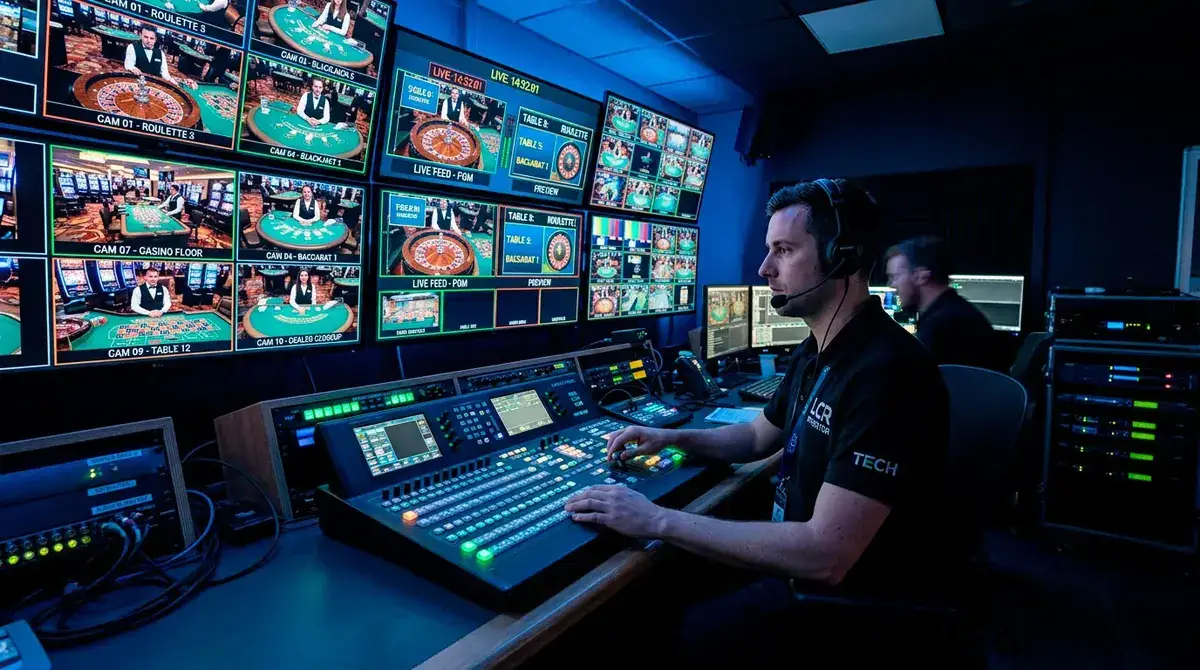
The dealer’s role in a live casino is a hybrid of traditional croupier and on-camera presenter. Dealers undergo weeks of training covering game procedures, camera awareness, player interaction through chat, and responsible gambling protocols. In game-show formats, the role shifts further toward entertainment — hosts for titles like Crazy Time are selected partly for their on-screen personality and energy. The human element is, ultimately, the product. Strip it away and you’re left with an RNG game with a video overlay. It’s the visible human dealing, spinning, and responding that creates the trust and engagement that drive the segment’s 31% growth.

Live Game Categories: Roulette, Blackjack, Baccarat, and Game Shows
Every live casino lobby I’ve reviewed in the last two years follows roughly the same structure — and that’s not a coincidence. The game categories reflect both player demand and provider strategy, and the hierarchy has been remarkably stable.
Live roulette is the volume leader. It accommodates unlimited concurrent players at a single table because every bet is independent — your wager on red has no interaction with another player’s bet on number 17. This scalability makes roulette the most capital-efficient game for providers and, consequently, the most widely available. European roulette (single zero, 2.7% house edge) dominates UK lobbies, with French roulette (La Partage rule, 1.35% house edge on even-money bets) available at selected tables. American roulette (double zero, 5.26% house edge) is present but less popular among informed UK players. I’ve written a detailed guide to live roulette variants and house edge differences for those who want the full breakdown.
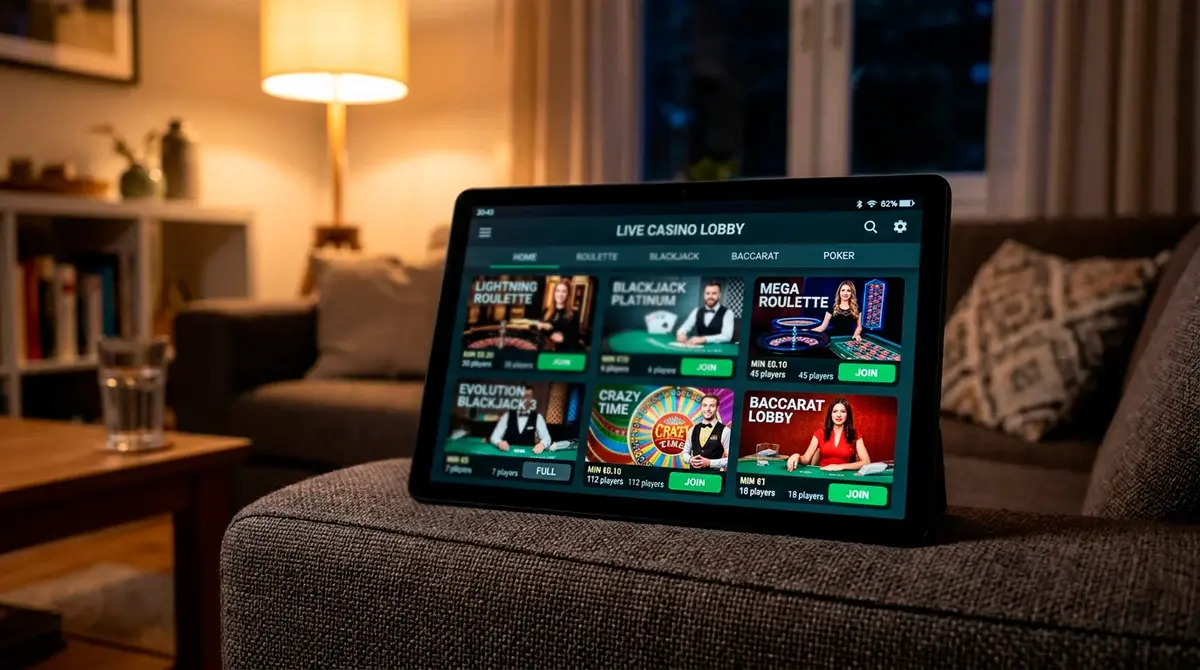
Live blackjack operates differently. Each seat at the table is occupied by one player making individual decisions — hit, stand, double, split — that affect their own hand against the dealer. Table capacity is limited to seven seats in standard formats. This creates a supply constraint: during peak hours (typically 8pm to midnight UK time), popular tables fill up, and players either queue or use the “Bet Behind” feature, which allows you to place a bet on another seated player’s hand without controlling the decisions.
Live baccarat occupies a significant share of the market, driven partly by its popularity among players of East Asian heritage. The game’s mechanics are straightforward — bet on Player, Banker, or Tie — and, like roulette, it scales to unlimited concurrent players. The house edge on the Banker bet (approximately 1.06%) makes it one of the most mathematically favourable wagers available in any live casino game.
Game shows represent the category that didn’t exist five years ago and now generates substantial revenue. Titles like Crazy Time, Monopoly Live, and Deal or No Deal Live combine elements of live presentation with RNG-determined bonus rounds. A live host spins a wheel or oversees the game, but augmented reality graphics and multiplier mechanics add layers that pure table games don’t offer. These games tend to have higher house edges than traditional table games — typically 3% to 10% depending on the specific title and bet type — but their entertainment value and visual spectacle have made them the fastest-growing sub-category within live casino.
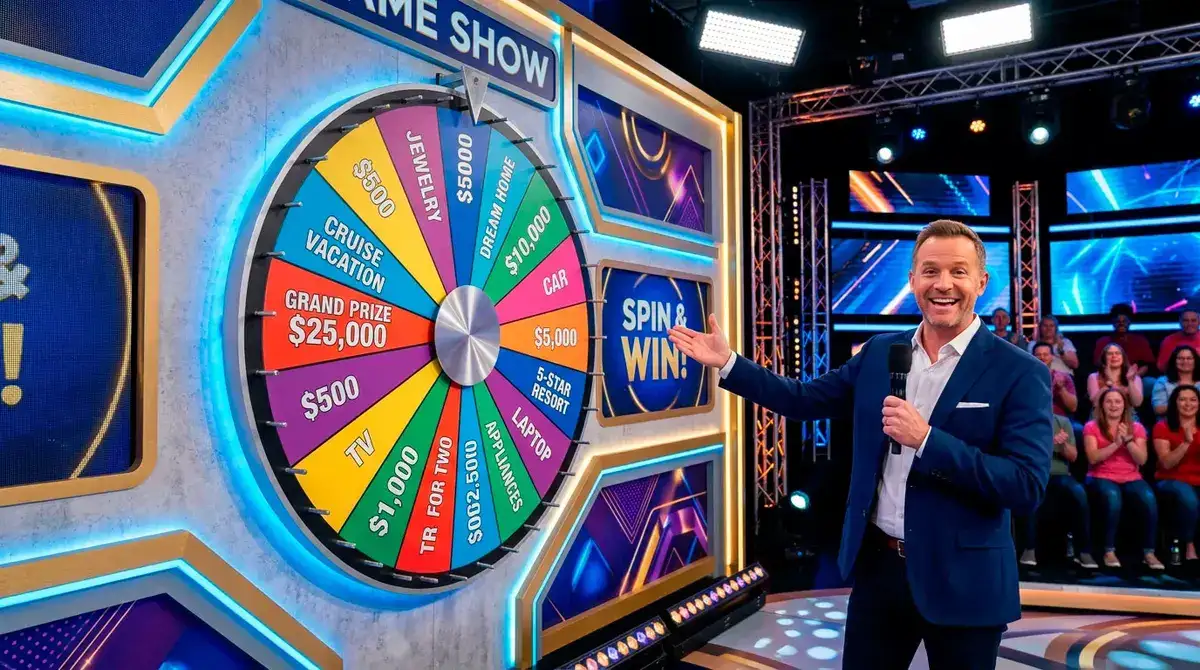
The game-show category is also where Evolution has pushed hardest for innovation, and it’s where the competitive moat is widest. Developing a new game-show format requires studio infrastructure, proprietary technology, and broadcast production capabilities that smaller providers struggle to match. The result is a category increasingly dominated by a single supplier — which has implications for player choice that extend beyond individual game selection.
The full picture is in our guide to UK real-money online casinos.
Evolution Gaming’s 73% Market Share: What It Means for Player Choice
When a single company controls nearly three-quarters of a market segment, that concentration has consequences — some visible, some not. Evolution Gaming’s 73.4% share of the live casino market didn’t happen by accident. It’s the result of a decade-long strategy combining organic growth, acquisitions (including the purchase of NetEnt and its live casino division), and relentless product development. Their revenue from live dealer operations grew 31% year on year in 2025, a growth rate that widened rather than narrowed the gap with competitors.
For players, the most immediate effect of this dominance is uniformity. Walk into the live casino lobby at five different UK-licensed operators, and you’ll find the same Evolution tables, the same dealer teams, the same game interfaces, and the same branded game-show titles. The games are streamed from the same studios. The only differences are the branded dedicated tables (if the operator has commissioned them) and the promotional overlays the casino adds to the lobby.
This uniformity has a positive side: consistency. An Evolution live blackjack table operates the same way regardless of which casino hosts it. The rules, the dealing procedure, the RNG elements (used for shuffle machines), and the streaming quality are standardised. If you’ve played at one Evolution table, you know what to expect at any other.
The negative side is reduced competition at the supplier level. With 73.4% market share, Evolution has significant pricing power over operators. The revenue-share agreements between Evolution and operators are not public, but industry consensus places them in the range of 20% to 30% of the operator’s live casino GGY. When the operator also pays 40% Remote Gaming Duty on that GGY, the combined supplier and tax burden leaves a thin margin — which in turn affects how aggressively the operator can promote live casino or invest in differentiated experiences.

The UK online casino market overall is valued at approximately $6.69 billion, and live casino’s 19% share translates to a segment worth over $1.2 billion. Evolution captures roughly $900 million of that. The remaining $300-odd million is split among competitors — Playtech (which operates live studios primarily from Latvia and the Philippines), Pragmatic Play Live, Ezugi, and a handful of smaller providers. None individually holds more than a mid-single-digit market share.
For players, the practical implication is simple: if you play live casino at a UK-licensed site, you’re overwhelmingly likely to be playing an Evolution game. The competitive dynamics that usually drive innovation and improve player value — multiple suppliers competing for operator contracts and player attention — are muted by the concentration of supply. Evolution’s dominance means the pace and direction of live casino innovation are set primarily by one company’s roadmap.
Fairness and Regulation of Live Dealer Games in the UK
Do the cards fall fairly when a human dealer draws them from a physical shoe? The question sounds almost naive, but I’ve fielded it dozens of times from players who instinctively trust a visible dealer more than a random number generator — even though the fairness standards governing both are equally rigorous.
UKGC-licensed live casino games are subject to the same regulatory framework as RNG games. The provider must hold a software supply licence from the Commission. The games must be tested and certified by accredited laboratories. The RTP must be declared and accessible. The key difference lies in what’s being certified: for RNG games, the laboratory tests the algorithm. For live games, it tests the physical equipment (certified shuffle machines, precision-balanced roulette wheels) and the OCR system that translates physical outcomes into digital data.
Shuffle machines in live blackjack and baccarat ensure that card distribution is random and cannot be manipulated by the dealer. These machines are manufactured by a small number of certified suppliers and are regularly inspected. The roulette wheels used in live studios are precision-engineered and tested for bias — any deviation from expected outcome distributions triggers recalibration or replacement.
The online GGY generated across all remote casino games — £7.8 billion in the most recent annual reporting period — is underpinned by this regulatory infrastructure. Live casino’s growing share of that total means the Commission has increased its attention to live-specific compliance issues: studio security, dealer training and monitoring, and the integrity of OCR systems. Charles Counsell, the Gambling Commission’s Interim Chair, commented on the Commission’s regulatory approach upon the departure of CEO Andrew Rhodes, noting that “consumer protection has remained at the heart of our work” — a posture that extends explicitly to the live casino segment’s unique compliance requirements.
Player protection in live casino has one additional dimension absent from RNG play: the interaction with the dealer. Dealers are trained to manage player communications — the chat function allows real-time text exchange — and to identify potentially harmful behaviour, such as aggressive betting patterns or distressed language. This isn’t a substitute for automated responsible gambling tools, but it adds a human layer of oversight that RNG games can’t replicate. The 17.4 million adults in the UK who gamble online include a growing proportion who prefer that human element, and the regulatory framework has adapted to account for its specific risks and benefits.

What to Look for When Choosing a Live Casino Platform
Given that most UK-licensed casinos offer the same core set of live games from the same primary supplier, the differentiators are found in the operational details — the elements the operator controls rather than the ones Evolution provides.
Table limits are the first practical variable. The same Evolution roulette table may appear at multiple casinos, but each operator sets its own minimum and maximum bet limits. If you prefer low-stakes play, look for tables with minimums of £0.50 or £1. If you play at higher levels, check that the maximum limits accommodate your bet sizing without requiring you to use VIP or invite-only tables.
Lobby size and variety matter more than they might appear. Some operators license the full Evolution catalogue — hundreds of tables across every game type and variant. Others license a subset, which may exclude certain game-show titles, regional variants, or dedicated environments. The lobby breadth reflects the operator’s commercial agreement with the provider and directly affects your options.
Streaming quality is theoretically standardised by the provider, but the player’s experience depends on the casino’s content delivery infrastructure. Some operators invest in CDN (Content Delivery Network) partnerships that reduce stream latency and improve visual quality, particularly on mobile devices. Others rely on the provider’s default delivery, which can result in slightly lower resolution or occasional buffering during peak traffic.
Promotions specific to live casino are a genuine differentiator. Some operators run cashback offers, live casino tournaments, or loyalty point multipliers that apply specifically to live games. These promotions are operator-level decisions, not provider-level, and they can meaningfully affect the value of playing live games at one casino versus another. The promotional terms — wagering requirements, game contribution, time limits — should be evaluated the same way you’d assess any casino bonus.
Customer support availability during live play hours is an overlooked factor. Live casino usage peaks between 8pm and midnight. If you encounter a technical issue — a disconnection during a hand, a disputed outcome, a frozen stream — having access to live chat support that’s actually staffed during those hours is the difference between a quick resolution and an unresolved complaint. Check the operator’s support hours and channels before committing to extended live play.
Live Casino FAQ
Articles
Created by the "onlinecasinorealmoneyuk.com" editorial team.