


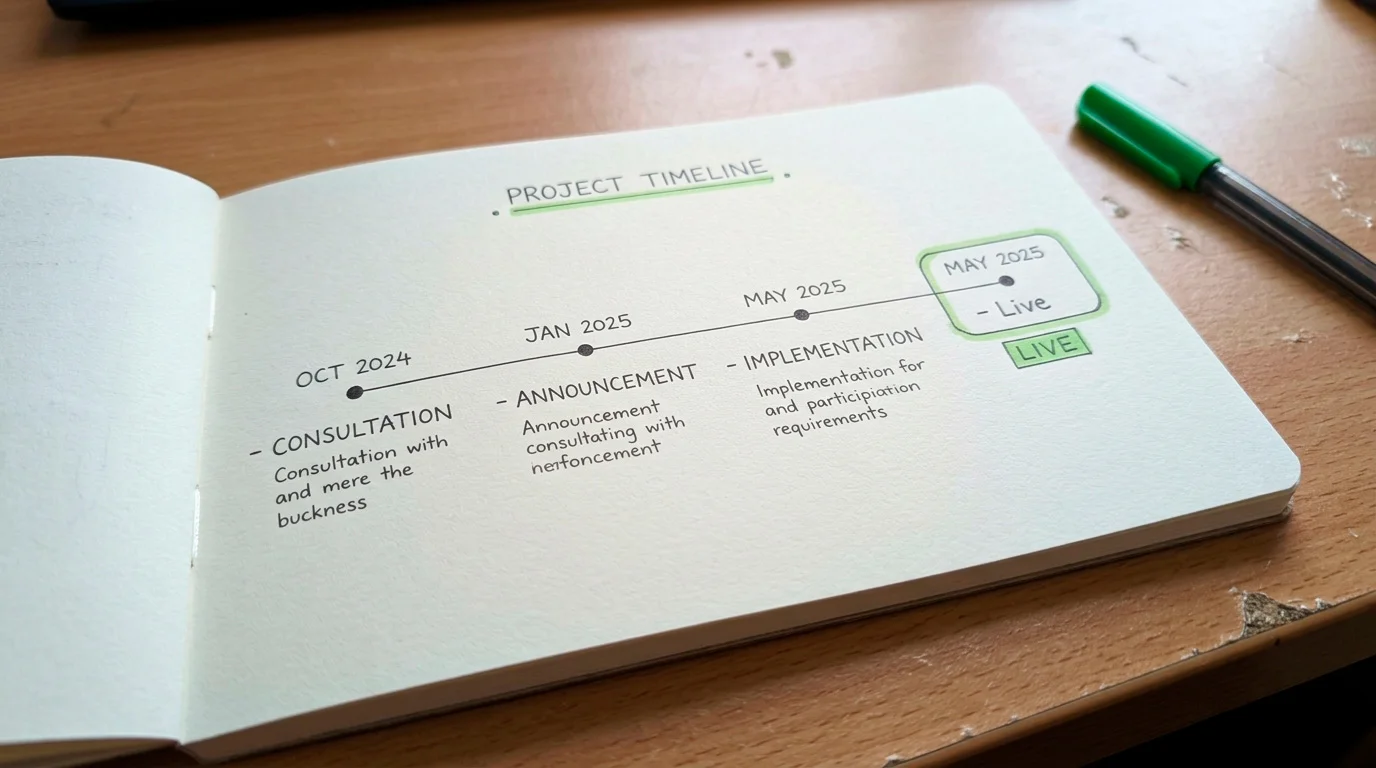
On 21 May 2025, the UKGC enforced stake limits on online slots that split the player base by age for the first time in UK gambling regulation: £5 maximum per spin for players aged 25 and over, £2 for players aged 18 to 24. Alongside the stake caps came the removal of autoplay and the elimination of the bonus buy feature. These were not incremental adjustments. They were structural interventions that altered how online slots function as a product, how operators price their game portfolios, and how players interact with the format that generates more revenue than any other segment in UK online gambling.
What the caps mean in a session: UK online slots.

£5 for Over-25s, £2 for 18-24: The Full Regulatory Text
Kevin Harrington, then UK and Ireland CEO of Flutter Entertainment, warned at the time that the combined regulatory and tax changes would hand a significant advantage to illegal operators who do not invest in safer gambling. Whether or not one agrees with that assessment, the stake limits themselves are blunt instruments — and understanding exactly what they mandate requires attention to detail.
The £5 cap applies to all online slots — including crash games and other RNG-based formats classified as slot-equivalent by the UKGC — for players whose verified age is 25 or above. This is a per-spin maximum, meaning no single bet on a slot game can exceed £5. It does not apply to table games, live casino, or sports betting. The UKGC’s framing is specifically about “games of chance played on a machine,” which translates in the online context to software-based RNG games.
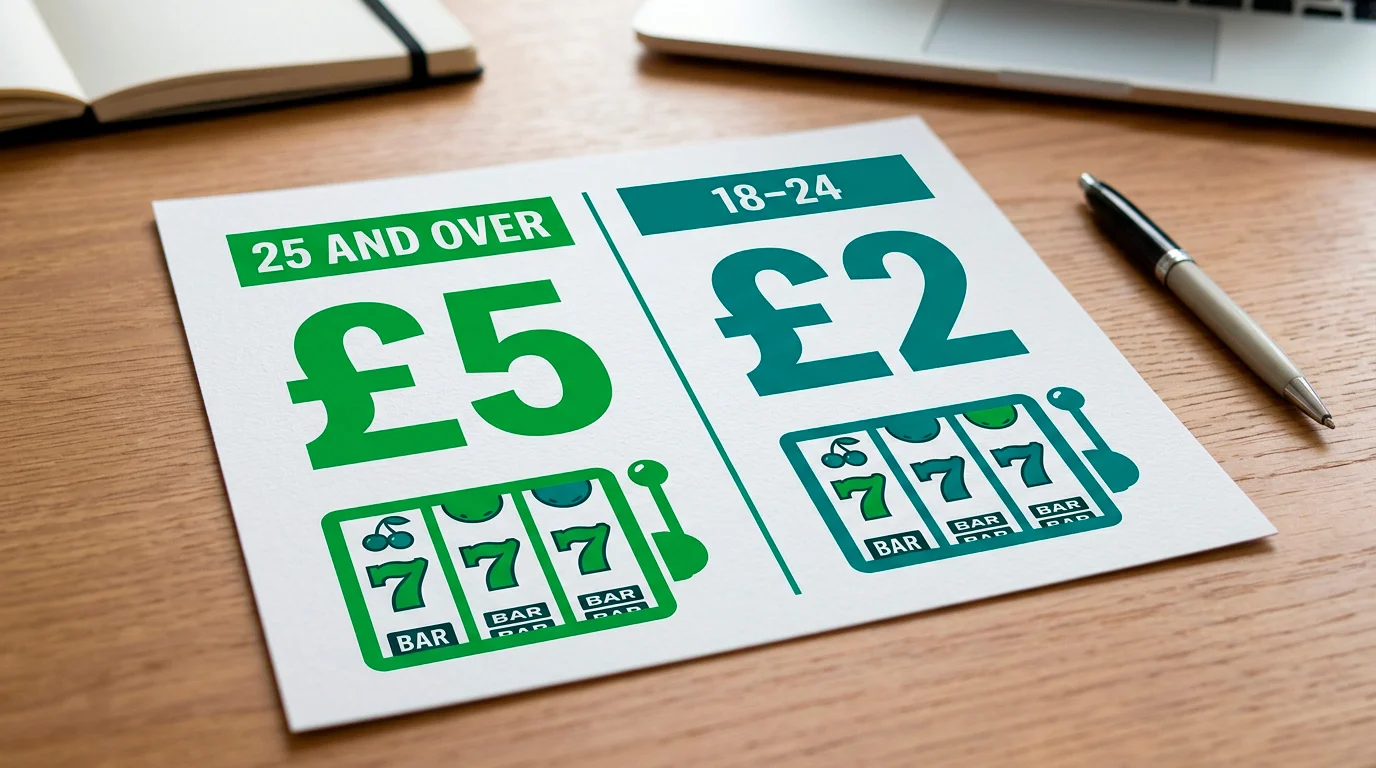
The £2 cap applies to the same game category but for players aged 18 to 24. The age-based differentiation is unprecedented in UK gambling regulation. The rationale, drawn from the Gambling Commission’s own research, is that younger adults demonstrate higher rates of problem gambling and are more susceptible to the rapid-play mechanics that online slots employ. The 44% year-on-year increase in GAMSTOP registrations among 16-to-24-year-olds, reported in the second half of 2025, was cited as supporting evidence for the differential treatment.
Age verification for the purpose of stake limits relies on the same KYC infrastructure that verifies eligibility to gamble at all. When you register and your age is confirmed electronically, the operator’s system tags your account with the appropriate stake tier. There is no separate verification step for the stake limit — it is embedded in the existing age check. Players who turn 25 during their membership have their stake tier updated automatically, though the speed of this update varies by operator.
Autoplay Ban and Bonus Buy Removal: The Companion Rules
Stake limits received the headlines, but the companion rules that came into force on the same date deserve equal attention. They change how slots function as much as the stake cap changes how much you can wager on them.
The autoplay ban prohibits operators from offering any feature that automatically spins the reels on behalf of the player. Before the ban, most slots offered an autoplay option — set a number of spins (10, 25, 50, 100), define stop conditions (stop on bonus, stop on balance change), and let the game run itself. The feature was popular with experienced players who wanted to grind through wagering requirements or play passively during other activities. The UKGC’s concern was that autoplay reduced the player’s engagement with each individual spin, dulling awareness of accumulating losses. Removing it forces a deliberate action — tapping or clicking “spin” — for every single round.

The bonus buy removal eliminated a feature that had become increasingly common in modern video slots. Bonus buy (also called “feature buy”) allowed players to pay a premium — typically 50x to 100x the base bet — to trigger a slot’s bonus round immediately, bypassing the standard gameplay loop. A £5 spin on a slot with a 100x bonus buy would cost £500 for instant access to the bonus feature. The UKGC determined that this effectively functioned as a high-stakes bet disguised as a feature, circumventing the intended pace of play and concentrating risk into a single transaction.
Combined, the three interventions — stake caps, autoplay ban, and bonus buy removal — restructure the slot experience around lower stakes, active engagement, and extended session length. A player who previously deposited £100, set autoplay on a £10-per-spin slot, and let it run for ten minutes while making coffee now deposits the same £100, spins manually at £5 or £2 per spin, and plays for 20 to 50 spins rather than 10. The per-session loss potential is constrained, but the session itself is longer and more deliberate.
The full picture is in our guide to UK real-money online casinos.

How Stake Limits Affected Slot Revenue and Session Behaviour
UK online casino GGY hit £1.55 billion in Q1 2026, with slots specifically recording approximately 12% year-on-year growth despite the stake limits having been in effect for nearly a year. That growth figure is counterintuitive — how does a product grow when you cap how much each customer can spend per unit of play?
The answer lies in volume compensation. Lower stakes per spin mean more spins per deposited pound. A player depositing £50 at £5 per spin gets roughly 10 spins before expected depletion (assuming 96% average RTP and standard variance). The same £50 at £2 per spin yields approximately 25 spins. More spins mean longer sessions, and longer sessions mean more engagement time per player. Operators have adapted by promoting higher-volume slot experiences — games designed for rapid, low-stake play with frequent small wins that sustain session length.
The revenue growth also reflects the broader expansion of the online gambling market rather than an organic response to stake limits. Player acquisition continued, mobile penetration increased, and new game formats attracted demographics that were not previously engaged with slots. The stake limits constrained per-player yield but did not shrink the addressable market — more players spending less per spin produced a net increase in total volume.

Session behaviour data from operator reports I have reviewed tells a more nuanced story. Average session length has increased by 15-20% post-stake-limits, while average loss per session has decreased by approximately 10-15%. The net effect on player welfare is debated: longer sessions with lower losses may represent better harm reduction, or they may simply extend exposure to a product whose psychological draw is engagement, not spend. The regulatory position is that lower financial harm per session is the primary objective, and by that measure, the stake limits appear to have achieved their intended effect. For the broader regulatory context in which stake limits sit, the regulation timeline maps the full reform sequence from the 2023 White Paper through to 2026.
Articles
Created by the "onlinecasinorealmoneyuk.com" editorial team.