

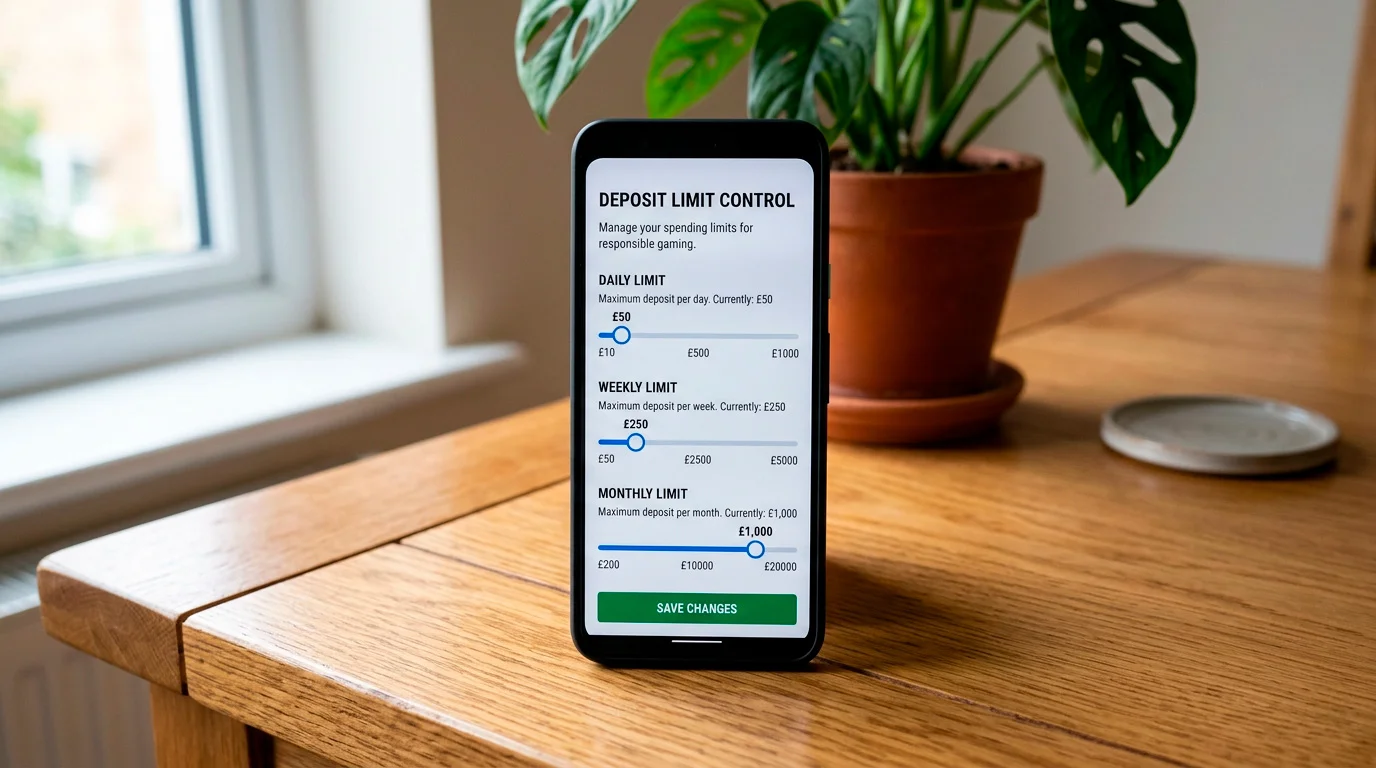
The most effective responsible gambling tool is also the least dramatic. Deposit limits do not lock you out of your account, do not require a multi-day cooling-off period, and do not involve anyone else reviewing your finances. They are a line you draw for yourself — a ceiling on how much you can deposit in a given timeframe — and they work because they convert a moment of self-awareness into a structural constraint. The Gambling Survey for Great Britain, conducted with a sample of approximately 20,000 respondents, found a problem gambling rate of 2.7% using the PGSI 8+ measure in the online methodology. Deposit limits are one of the tools designed to prevent players from crossing that threshold, and with around 48% of UK adults participating in gambling activities, the addressable population for these controls is substantial.
The wider toolset: responsible gambling tools.
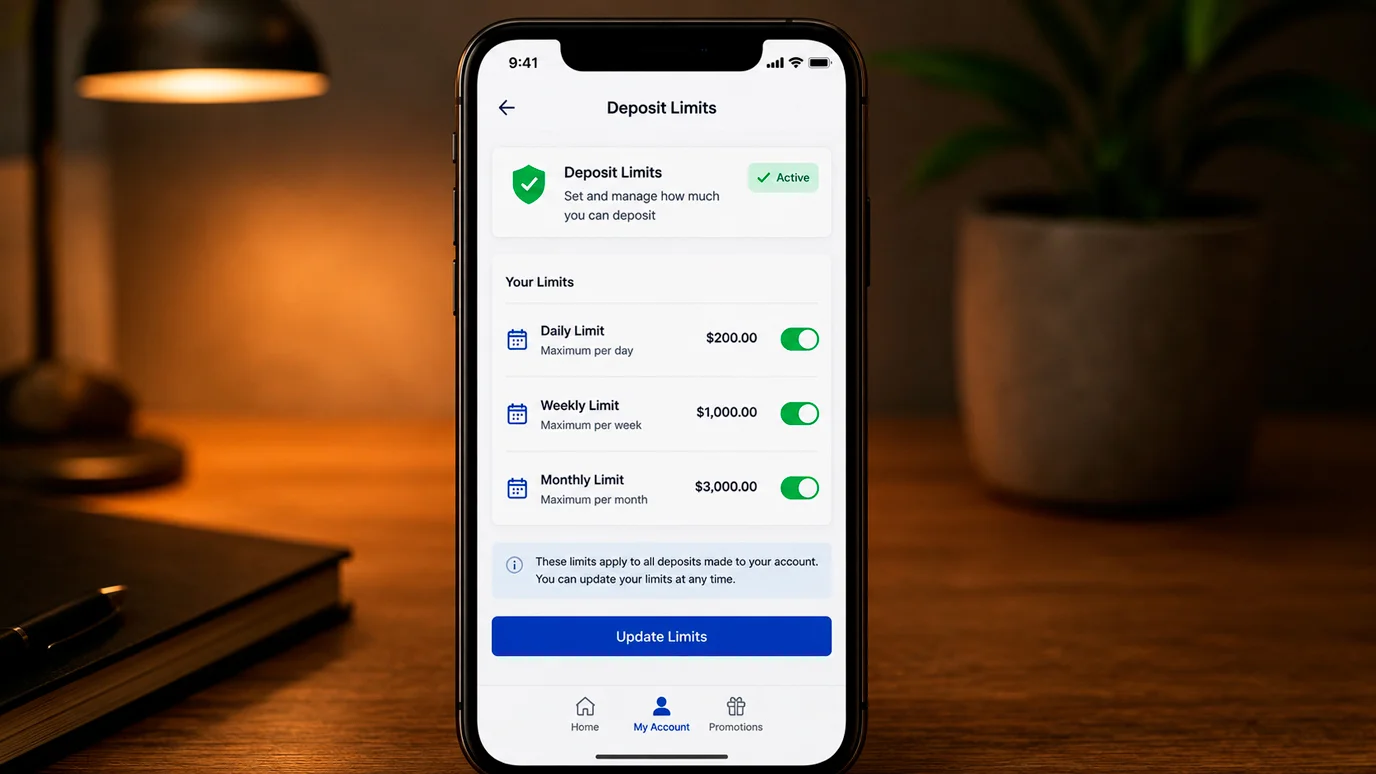
Daily, Weekly, and Monthly Limits: What Each Controls
Every UKGC-licensed online casino is required to offer deposit limits at three intervals: daily, weekly, and monthly. The mechanics are straightforward, but the interactions between them are less obvious than they appear.
A daily limit caps the total amount you can deposit in a 24-hour period. If you set a £20 daily limit and deposit £15 in the morning, you can deposit a maximum of £5 more before the limit resets. The reset typically occurs at midnight GMT, though some operators use a rolling 24-hour window anchored to your first deposit of the day.
A weekly limit caps the total over seven days. If you set a £100 weekly limit and deposit £80 by Wednesday, you have £20 remaining for the rest of the week. The daily limit still applies within the weekly cap — if your daily limit is £20 and your weekly limit is £100, you cannot deposit more than £20 in a single day even if you have unused weekly allowance.

A monthly limit works the same way at a 30-day interval. The three limits are cumulative and the most restrictive one takes precedence at any given moment. Setting a £500 monthly limit with a £50 daily limit means you can never deposit more than £50 in a day, but your total for the month is also capped at £500. A player who deposits £50 every day would hit the monthly cap on day ten and be locked out of further deposits for the remaining twenty days.
The key nuance is that these limits apply to deposits, not to your total gambling activity. Funds already in your casino balance — whether from prior deposits or from winnings — remain playable regardless of your deposit limit. The limit controls the inflow of new money, not the use of existing balance. This is an important distinction for players who win during a session and then spend those winnings: the deposit limit does not prevent you from wagering your winnings back to zero, only from adding more money once you reach the cap.
Setting and Adjusting Limits: Instant Down, Delayed Up
The UKGC mandates an asymmetry in how deposit limits can be adjusted, and it is one of the most thoughtfully designed features in the regulatory framework. Lowering a limit — making it more restrictive — takes effect immediately. Raising a limit — making it less restrictive — takes effect only after a cooling-off period, typically 24 hours for daily limits, 7 days for weekly limits, and 30 days for monthly limits.
This asymmetry exists because the decision to restrict yourself and the decision to relax a restriction operate on different psychological timelines. Lowering a limit is typically a considered, reflective decision — I have been spending too much, I want to cut back. Raising a limit is more likely to be an impulsive, in-the-moment decision — I am on a losing streak and want to chase my losses, or I have just won and want to keep going with more money. The delay creates a structural cooling-off period that forces the decision to age before it takes effect.

In practice, I have seen the cooling-off period prevent impulsive escalation repeatedly during compliance reviews. A player requests a limit increase on Saturday evening, the system holds it until the following Saturday, and by then the player either no longer wants the increase or has had time to evaluate whether it is genuinely appropriate. The system does not prevent the increase — it just slows it down. That speed bump is remarkably effective.
Some operators allow you to set a limit increase to “never” — a permanent lock that prevents any future increase without contacting customer support and passing through a manual review. This option is less commonly promoted but available at most major UK operators. It functions as a halfway measure between deposit limits and self-exclusion: you can still play, but your spending ceiling is fixed.

Using Deposit Limits as Part of a Bankroll Management Strategy
Deposit limits work best when they are set before you start playing, not in response to a bad session. That sounds obvious, but the vast majority of players who use deposit limits set them reactively — after a loss, after a larger-than-intended session, after the regret kicks in. Setting them proactively, as a structural boundary rather than an emotional response, changes the dynamic entirely.
A reasonable starting framework is to decide what you can afford to lose over a month — genuinely afford, meaning money that would not affect your bills, savings, or quality of life if it disappeared entirely. Set your monthly deposit limit to that amount. Then divide it into a weekly allocation and set the weekly limit accordingly. The daily limit can function as a further brake — preventing you from burning through your weekly allocation in a single session.
The full picture is in our guide to UK real-money online casinos.

The numbers are personal. There is no universal “right” deposit limit. A player with substantial disposable income and a casual relationship with gambling has a different appropriate limit than a player with tight finances or a history of chasing losses. The point is not the amount — it is the act of deciding in advance, when your judgement is clear, rather than deciding in the moment when emotions are driving the decision.
One strategy I have seen work effectively during player support reviews is the “session budget” approach. Rather than thinking in terms of daily or weekly totals, some players set their deposit limit to the amount they plan to spend in a single session, then reduce it to zero between sessions. This requires adjusting the limit before each session (remembering the delay for increases), which creates an additional intentional step before gambling. The friction is the feature. For players who want to explore additional controls beyond deposit limits — time-outs, reality checks, and session duration controls — the GAMSTOP self-exclusion guide covers the most comprehensive option available.
Articles
Created by the "onlinecasinorealmoneyuk.com" editorial team.