

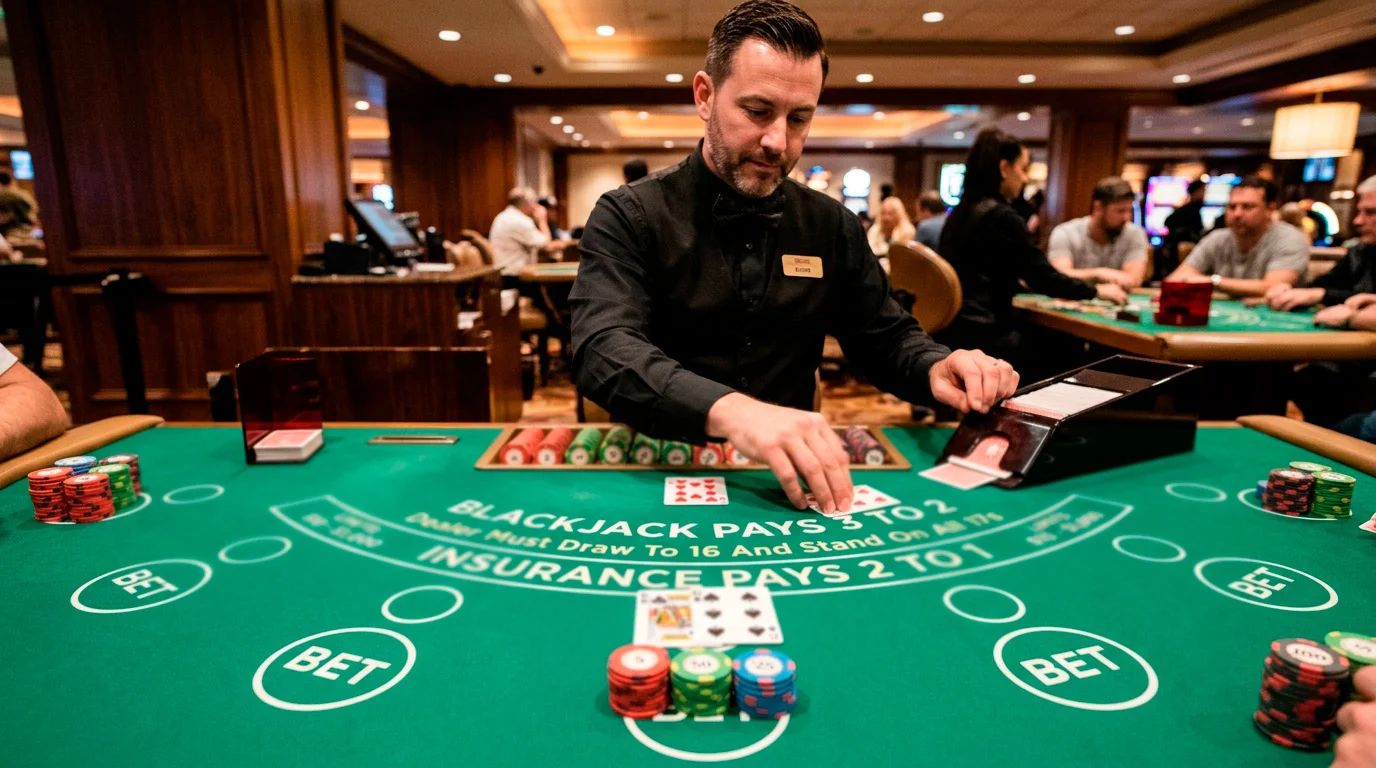
Live blackjack occupies a unique position in the UK online casino market. It is the only mainstream live format where player decisions genuinely affect the mathematical outcome — hit, stand, double, split, surrender. That interactivity, combined with one of the lowest house edges in the casino, makes it the format most likely to attract players who care about the numbers. The live dealer segment grew 31% year-on-year in 2025, and blackjack consistently ranks as the second most-played live game after roulette. What most guides overlook is that the specific rules at the table you sit down at can swing the house edge by a full percentage point or more. Not all live blackjack is equal, and the differences are not cosmetic.
The rest of the live floor: the live casino segment.
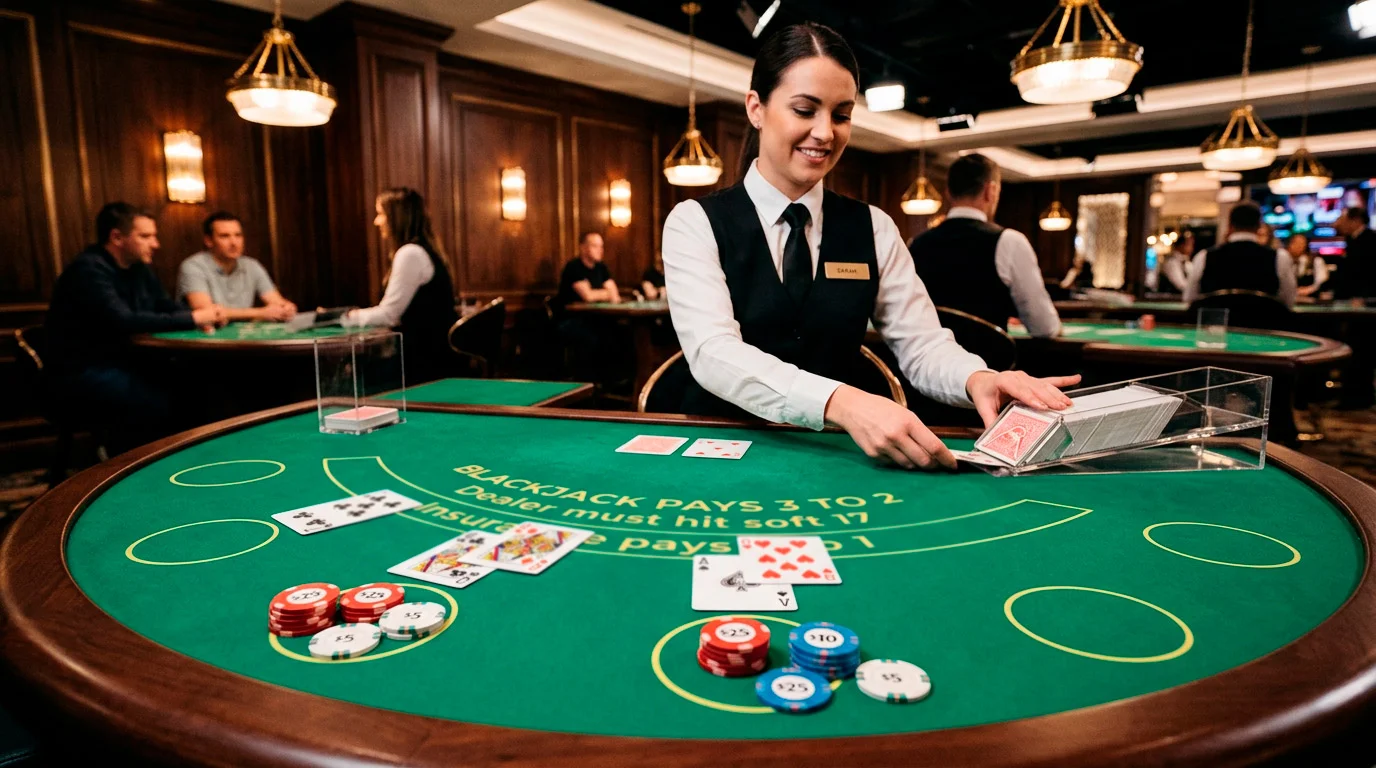
Rule Variations That Shift the House Edge at UK Live Tables
I once pulled up two live blackjack tables side by side at different operators — both from the same provider, both with seven seats, both dealing from eight decks. The house edge at one was 0.43%. At the other, it was 0.65%. Same game, same studio, different rules. The difference came down to three variables that most players never check.
First, dealer stand rules. Some tables require the dealer to stand on all 17s (S17), while others require the dealer to hit on soft 17 (H17). A soft 17 is a hand containing an ace counted as 11 (for example, ace-6). When the dealer hits soft 17, they get an additional chance to improve a mediocre hand, which shifts roughly 0.2% of edge toward the house. This is the single most common rule variation in UK live blackjack, and it is not always clearly displayed on the table interface.
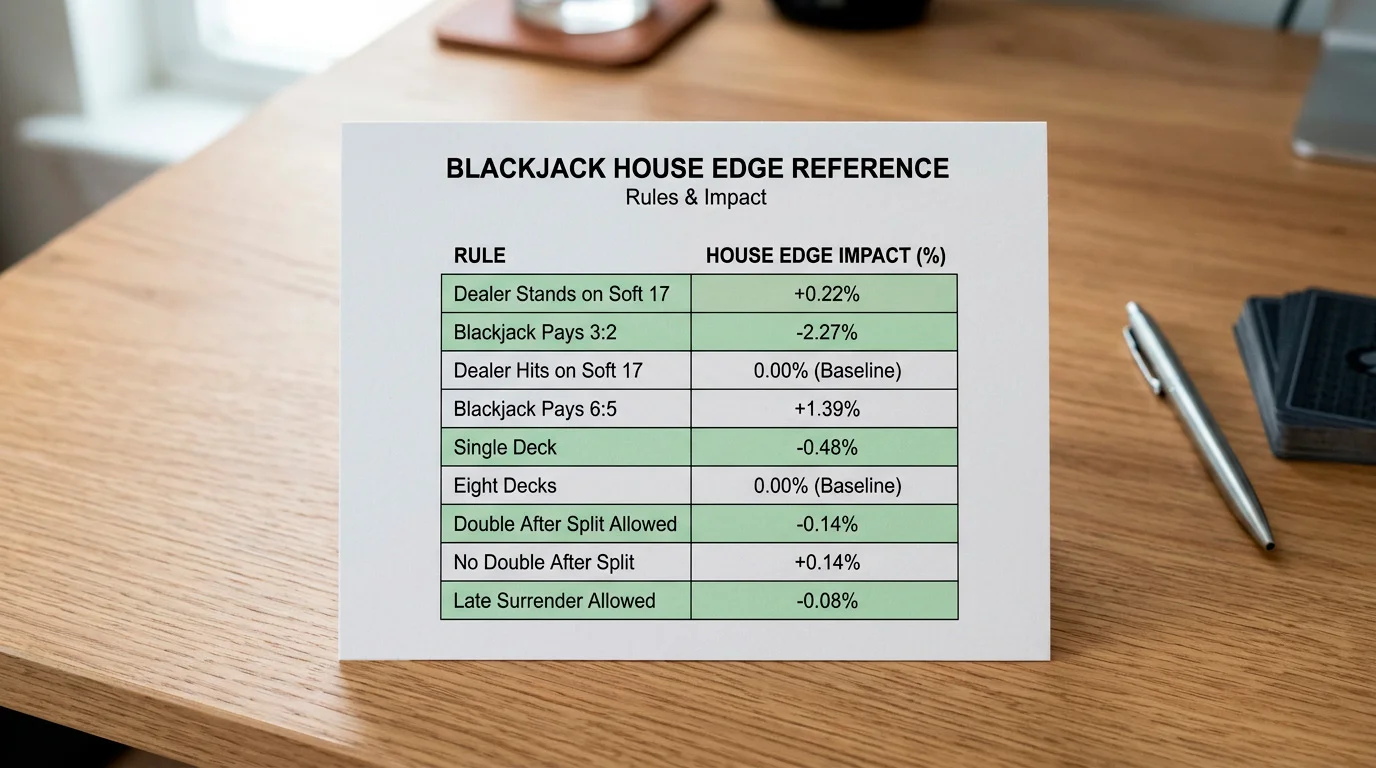
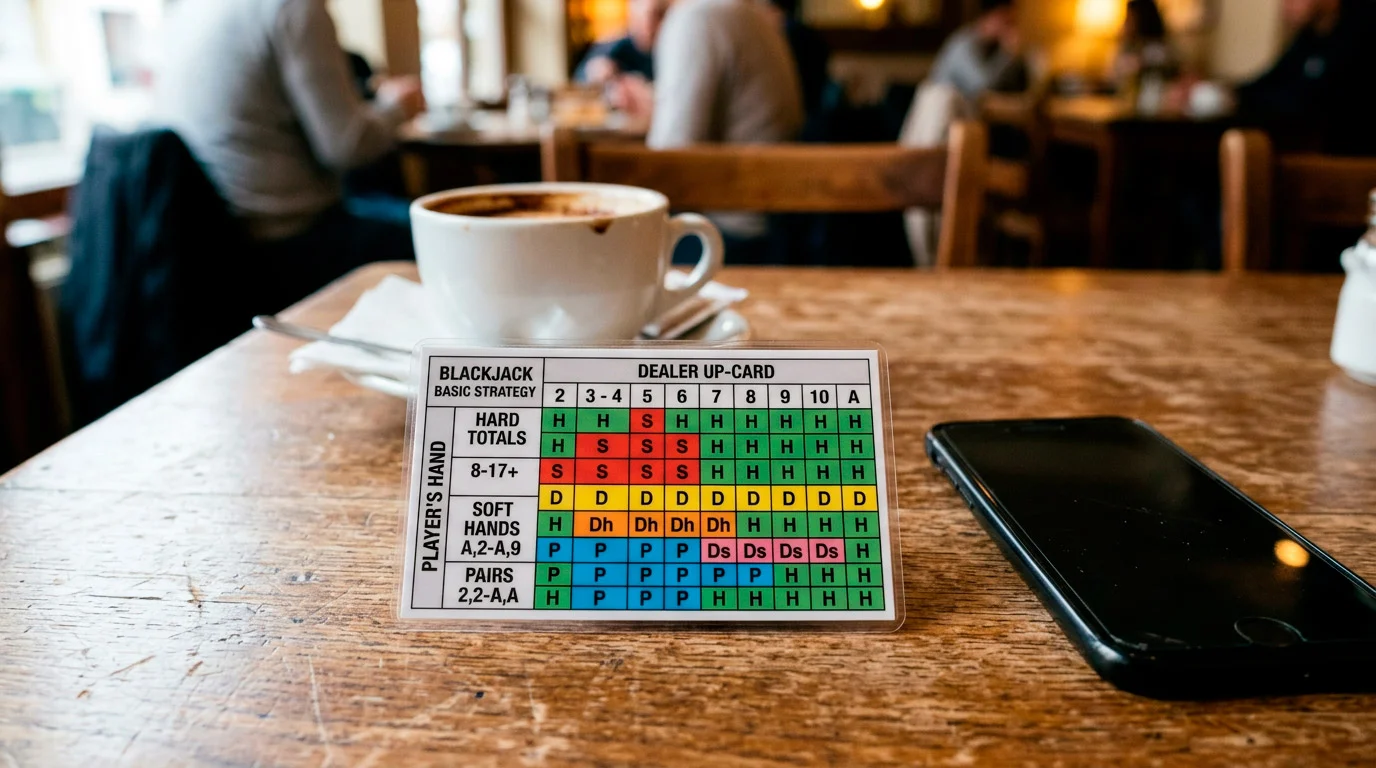
Second, doubling restrictions. Standard blackjack allows doubling on any two cards. Some UK live tables restrict doubling to hard totals of 9, 10, or 11 only. Others permit doubling after splitting while some do not. Each restriction removes a profitable player option, nudging the house edge upward. Doubling after split alone is worth approximately 0.13% to the player — small per hand, but meaningful over hundreds of hands.
Third, the number of times you can split and whether you can re-split aces. Most UK live tables allow splitting up to three times (creating four hands), but aces can usually be split only once, and you receive a single card on each split ace. Allowing re-split of aces is worth about 0.08% to the player. It sounds trivial, but these percentages stack.
Surrender availability is the wildcard. Early surrender (before the dealer checks for blackjack) is virtually nonexistent in UK live games. Late surrender (after the dealer checks) is available at some tables and is worth approximately 0.08% when used with correct strategy. The option to cut losses on a bad hand against a dealer showing 9, 10, or ace has tangible long-run value, and finding a table that offers it is a genuine edge in table selection.
The full picture is in our guide to UK real-money online casinos.
Side Bets: Which Ones Add Fun and Which Just Drain Your Bankroll
Every live blackjack table I have reviewed in the past three years offers at least one side bet, and most offer three or four. They are positioned on the felt like accessories — Perfect Pairs, 21+3, Insurance, Bust It — and they are designed to capture incremental wagers with house edges far above the main game.
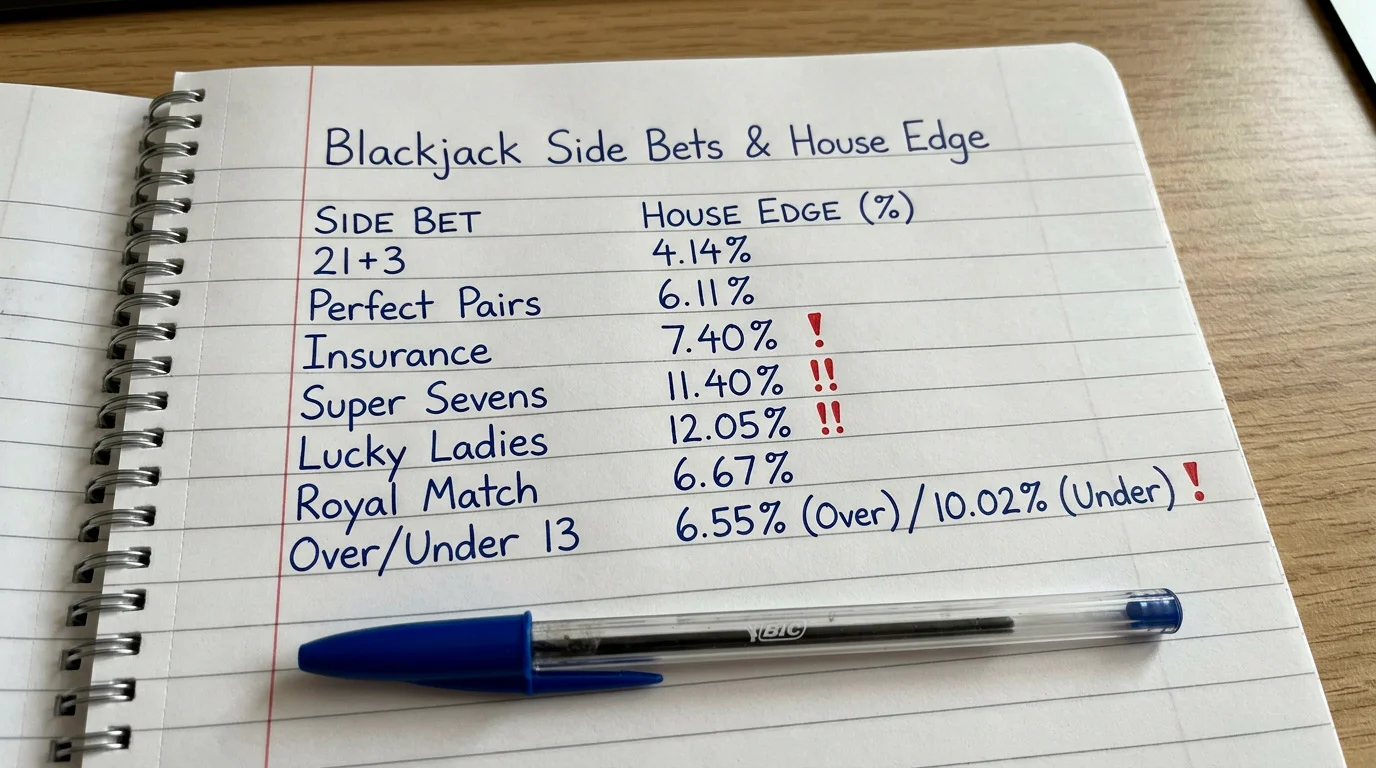
Perfect Pairs pays out when your initial two cards form a pair — same value. The house edge on Perfect Pairs varies by paytable but typically ranges from 4% to 8%. Compare that to the sub-1% edge on the main game. A player who bets £1 on Perfect Pairs alongside every £10 main bet is effectively adding 4-8% extra house edge on 10% of their total action, which degrades their overall return measurably.
21+3 combines your two cards with the dealer’s up card to form a three-card poker hand. Payouts for suited trips or straight flushes can be substantial — up to 100:1 at some tables. The house edge runs between 3.2% and 7.5% depending on the paytable and number of decks. The high-payout potential is what sells this side bet, but the frequency of those premium hands is low enough that the expected return is firmly negative.
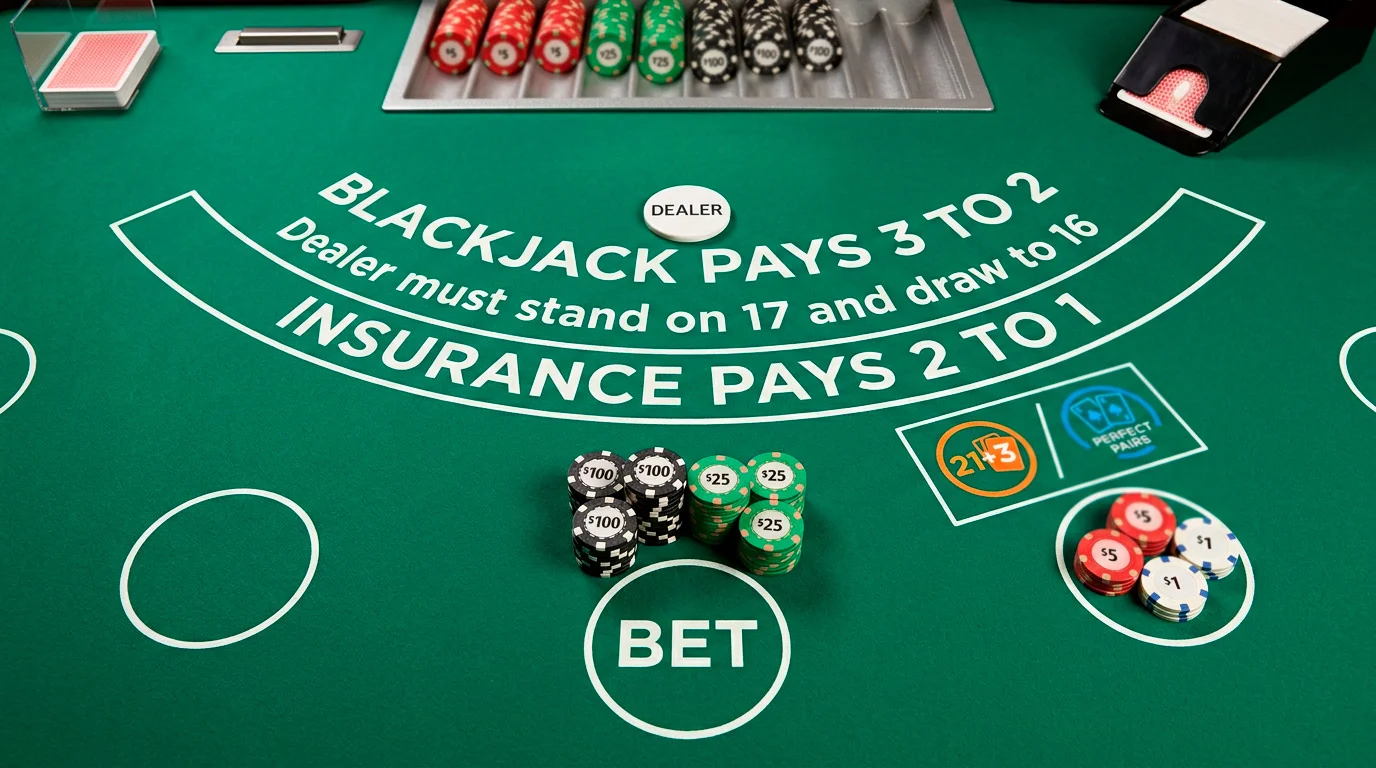
Insurance deserves separate attention because it is not presented as a side bet, even though it functions as one. When the dealer shows an ace, you are offered insurance at 2:1 odds — essentially a bet that the dealer has blackjack. The house edge on insurance in an eight-deck game is approximately 7.4%. In my experience, insurance is the single worst bet available at a UK live blackjack table, and basic strategy recommends declining it in all circumstances unless you are counting cards, which is impractical in a live dealer format dealt from eight shuffled decks.
The summary is straightforward: side bets increase volatility and entertainment but degrade expected value. If you enjoy the occasional speculative bet and accept the cost, that is a personal choice. If you are playing for optimal return, skip every side bet on the table and focus on the main game.
Seat Availability and “Bet Behind”: Playing When Tables Are Full
With approximately 17.4 million UK adults gambling online, peak-hour congestion at live blackjack tables is a genuine issue. Unlike roulette, where an unlimited number of players can bet simultaneously, traditional live blackjack tables have seven seats. When all seven are occupied, new players cannot join until someone leaves.
The “Bet Behind” feature addresses this by allowing you to place bets on a seated player’s hand. You follow their decisions — if they hit, your bet is affected by the outcome of that hit. You cannot override their choices. This creates an agency problem: your money is riding on someone else’s strategy, which may be suboptimal. I have watched Bet Behind players lose when seated players made statistically poor decisions (hitting on 17, standing on soft 14), and the frustration is palpable.
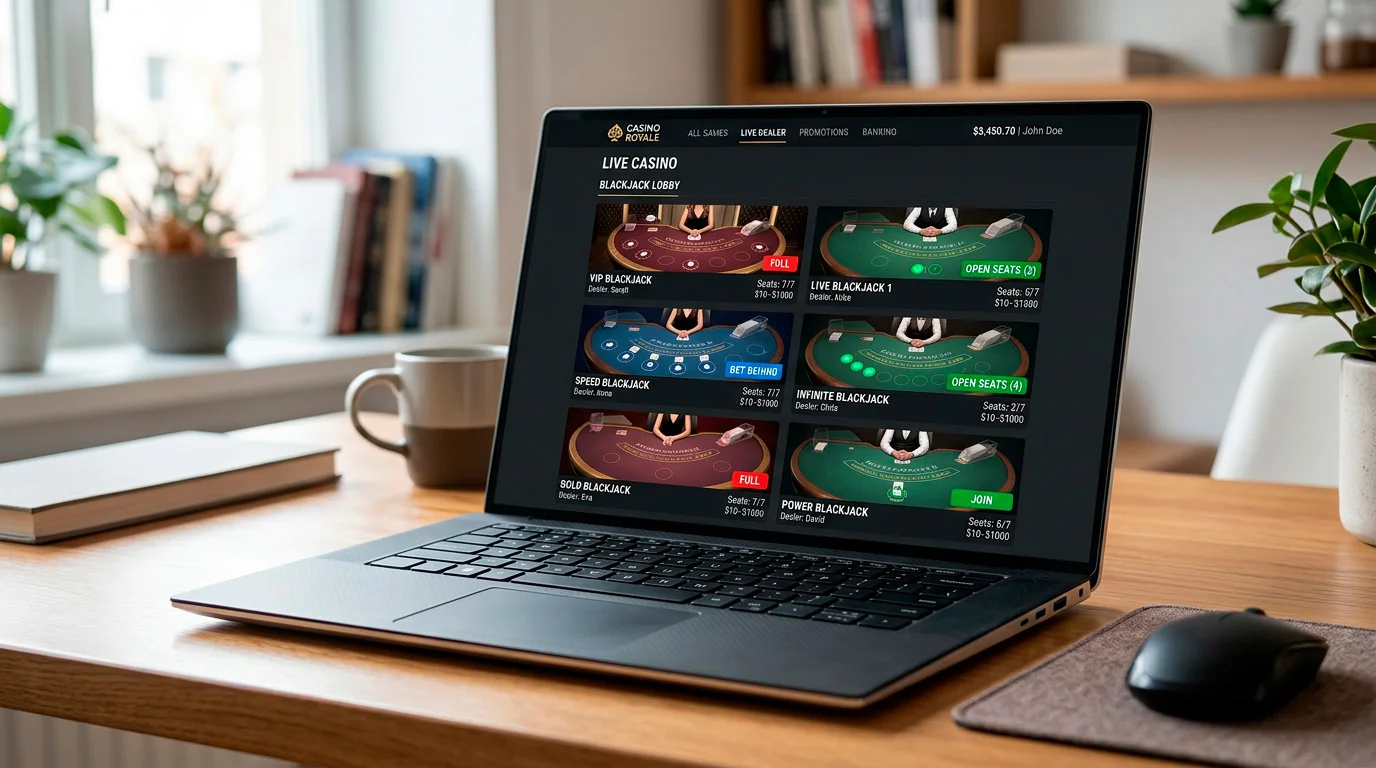
Infinite Blackjack and One-to-Many formats are the provider-level solution to seat scarcity. In these variants, a single dealer deals one hand that all players share for the initial two cards. Splitting and doubling decisions are individualised — each player decides how to play their own copy of the hand. This eliminates seat limits entirely, since every player receives the same starting cards but plays them independently. The trade-off is a modified rule set (often six-to-five blackjack payouts instead of three-to-two), which increases the house edge by roughly 1.4%. The convenience of instant access comes at a mathematical cost.
Timing matters too. Peak hours for UK live blackjack are between 7pm and 11pm GMT, with Saturday evenings being the most congested. If you prefer traditional seven-seat tables, playing during off-peak hours — weekday mornings or early afternoons — gives you the best chance of finding an open seat without resorting to Bet Behind or Infinite formats. For an overview of how the live dealer segment operates and what drives provider selection, the live roulette analysis covers the shared infrastructure and technology that underpins all live games.
Articles
Created by the "onlinecasinorealmoneyuk.com" editorial team.