


Fast withdrawal casino UK searches spike every January — right after the Christmas deposit surge, when players realise their winnings are stuck in a processing queue. I’ve tracked this pattern for years from the regulatory side, and the reality behind withdrawal speed is more layered than any operator’s marketing page admits. The UK’s online gambling sector generated £7.8 billion in gross gambling yield last year, with billions flowing through deposit and withdrawal pipelines daily. Where your money goes after you press “withdraw” involves at least three separate stages, each with its own bottleneck.
The frustrating part is that most delays are predictable — and avoidable, if you understand the system. This guide walks through the actual withdrawal process at UKGC-licensed casinos, ranks payment methods by real-world speed, explains why your first cashout always takes longer than subsequent ones, and covers the regulatory threshold that can pause your withdrawal altogether. No operator rankings. Just the mechanics of getting your money out.
Verification comes first: casino verification.
What Happens After You Hit “Withdraw”: The Step-by-Step Process
I once filed a withdrawal at 11pm on a Friday and watched it sit in “pending” for 72 hours before a single thing happened. That’s not unusual. It’s the normal functioning of a multi-stage system that most players encounter as a single opaque wait.
The withdrawal process at a UKGC-licensed casino typically moves through four phases. The first is the pending period — an internal window, usually 24 to 72 hours, during which the casino holds the request before processing it. During this period, many operators allow you to reverse the withdrawal and return the funds to your playable balance. Some operators have reduced or eliminated the pending period, but it remains standard practice at the majority of UK-licensed sites.
The second phase is internal verification. The casino’s compliance team checks whether any Know Your Customer requirements remain outstanding, whether the withdrawal triggers any enhanced due diligence thresholds, and whether the funds were generated through bonus play (which may involve confirming wagering completion). This phase is where the £150 net deposit threshold enters the picture: since August 2025, operators must initiate a Financial Vulnerability Check if a player’s net deposits exceed £150 within a rolling 30-day period. If your withdrawal request coincides with this trigger, there may be a brief delay while the automated check completes. In most cases, the check is frictionless — a database lookup, not a document request — but it can add hours to the timeline.
The third phase is payment processing. The casino submits the payment instruction to the relevant payment provider — the e-wallet company, the card network, or the bank. This is where the chosen payment method makes its largest difference. E-wallet payments are processed in minutes. Card payments enter the banking network’s settlement cycle. Bank transfers follow BACS or Faster Payments protocols depending on the operator’s banking arrangements.
The fourth phase is settlement — the point at which funds arrive in your account. For e-wallets, this is near-instantaneous once the payment is processed. For debit cards, settlement typically takes one to three business days after the casino releases the funds. For bank transfers, it ranges from same-day (via Faster Payments) to three to five business days (via BACS).
The total elapsed time from clicking “withdraw” to seeing funds in your account is the sum of all four phases. An operator with a 24-hour pending period, same-day verification, and e-wallet processing can deliver funds within 24 to 36 hours. An operator with a 72-hour pending period, manual verification, and BACS bank transfer can take seven business days or more.

One detail that catches players off guard: the reverse withdrawal option. During the pending period, some operators display a “cancel withdrawal” button that lets you return the funds to your playable balance. From the operator’s perspective, this is a retention tool — a player who reverses a withdrawal and continues playing generates additional revenue. From a player’s perspective, it’s a psychological trap. The Gambling Commission has not banned reverse withdrawals, but it has flagged them as a potential harm vector, and a growing number of operators have removed the option voluntarily. If you’re concerned about impulse decisions, choosing an operator that doesn’t offer reverse withdrawals — or one with a zero-hour pending period — removes the temptation entirely.

Weekends and bank holidays add a further dimension. Payment processing teams at many operators run reduced hours outside standard business days. A withdrawal requested on Saturday afternoon may not enter the processing queue until Monday morning. E-wallets partially mitigate this because their payment networks operate 24/7, but the casino’s internal verification step still depends on human availability at most operators. Some larger operators run automated verification systems that process around the clock, but this isn’t universal.
Payment Methods Ranked by Withdrawal Speed
Not all payment methods are equal, and the gap between the fastest and slowest is measured in days, not hours. I track withdrawal timelines across a sample of UKGC-licensed operators as part of my ongoing compliance work, and the data consistently shows the same hierarchy.
E-wallets — PayPal, Skrill, Neteller — sit at the top. Once the casino releases the payment, e-wallet deposits typically arrive within minutes to a few hours. PayPal is the most widely supported e-wallet at UK casinos and benefits from broad consumer trust. Skrill and Neteller, both owned by Paysafe Group, are popular among frequent players but carry higher fee structures for certain transaction types. The same-method rule — which requires operators to return withdrawals to the same method used for the most recent deposit — means you can only withdraw to an e-wallet if you deposited with one. I cover PayPal specifically, including its limits and processing windows, in a dedicated breakdown of PayPal at UK casinos.

Debit cards — Visa, Mastercard — are the default for most UK players. Mobile gaming accounts for over 60% of total UK online gambling revenue, and a significant portion of those mobile deposits are made via saved card details. Withdrawals to debit cards are slower than e-wallets: once the casino processes the payment, the card network’s settlement cycle adds one to three business days. Visa Fast Funds, supported by some operators, can reduce this to hours, but availability varies and isn’t universal.
Bank transfers occupy the slowest tier for standard processing. BACS transfers take three to five business days. Faster Payments — the UK’s real-time interbank system — can deliver same-day transfers, but not all casinos route withdrawals through Faster Payments. If you request a bank transfer and the operator uses BACS, you’re looking at the longest withdrawal timeline of any commonly available method.
Prepaid cards and vouchers — Paysafecard being the most common — generally support deposits only. Withdrawals to Paysafecard are not available at most UK operators, which means depositing via prepaid card forces you to provide an alternative withdrawal method. This creates an additional step and potential delay, especially if the alternative method hasn’t been previously verified.
The practical ranking, from fastest to slowest typical total time: e-wallets (same day to 24 hours after pending period), debit cards (two to five business days total), bank transfers via Faster Payments (one to three days total), bank transfers via BACS (four to seven business days total).
There’s an often-overlooked factor in method selection: mobile compatibility. With over 60% of UK online gambling revenue now coming from mobile devices, many players deposit and play entirely on their phones. E-wallets integrate seamlessly with mobile play — a PayPal deposit via the app takes seconds, and the same account receives withdrawals. Debit card deposits work well on mobile too, but some players report friction when uploading card verification documents (a photo of the front of the card) on smaller screens. Bank transfers are technically possible from mobile banking apps, but the multi-step process — logging into the casino, initiating the withdrawal, then separately confirming via the banking app — makes them the least convenient mobile option.
The method you choose for deposits also constrains your withdrawal options in ways that aren’t always obvious at the point of deposit. If you deposit using Apple Pay — which is increasingly popular for mobile casino deposits — you may find that Apple Pay doesn’t support incoming payments from casinos. Your withdrawal then defaults to the underlying card linked to your Apple Pay wallet, which adds the card network’s settlement time and may require additional verification of the card itself. Planning your withdrawal route at the moment of deposit, not after you’ve won, is the single most effective time-saving measure available.

Why KYC Verification Slows Your First Withdrawal — and How to Prepare
Your first withdrawal at any UKGC-licensed casino will be slower than every subsequent one. That’s not a design flaw — it’s a regulatory requirement, and understanding it saves both time and frustration.
Know Your Customer verification — KYC — is mandated by the Gambling Commission and by anti-money laundering regulations. Before an operator can process a withdrawal, they must verify your identity, your age (confirming you’re over 18), and your address. Most operators collect this information at registration but may not fully verify it until a withdrawal is requested. The result: you can often deposit and play without completing full verification, but you cannot withdraw until every document has been checked and approved.
The standard KYC package includes photo identification (passport or driving licence), proof of address (utility bill or bank statement dated within the last three months), and — in some cases — proof of the payment method itself (a screenshot or photo of the card or e-wallet account). The verification process typically takes 24 to 72 hours, depending on the operator’s compliance team capacity and whether your documents are clear and legible.
The Gambling Commission has drawn an explicit distinction between standard KYC and Financial Risk Assessments. As the Commission stated: “Financial risk assessments are a proposed way of identifying high-spending remote gambling customers who may be in financial difficulties. This is not the same as ‘affordability checks.'” Standard KYC verifies identity. FRAs assess financial vulnerability based on spending patterns. They are separate processes triggered by different thresholds, and conflating them — as many players and even some operators do — creates unnecessary anxiety about the withdrawal process.
The full picture is in our guide to UK real-money online casinos.
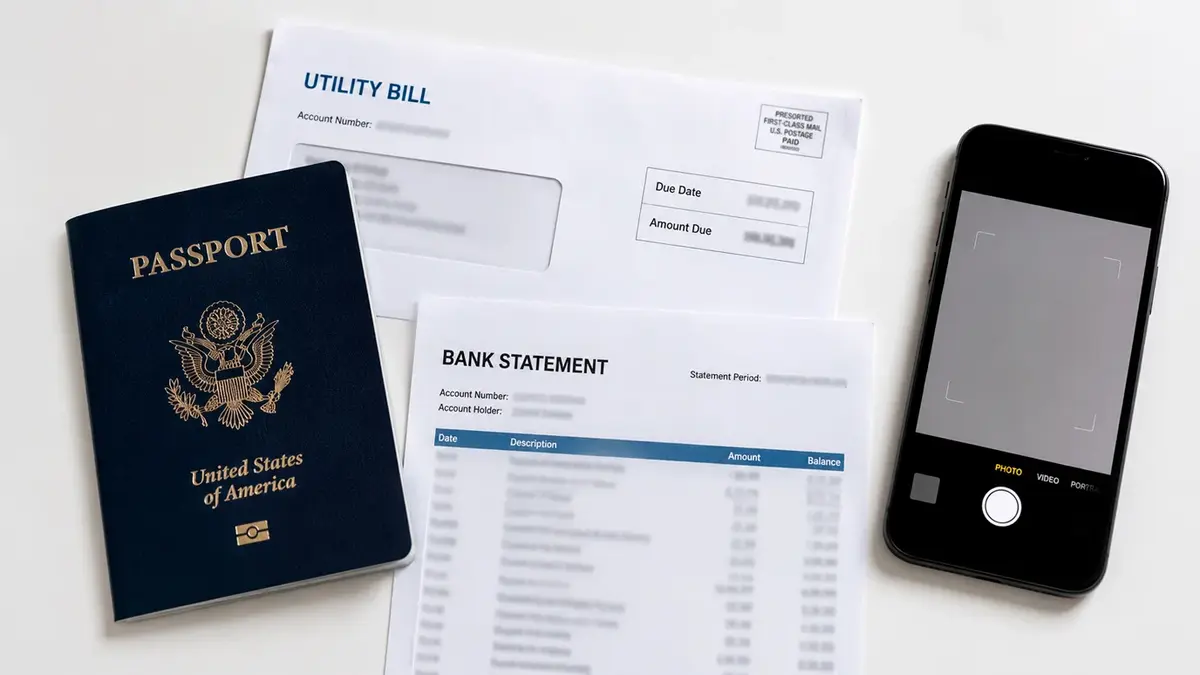
A YouGov survey commissioned by the Betting and Gaming Council found that 65% of British players said they would refuse to provide personal financial documents if required to continue playing. That resistance is understandable but, for standard KYC, somewhat misplaced — the documents requested (ID, address proof) are the same ones required to open a bank account or sign a mobile phone contract. The more intrusive financial documentation — bank statements, payslips — is reserved for FRAs triggered by the £150 net deposit threshold or higher-tier enhanced due diligence, not for routine identity verification.
The practical impact: if you complete your KYC verification before requesting your first withdrawal, the first cashout processes at the same speed as every future one. Most operators allow you to upload verification documents at any time after registration. Doing so proactively, before you have funds to withdraw, eliminates the single largest source of first-withdrawal delay.
Five Ways to Speed Up Your Casino Cashout
After eight years of watching withdrawal complaints cross my desk — from both sides of the operator-player relationship — the patterns are consistent. The players who get their money fastest aren’t lucky. They’re prepared.
First, complete your KYC verification immediately after registration. Don’t wait until you’ve won. Upload your ID, proof of address, and payment method confirmation as soon as your account is created. Verification queues are longest on weekends and Monday mornings. Submit documents midweek if possible.
Second, deposit with the method you want to withdraw to. The same-method rule means your withdrawal goes back to your most recent deposit method. If you deposit with a debit card but want to withdraw to PayPal, you’ll need to make at least one deposit via PayPal first to establish it as a valid withdrawal route. Planning your deposit method as a withdrawal strategy — not just a funding mechanism — saves days.

Third, choose operators that have eliminated or minimised the pending period. Some UK-licensed casinos process withdrawals with no pending period at all — the payment moves to the processing queue immediately. Others hold withdrawals for 24, 48, or even 72 hours. This information is available in the operator’s terms and conditions, usually under “withdrawals” or “banking.” It’s rarely advertised prominently, but it’s the single largest variable in total cashout time that the player can influence through operator selection.
Fourth, stay below the Financial Vulnerability Check threshold if your withdrawal timing is critical. The £150 net deposit threshold triggers an automated check that, while usually seamless, can introduce a delay. If you’ve deposited £200 and withdrawn £60 within the past 30 days, your net deposits sit at £140 — below the threshold. Awareness of your rolling net deposit total gives you a clearer picture of whether a check will be triggered when you request a withdrawal.
Fifth, withdraw in amounts that sit within the operator’s standard processing limits. Large withdrawals — particularly those exceeding £10,000 — often trigger enhanced due diligence, which involves additional compliance checks beyond standard KYC. Splitting a large withdrawal into smaller amounts doesn’t circumvent regulatory requirements (and operators will flag structured transactions), but understanding that larger amounts require more scrutiny helps set realistic timeline expectations.
Withdrawal Limits and Caps: What to Expect in 2026
Every UKGC-licensed operator sets withdrawal limits — daily, weekly, and monthly caps that determine the maximum amount you can cash out within a given timeframe. These limits are disclosed in the operator’s terms and conditions, but finding them often requires scrolling past dozens of paragraphs about bonus rules and game eligibility.
Typical daily withdrawal limits at mid-range UK operators sit between £2,000 and £5,000. Weekly limits commonly range from £10,000 to £30,000. Monthly limits vary more widely, from £20,000 at smaller operators to effectively unlimited at larger, established brands. VIP or loyalty programmes at some operators offer elevated limits, though the criteria for qualification are rarely transparent.
These limits apply to processed withdrawals, not pending requests. If your daily limit is £5,000 and you request a £15,000 withdrawal, the operator typically splits it into three daily payments of £5,000 each, processed over three consecutive business days. The total elapsed time for a large withdrawal is therefore a function of both the payment method’s speed and the daily cap’s constraint.
Progressive jackpot wins present a specific scenario. Many operators include a clause in their terms stating that jackpot wins above a certain threshold — often £100,000 or more — are paid in instalments over weeks or months. This is a cash-flow management tool for the operator, not a regulatory requirement. The Gambling Commission requires operators to pay legitimate winnings in a “timely manner” but does not define a specific maximum payout timeline for large amounts. If you’re playing progressive jackpots, checking the operator’s large-win payout policy before you play is prudent — not because a jackpot is likely, but because the terms are fixed before the event, not after.
Payment method limits add another layer. PayPal, for instance, imposes its own transaction limits independent of the casino’s caps. A casino might allow a £10,000 daily withdrawal, but if your PayPal account has a £5,000 transaction limit, the effective cap is the lower of the two. E-wallet and card limits are set by the payment provider, not the casino, and they can usually be increased by contacting the provider directly — a step most players don’t think to take until they’re already mid-withdrawal.
Currency conversion adds a final consideration for players using payment methods denominated in currencies other than GBP. Some e-wallets hold balances in multiple currencies, and withdrawals from a GBP casino account to a non-GBP wallet balance will incur a conversion fee — typically 2% to 4%. At UKGC-licensed casinos, the gambling itself is conducted in pounds sterling, and withdrawals to GBP-denominated accounts avoid this cost entirely. It’s a minor point for domestic players but a meaningful one for those with multi-currency payment setups.
Casino Withdrawal FAQ
Recommend
Created by the "onlinecasinorealmoneyuk.com" editorial team.