

I spent the better part of January 2026 pulling apart every promotional page I could find from UKGC-licensed operators, and the pattern was unmistakable: the moment the Gambling Commission capped wagering requirements at 10x on 19 January 2026, no-wagering bonuses stopped being a niche selling point. They became just another flavour in a market where every offer suddenly had to look simpler. That shift matters if you are trying to figure out whether a zero-playthrough deal is genuinely better than a standard welcome offer, or whether it is simply the same margins dressed up in friendlier language.
Before the cap, no-wagering bonuses existed as a clear alternative to the 40x or 60x requirements that dominated UK casino promotions. The pitch was obvious — skip the treadmill, keep what you win. Now that the maximum any operator can attach is 10x, the distance between “no wagering” and “low wagering” has compressed dramatically. The question is not whether zero-playthrough offers still exist. They do. The question is whether they still carry the advantage they once promised.
The cap that reshaped them: 10x wagering.
Zero Wagering vs Low Wagering: What’s the Actual Difference
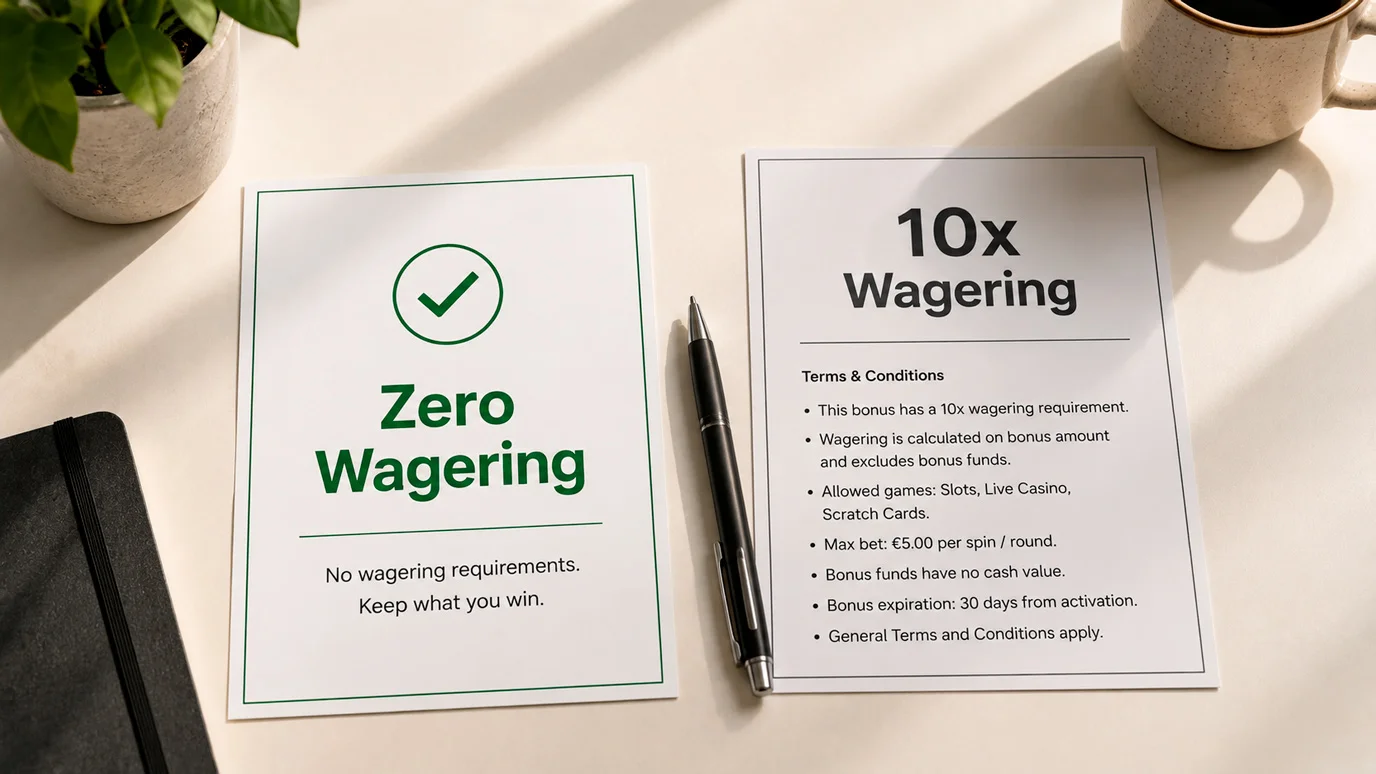
A colleague once described the old wagering landscape as a spectrum from ankle-deep water to open ocean. You had 0x on one shore and 70x on the other, and everything in between. Today, the ocean has been drained to waist height at most. A 10x requirement on a £20 bonus means you need to wager £200 before withdrawing. A 0x requirement on a £10 bonus means you keep whatever you win immediately. On paper, zero wagering still wins. In practice, the gap is far narrower than it was twelve months ago.
The real difference sits in the fine print that surrounds the wagering number itself. No-wagering bonuses typically come with tighter maximum win caps. I have reviewed offers where the bonus was £10 in free spins with 0x wagering but a maximum cashout of £50. A 10x bonus of £20 with a £200 wagering requirement might allow withdrawals up to £500. When you run the expected-value maths on both, the 10x offer can actually return more to the player despite requiring more turnover. The wagering multiplier is one variable in a multi-variable equation, and treating it as the only one that matters is a mistake I see repeated in most competitor guides.

Maximum bet limits during play, game eligibility restrictions, and expiry windows all shape the real value. A no-wagering offer restricted to a single low-RTP slot with a 24-hour expiry is worth less than a 5x offer playable across the full slot library with a 30-day window. The label “no wagering” describes one dimension of a multi-dimensional product.
Why No-Wagering Bonuses Survive the 10x Regulatory Shift
When I first saw the UKGC’s announcement capping wagering at 10x, my initial thought was that no-wagering offers would disappear entirely. If you can only ask for 10x anyway, why bother offering 0x and eating the margin? Six months later, the offers are still here. The reason is marketing differentiation, not player economics.
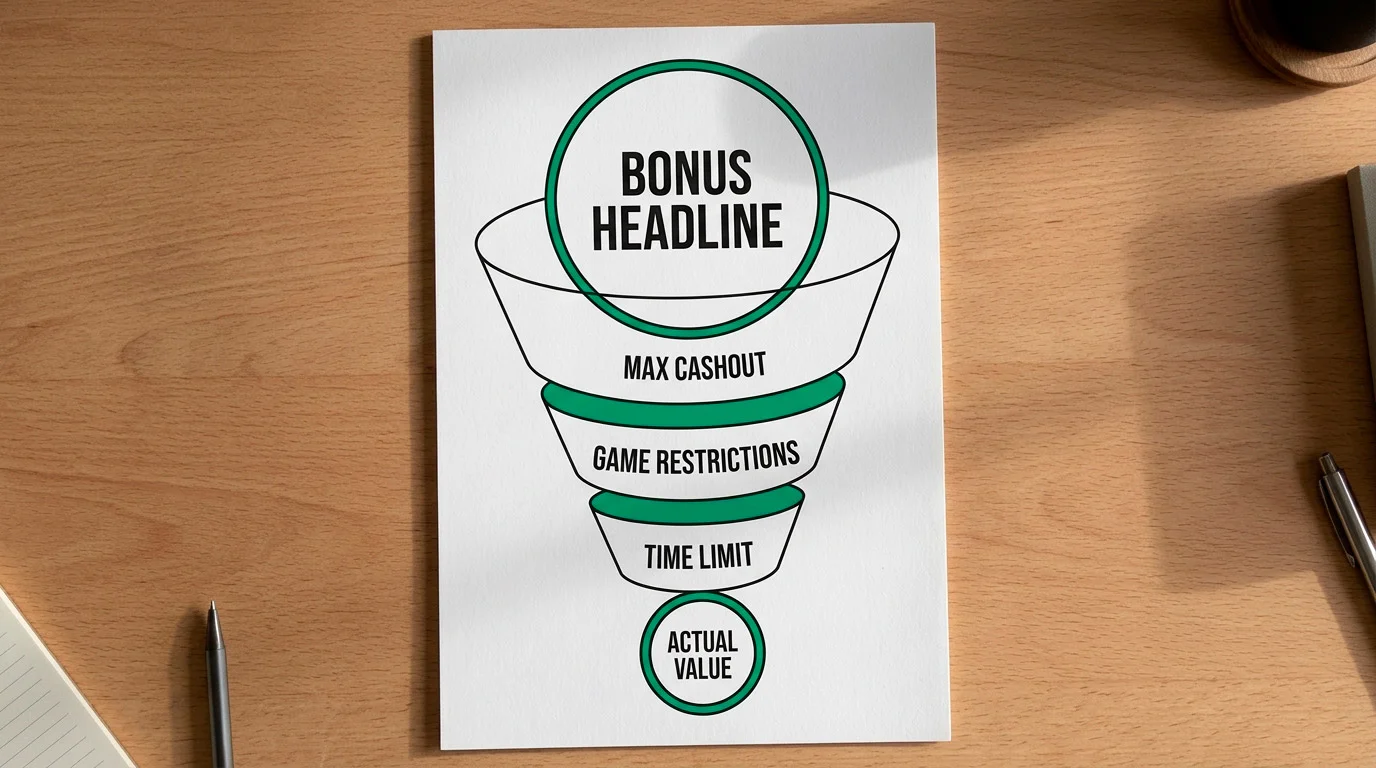
The Remote Gaming Duty increase from 21% to 40%, effective April 2026, squeezed operator margins across the board. Every pound given away in bonuses now costs more to fund because the tax bite on gross gaming yield nearly doubled. Operators offering no-wagering bonuses have responded by reducing the face value of those offers — smaller bonus amounts, fewer free spins, lower maximum wins. The “no wagering” badge remains because it is a recognisable trust signal in a market crowded with near-identical 10x offers. It is a branding tool as much as a financial one.

There is a second, less obvious reason. No-wagering bonuses attract a specific player profile — typically more experienced, more likely to read terms, and less likely to chase losses through extended play sessions. For operators managing their regulatory risk under the new framework, this player segment carries lower compliance costs. The economics work not because the bonus itself is profitable, but because the customer it attracts tends to generate fewer responsible-gambling interventions.
That said, the structural economics are genuinely tight. With the 40% RGD, an operator offering a £10 no-wagering bonus on a slot with 96% average RTP expects to lose roughly £9.60 of that £10 in returned winnings, plus the tax liability on any net yield. The viable range for no-wagering face values has compressed to single digits for most operators. If you see a no-wagering bonus above £20, check the maximum cashout cap — it is almost certainly doing the work that wagering requirements used to do.
The full picture is in our guide to UK real-money online casinos.
How to Evaluate a No-Wagering Offer Beyond the Headline
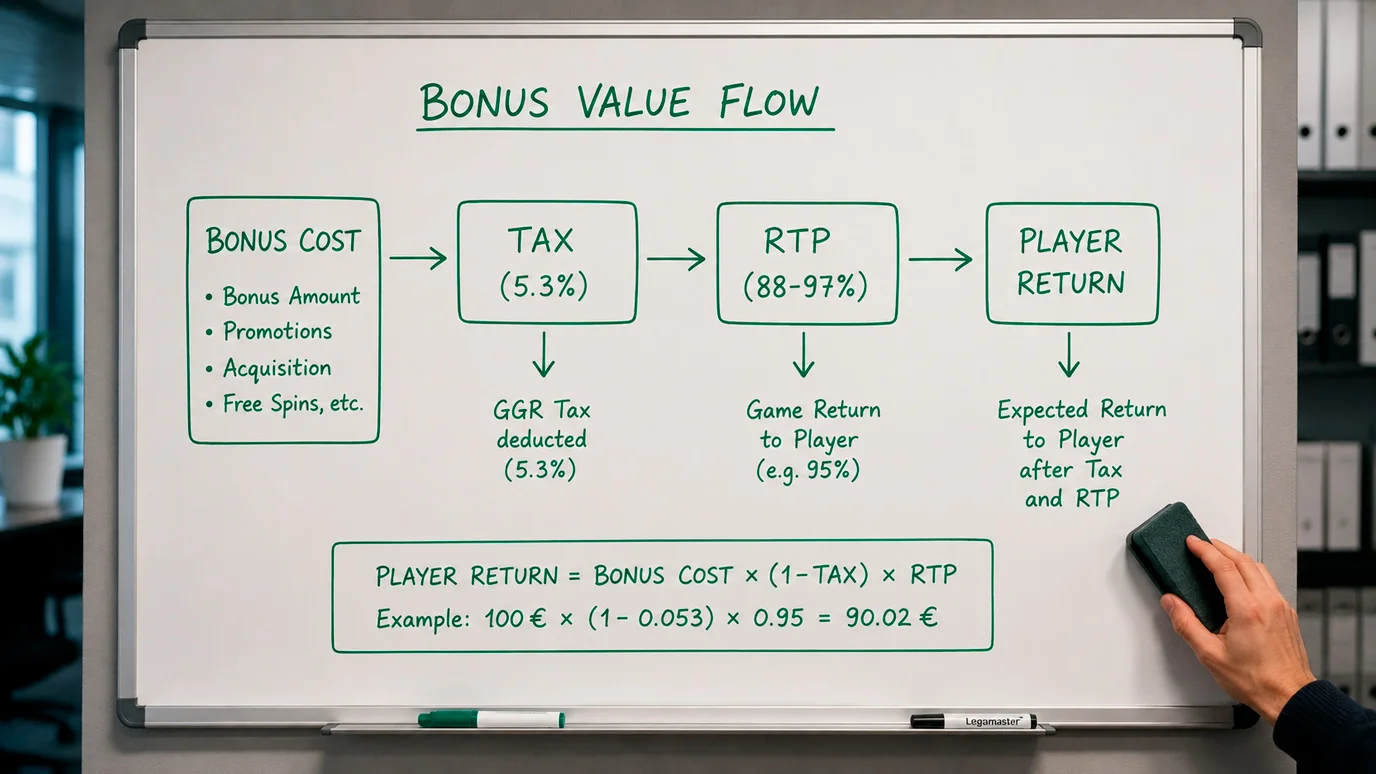
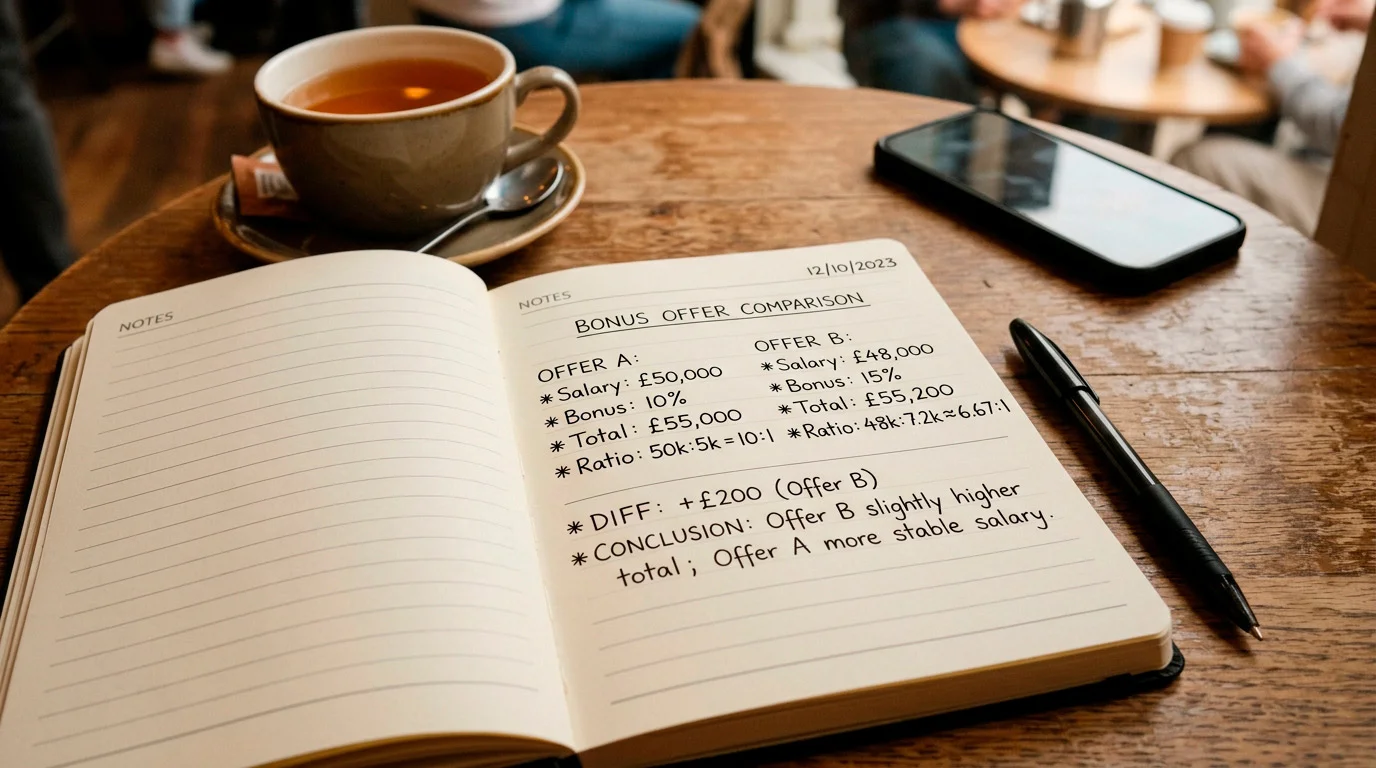
Three years ago, I started keeping a spreadsheet of every no-wagering offer I encountered during licensing audits. The single strongest predictor of actual player value was not the bonus amount or the wagering multiplier — it was the maximum cashout cap divided by the bonus value. I call this the cashout ratio, and it tells you more than any marketing headline.
A £10 bonus with a £100 maximum cashout has a cashout ratio of 10:1. A £5 bonus with a £20 cap has a ratio of 4:1. In my dataset, the average cashout ratio for no-wagering offers in Q1 2026 was approximately 6:1, down from roughly 12:1 in early 2025. That compression mirrors the industry-wide margin squeeze.
Beyond the cashout ratio, pay attention to game weighting. Even with 0x wagering, some offers restrict which games you can play. Free spins locked to a single title are worth whatever that title’s RTP delivers across the number of spins granted, minus the cap. If you receive 20 free spins at £0.10 each on a slot with 96% RTP, the expected return is roughly £1.92 before any cap applies. That is the realistic value of the offer — not the “up to £50” headline.
Time limits deserve equal scrutiny. A 24-hour expiry on free spins forces immediate use, which is not a problem in itself but becomes one if you cannot access the specific game during that window or if the game is undergoing scheduled maintenance. I have seen players forfeit no-wagering spins simply because they did not log in within the window. A 7-day or 30-day window carries substantially more practical value.
Finally, check whether the no-wagering label applies to the bonus itself or only to the winnings. Some operators structure offers so that the bonus amount is non-withdrawable but any winnings from it carry no wagering. This is a meaningful distinction — you are playing with house money that you cannot keep, and only the profit (if any) is yours. The effective value depends entirely on session variance and the cashout cap. For a deeper look at how the 10x cap reshaped the broader bonus landscape, the analysis of UK casino bonuses covers the full regulatory mechanics.
Articles
Created by the "onlinecasinorealmoneyuk.com" editorial team.