

Online slots UK real money is the single largest segment of the country’s regulated online gambling market — and it isn’t close. Around 41% of people who gamble online in the UK play slots or casino games, translating to roughly 7.1 million individuals. I’ve spent the better part of eight years inside the regulatory side of this industry, reviewing operator licence conditions, auditing promotional compliance, and reading more random number generator certification reports than I care to admit. The mechanics underneath those spinning reels are straightforward once you strip away the visual noise, but very few guides bother to explain them properly.
That matters more now than it did two years ago. Since May 2025, UK online slots operate under stake limits — £5 per spin for players aged 25 and over, £2 for those between 18 and 24 — alongside an autoplay ban and the removal of bonus-buy features. These rules changed how people play, how long sessions last, and which types of slots attract the most activity. At the same time, the slot segment itself kept growing: online slot revenue rose by approximately 12% year on year in Q1 2026, outpacing the broader online gambling market.
This guide covers the machinery behind online slots — how random number generators determine outcomes, what RTP and volatility actually measure, and how the 2025 stake limits reshaped the segment. I’m not building a list of games to play. I’m giving you the technical framework to evaluate any slot on your own terms.
The titles with the best return: high RTP slots.
How Online Slots Work: RNG, Paylines, and Game Mechanics
I once sat across from a slot developer who told me, with a straight face, that the graphical reels on screen are “just television.” He meant it literally. The spinning animation, the near-miss where the wild symbol lands one position above the payline, the dramatic slowdown before a bonus trigger — none of it determines the outcome. The result is decided the instant you press the spin button, by a random number generator running in the game server, long before the reels finish their choreography.
The RNG — random number generator — is a software algorithm that produces a sequence of numbers with no discernible pattern. Each number maps to a specific combination of symbols on the reels. When you initiate a spin, the RNG generates a number, the game engine translates that number into a reel configuration, and the visual display animates the result. The process takes milliseconds. Everything you watch on screen after clicking “spin” is presentation, not determination.
UKGC-licensed slots must use RNG systems that have been independently certified by accredited testing laboratories — organisations like eCOGRA, GLI, and BMM Testlabs. These labs verify two things: that the RNG produces statistically random outputs (no predictable sequences) and that the game’s actual payout percentage matches the declared RTP over a sufficiently large sample of outcomes. The certification process involves analysing millions of simulated spins and checking that the observed results fall within expected statistical bounds.
Paylines define the patterns across the reel grid that count as a winning combination. Classic slots might have a single payline running horizontally across the centre of three reels. Modern video slots can have anywhere from 10 to hundreds of paylines — or, in some formats, abandon fixed paylines entirely in favour of “ways to win” systems where any matching symbol on adjacent reels constitutes a win. A 5-reel slot with 243 ways to win evaluates every possible left-to-right combination of symbol positions across all five reels on every spin.
The bet-per-spin amount is typically spread across all active paylines. If you stake £1 on a 20-payline slot, you’re wagering £0.05 per payline. Wins are calculated based on the payline bet, not the total bet, which is why pay tables express returns as multipliers of the line bet rather than the total stake. This distinction catches out new players — a “50x” win on a £1 total bet across 20 lines returns £2.50, not £50.
Bonus features — free spins rounds, pick-and-click games, expanding wilds, cascading reels — add variance and entertainment. From a mathematical standpoint, they are factored into the overall RTP of the game. A slot with a base-game RTP of 90% and a bonus round that, on average, returns the equivalent of 6% produces a combined RTP of 96%. The bonus round doesn’t operate outside the game’s declared payout structure — it’s an integral part of it.
Wild symbols substitute for other symbols to complete winning combinations, functioning like a joker in a card game. Scatter symbols typically trigger bonus features regardless of their position on the reels — they don’t need to land on an active payline. Multipliers increase the payout of a win by a stated factor. These mechanics are universal across providers, though the specific implementations vary. What doesn’t vary is the underlying principle: every feature, every symbol weight, and every bonus trigger probability is governed by the RNG and reflected in the certified RTP.

RTP and Volatility: Choosing Slots by the Numbers
Two numbers tell you more about a slot than any review ever will: RTP and volatility. I learned this the hard way, years ago, when I was still on the operator side and trying to explain to a compliance director why a game with 96% RTP had generated complaints from players who lost their entire balance in under ten minutes. The answer wasn’t that the game was broken. It was that the players — and, frankly, the compliance director — didn’t understand what RTP doesn’t measure.
RTP — Return to Player — expresses the theoretical percentage of all wagered money that a slot returns to players over an extremely large number of spins. The average RTP across UK online slots sits around 96%. That means for every £100 wagered, the game is designed to return £96 and retain £4 as the house edge. But “extremely large number” is doing heavy lifting in that definition. RTP is a long-run statistical average calculated across millions or billions of spins. Over a single session of, say, 200 spins, your actual return will almost certainly deviate — sometimes dramatically — from the theoretical figure.
The highest-RTP slot I’ve encountered with UKGC certification is Ugga Bugga by Playtech, at 99.07%. At the other end of the licensed spectrum, some branded slots and jackpot games sit below 93%. That 6-percentage-point spread represents a significant difference in expected cost per hour of play. If you’re wagering £2 per spin at 100 spins per hour, a 96% RTP slot costs you an expected £8 per hour. A 93% slot costs £14 per hour. A 99% slot costs £2. The RTP isn’t an academic curiosity — it directly determines the price of playing.
Volatility — sometimes labelled variance — describes the distribution of those returns. A low-volatility slot pays out frequently but in small amounts. Your balance fluctuates gently, and sessions tend to be long relative to your starting stake. A high-volatility slot pays out rarely but in larger bursts. You’ll experience longer losing streaks punctuated by occasional significant wins. Both can have identical RTPs. The 96% return is simply distributed differently across the spin population.
Think of it as the difference between a salary and commission-based income. Both might average the same annual earnings, but the monthly experience is entirely different. Low volatility is the steady salary. High volatility is commission — months of low returns followed by a windfall.
Most slot providers label volatility on a three-point or five-point scale — low, medium, high, or adding medium-low and medium-high. These labels aren’t standardised, so a “medium” volatility from one provider might align with a “medium-high” from another. The mathematical measure underneath — standard deviation of returns per spin — is rarely published, making direct comparisons imprecise. What you can do is play a demo version and observe the frequency and size of wins over a sample of 50-100 spins. It’s not a substitute for the actual variance data, but it gives a practical impression.

Choosing between high and low volatility isn’t about which is “better.” It’s about what matches your bankroll and your session expectations. A player with a £20 balance playing a high-volatility slot is likely to lose that balance quickly, because the winning combinations are spaced further apart. The same £20 on a low-volatility slot stretches further but is unlikely to produce a large single win. I cover specific high-RTP titles and what their payout rates mean in practice in a separate analysis of UK slots above 97%.
The £5 and £2 Stake Limits: Impact on Slot Selection and Session Length
On 21 May 2025, the UKGC enforced online slot stake limits: a maximum of £5 per spin for players aged 25 and over, and £2 per spin for anyone between 18 and 24. The same regulatory package banned the autoplay function and removed bonus-buy features from all UKGC-licensed slots. I remember the weeks leading up to enforcement — operators scrambling to update their platforms, compliance teams rewriting terms, and player forums buzzing with confusion about what, exactly, would change.
What changed was more structural than most people expected.
Before the limits, a high-stakes slot player could wager £100 or more per spin on certain games. Sessions were often short and intense — large bets, rapid outcomes, significant swings in balance. The £5 cap fundamentally altered that dynamic. A player who previously wagered £50 per spin now needs ten times as many spins to achieve the same total wagering volume. Sessions became longer by necessity. The same bankroll that once lasted 20 minutes at high stakes now stretches across hours at £5 maximum.
The age-differentiated cap — £2 for 18-to-24-year-olds — reflects the Gambling Commission’s harm data showing higher vulnerability in younger demographics. GAMSTOP registrations among 16-to-24-year-olds grew by 44% year on year, a trajectory the Commission cited as part of its rationale. The lower limit reduces the maximum hourly loss for younger players: at £2 per spin and a typical pace of 600-800 spins per hour (accounting for the autoplay ban, which I’ll address shortly), the maximum theoretical hourly wagering for an 18-to-24-year-old is roughly £1,200 to £1,600. At 96% RTP, that translates to an expected hourly loss of £48 to £64 — still substantial, but significantly lower than the pre-limit maximum.
The autoplay ban had a quieter but arguably deeper impact. Autoplay allowed players to set a number of spins — 50, 100, sometimes unlimited — and let the game execute them automatically. The player watched passively. The removal of this feature forces active engagement: you must press the spin button each time. This adds a cognitive step between each bet, introducing a natural brake on session pace. Industry data from the first quarter post-implementation showed a measurable reduction in average spins per session, though the exact figures vary by operator and remain commercially sensitive.
Bonus-buy features — buttons that allowed players to pay a premium (typically 50x to 100x the base bet) to trigger a bonus round immediately instead of waiting for it to occur naturally — were removed entirely from UK-licensed slots. These features had been controversial because they enabled players to spend large sums in a single click, bypassing the gradual bankroll erosion that base-game play produces. The removal was straightforward in execution: providers simply disabled the feature for UK-facing game instances while maintaining it for jurisdictions without equivalent restrictions.
The combined effect on game design has been notable. Slot providers now develop titles with the UK market’s constraints built in from the start. Games designed for a £5 maximum need to deliver engaging experiences at lower stake levels, which has shifted design emphasis toward more frequent base-game features, shorter bonus round cycles, and visual variety. The era of slots designed primarily around high-stakes, high-volatility, bonus-buy mechanics — at least for the UK market — is effectively over.

For players, the practical takeaway is this: your slot selection now matters more, not less. When everyone is capped at £5, the differentiating factors become RTP, volatility profile, and game mechanics — the structural elements rather than the stake size. A well-chosen low-volatility slot at £5 per spin can deliver a meaningfully different session from a high-volatility slot at the same stake, even though the maximum bet is identical.
Major Slot Providers Licensed for the UK Market
Who builds the game matters at least as much as which casino hosts it. I’ve reviewed licensing files where a single operator listed over 40 slot providers in their portfolio — and the quality gap between the top and bottom of that list was vast. The provider determines the RTP, the volatility model, the certification standard, and the game mechanics. The casino just distributes it.
Playtech has been a fixture of the UK market since the early 2000s. Their portfolio spans classic slots, branded titles, and the Age of the Gods progressive jackpot series. They hold their own UKGC licence as a software supplier, which means their games undergo regulatory scrutiny independently of the casinos that offer them. Playtech’s RTP figures tend to sit in the mid-to-high 90s, with a few outliers — including the 99.07% Ugga Bugga, which remains the highest-RTP slot I’ve encountered in a UKGC-certified environment.
NetEnt — now part of Evolution Gaming Group — built its reputation on titles like Starburst and Gonzo’s Quest, games that became industry standards for visual polish and mechanical innovation. Their UK-licensed portfolio remains extensive, and their RTP figures are generally published transparently in the game rules. NetEnt was among the first providers to adapt its games to the 2025 stake limits, deploying updated UK-specific game builds ahead of the enforcement deadline.
Pragmatic Play expanded aggressively into the UK market over the past three years. Their release cadence is high — multiple new titles per month — and their Sweet Bonanza and Gates of Olympus series attracted substantial player bases. Their approach to volatility skews toward medium-high and high, which suits players who prefer larger but less frequent payouts. Their UKGC licence covers both slots and live casino, giving them a cross-vertical presence that most pure-slot providers lack.
The full picture is in our guide to UK real-money online casinos.

Blueprint Gaming, a subsidiary of the Gauselmann Group, focuses heavily on the UK market. Their slots frequently feature mechanics adapted from land-based fruit machines — a design lineage that resonates with UK players familiar with pub and arcade gaming. Blueprint’s Megaways-licensed titles have been consistent performers in the UK online segment.
Andrew Rhodes, who served as CEO of the UK Gambling Commission through the implementation of the stake limits and beyond, noted on his departure in February 2026 that he was “proud of the progress we have made to strengthen regulation, improve consumer protections, and ensure gambling is safer and fairer.” That progress includes the regulatory framework that governs how these providers operate — the dual licensing of operators and software suppliers, the certification requirements for RNG and RTP, and the enforcement actions against non-compliant games. The provider landscape is shaped as much by regulation as by commercial competition.
Slot Categories: Classic, Video, Megaways, and Jackpot
Walk into any UK online casino lobby and you’ll see hundreds — sometimes thousands — of slot titles. The sheer volume can be paralysing. But every game on that grid falls into a handful of structural categories, and knowing those categories tells you more about what to expect than any thumbnail image or catchy name.
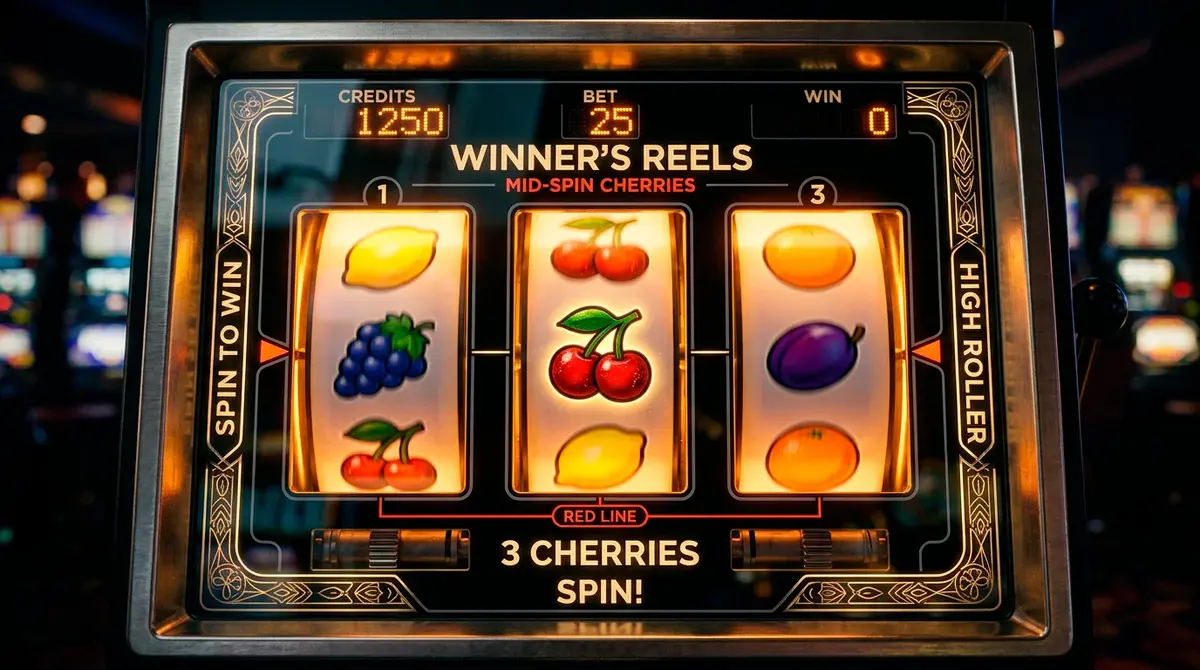
Classic slots replicate the format of traditional three-reel fruit machines: limited paylines (usually one to five), simple symbol sets (fruits, bars, sevens), and minimal bonus features. They tend toward low volatility and straightforward gameplay. Their audience in the UK market is smaller than it once was, but they retain a dedicated player base — particularly among those who transitioned from land-based fruit machines to online play. The simplicity is the point: fewer variables, more predictable sessions.
Video slots dominate the market by volume and revenue. These are five-reel (or more) games with extensive payline structures, themed graphics, narrative elements, and layered bonus features. The category is broad enough to encompass everything from a 10-payline retro-styled game to a 117,649-way Megaways title. Video slots account for the majority of the 12% year-on-year slot revenue growth recorded in Q1 2026 — the segment’s expansion is driven primarily by new video slot releases and the engagement mechanics they deploy.
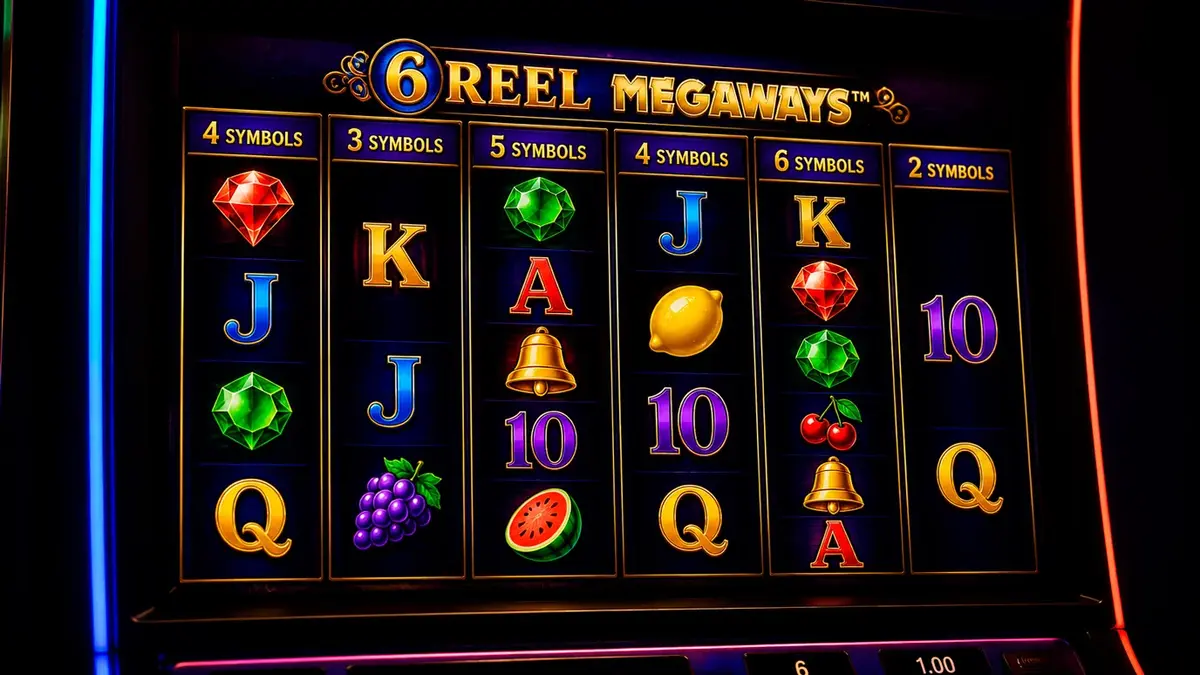
Megaways slots deserve a separate mention despite technically being video slots. Developed under licence from Big Time Gaming, the Megaways engine uses a variable reel modifier that changes the number of symbols visible on each reel with every spin. A six-reel Megaways slot can produce up to 117,649 ways to win on a single spin — or as few as 64. This variability creates high volatility inherently, because the number of potential winning combinations fluctuates wildly. Megaways titles became enormously popular in the UK market between 2020 and 2024, and several providers — Blueprint, Pragmatic Play, Red Tiger — hold licences to build games using the engine.
Progressive jackpot slots pool a small percentage of each bet into a shared prize fund that grows until a player triggers the jackpot. These games typically carry lower base-game RTPs — often 92% to 94% — because part of the theoretical return is allocated to the jackpot contribution. The trade-off is explicit: you accept a higher base-game house edge for the chance at a life-changing payout. Networked progressives, where jackpots are shared across multiple casinos, can reach seven-figure sums. Non-networked progressives, confined to a single operator, grow more slowly and pay out at lower thresholds.
Understanding which category a slot belongs to isn’t trivial — it sets expectations for volatility, session length, and the nature of wins. A player who enjoys steady, low-variance gameplay will likely find a high-volatility Megaways slot frustrating, regardless of how visually appealing it is. Conversely, someone looking for the possibility of a large payout from a modest stake will find classic three-reel games underwhelming. The category choice is really a bankroll management decision disguised as a preference.

Online Slots FAQ
Articles
Prepared by the onlinecasinorealmoneyuk.com editorial staff.