


Safe online casinos UK is, at its core, a licensing question — and the answer starts with 741 Cease-and-Desist notices. That’s how many the UK Gambling Commission issued in the 2025-2026 financial year alone, alongside reporting 397,527 URLs to search engines and disrupting 1,134 unlicensed websites. I’ve spent my career on the regulatory side of this industry, and those numbers tell a story that most casino review sites never touch: the safety of UK-licensed platforms isn’t an abstract claim. It’s a measurable enforcement output backed by statute, funding, and active investigation.
But UKGC licensing also has limits. It guarantees certain protections and leaves others to the operator’s discretion. Understanding what the licence actually covers — and where it stops — is the difference between informed trust and blind faith. This guide explains the legal framework, shows you how to verify a licence in under a minute, and breaks down what happens when things go wrong, including the growing threat of a £16.6 billion black market operating outside all of these protections.
What to do when it goes wrong: the complaints procedure.
The UK Gambling Act and the Commission’s Remit
I often get asked whether online casino gambling is “legal in the UK.” The question itself reveals how poorly the legal framework is understood — and, to be fair, it isn’t simple. The answer isn’t just “yes.” It’s “yes, under specific conditions, governed by a specific statute, enforced by a specific body.”
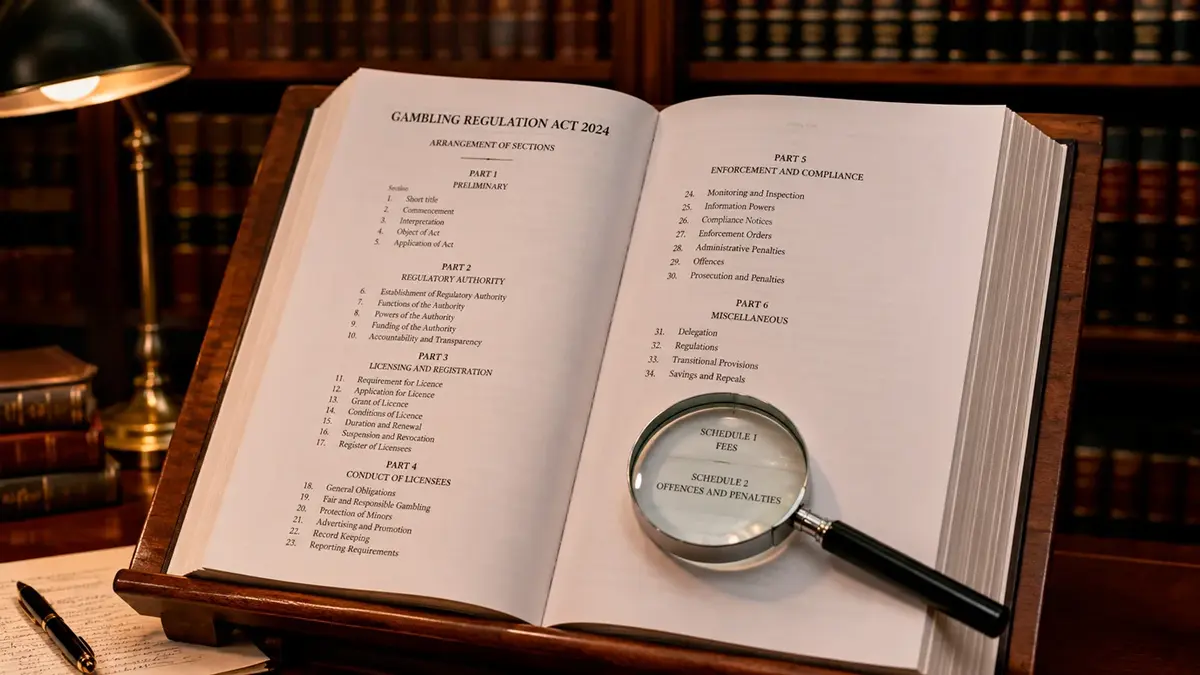
The Gambling Act 2005 is the primary legislation governing all forms of gambling in Great Britain (England, Scotland, and Wales — Northern Ireland operates under separate legislation). The Act established the Gambling Commission as the independent regulatory body responsible for licensing, compliance, and enforcement. It replaced a patchwork of older laws and created a unified framework that covers land-based gambling, online gambling, lotteries, and betting.
For online casinos, the Act requires any operator offering gambling services to consumers in Great Britain to hold a remote operating licence issued by the Gambling Commission. This requirement applies regardless of where the operator is based. A company headquartered in Malta, Gibraltar, or the Isle of Man that accepts UK customers must hold a UKGC licence in addition to any local licence it may possess. Operating without one is a criminal offence.
The Gambling Commission’s remit under the Act has three statutory objectives: keeping gambling crime-free, ensuring gambling is conducted fairly and openly, and protecting children and vulnerable people from gambling-related harm. These aren’t aspirational goals — they’re the legal basis for every licence condition, every enforcement action, and every regulatory intervention the Commission undertakes.
The licensing process itself is rigorous by international standards. Applicants for a remote operating licence must demonstrate financial viability, technical competence, and a comprehensive approach to social responsibility and anti-money laundering. Key personnel — directors, beneficial owners, anyone with significant management functions — undergo personal background checks. The process typically takes several months, and the Commission can reject applications or attach specific conditions to licences based on the risk profile of the applicant.
Once granted, a licence is not permanent. It’s subject to ongoing conditions that the operator must meet throughout its period of validity. These Licence Conditions and Codes of Practice — the LCCP — cover everything from advertising standards and age verification to complaints handling and responsible gambling tool implementation. Breach of an LCCP condition can trigger enforcement action, and the Commission publishes a regularly updated version of the LCCP that reflects new regulatory requirements. The 2025 and 2026 reforms — stake limits, the wagering cap, the Statutory Levy — all entered the LCCP as specific conditions that licensed operators must comply with.
What the Act doesn’t do is guarantee that every licensed operator will be well-managed, well-funded, or well-intentioned. The licence sets a floor, not a ceiling. An operator can be fully licensed and still provide poor customer service, slow withdrawals, or a limited game selection. The licence protects against specific risks — fraud, unfair games, fund misappropriation — but it doesn’t certify quality. I cover the full legal framework, including player obligations and tax implications, in a separate piece on UK online casino legality.
How to Verify a Casino’s UKGC Licence in 60 Seconds
Three clicks. That’s all it takes — and the fact that most players don’t bother is, frankly, baffling to me. I’ve seen cases where players deposited four-figure sums at sites that turned out to be completely unlicensed, because they never checked.
Every UKGC-licensed operator is required to display their licence number on their website, typically in the footer. The licence number follows a format like “000-012345-R-123456.” The “R” denotes a remote (online) licence. If you can’t find a licence number on the site, that’s the first red flag — and, in many cases, the only one you need.
Once you have the number, go to the Gambling Commission’s public register. The register is a searchable database of all current and historical licences. Enter the operator’s name or licence number, and the register returns the licence status (active, surrendered, suspended, or revoked), the licence holder’s legal name, and the activities covered by the licence (remote casino, remote betting, remote bingo, and so on).
Pay attention to the distinction between a “remote casino operating licence” and a “remote casino ancillary licence.” An operating licence authorises the company to provide gambling services directly to consumers. An ancillary licence covers support activities — software supply, hosting, payment processing. If a website displays only an ancillary licence number, it may not be authorised to accept bets directly. This distinction trips up players who see a valid licence number and assume it covers everything.
Also check the licence holder’s legal name against the brand name of the casino. Large operator groups run multiple brands under a single licence. The company listed on the register may be “XYZ Holdings Ltd” while the casino you’re looking at is branded as something entirely different. This is normal and legal, but confirming the connection — usually stated in the casino’s terms and conditions or “About Us” page — adds an extra layer of verification.
The entire process takes under a minute. It’s the single most effective safety check available to any UK player, and it costs nothing.

Player Protections Mandated by UKGC: Funds, Fairness, and Complaints
Licensing isn’t just a badge. It activates a set of mandatory protections that every licensed operator must implement, regardless of size, brand, or market position. I’ve audited these protections across dozens of operators, and the variation in how well they’re implemented is wider than most players realise — but the baseline requirements are non-negotiable.
Fund protection is the most consequential. UKGC-licensed operators must hold player funds in a way that provides a defined level of protection in the event of insolvency. The Commission categorises fund protection into three tiers: “basic,” “medium,” and “high.” At the basic level, player funds are identified and tracked in the operator’s accounts but are not ring-fenced from the company’s operating capital. At the medium and high levels, funds are held in separate accounts with varying degrees of legal protection against creditor claims. The operator’s level of fund protection must be disclosed to players — it’s typically stated in the terms and conditions. Choosing an operator with “high” fund protection means your balance is held in a legally segregated account that cannot be accessed by the company’s general creditors if the operator goes bankrupt.
The UKGC allocated £26 million in additional enforcement funding to address regulatory compliance and combat the unlicensed market — a figure that reflects the scale of the Commission’s operational remit. Part of that funding supports the compliance infrastructure that ensures operators maintain these protections in practice, not just on paper.
Game fairness is enforced through mandatory RNG certification and RTP disclosure. Every game offered by a UKGC-licensed operator must use a random number generator certified by an accredited testing laboratory. The operator must also make game rules and RTP information accessible to players. This doesn’t mean the RTP is prominently displayed — in many cases, it’s buried in the game’s help file — but it must be available.
Responsible gambling tools are another mandated layer. Licensed operators must offer deposit limits (daily, weekly, monthly), session time reminders, cool-off periods, and self-exclusion — both through the operator’s own systems and via GAMSTOP, the national multi-operator self-exclusion scheme. These tools must be accessible from within the player’s account, and the operator cannot make them difficult to find or use. The requirement extends to how operators respond when a player shows signs of potential harm: interaction triggers, such as sustained losses or erratic deposit patterns, must prompt a contact from the operator’s responsible gambling team.

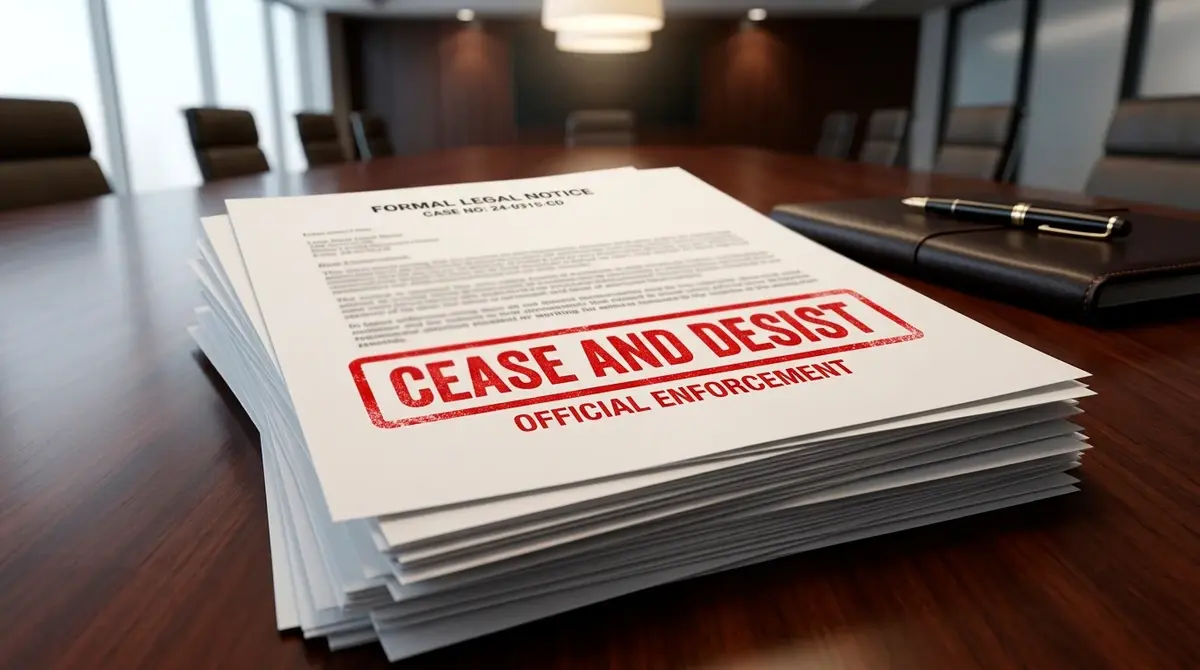
Complaints handling follows a prescribed process. Operators must have an internal complaints procedure that resolves disputes within eight weeks. If the complaint is unresolved or the player is dissatisfied with the outcome, the operator must direct the player to an approved Alternative Dispute Resolution provider — an independent body that adjudicates the dispute. ADR decisions are binding on the operator but not on the player, who retains the right to pursue legal action. Tim Miller, the Gambling Commission’s Executive Director, detailed the Commission’s enforcement posture at the 2026 Ethical Gambling Forum, noting that in the 2025-2026 year alone the Commission issued 741 Cease-and-Desist actions, reported nearly 400,000 URLs for removal, and disrupted over 1,100 unlicensed sites. That enforcement activity underpins the protections that licensed players rely on.
The £16.6 Billion Black Market: Why Unlicensed Sites Are Dangerous
Here’s a number that should unsettle anyone who plays at online casinos in the UK: £16.6 billion. That’s the estimated total amount staked with unlicensed operators in Britain in 2025, according to data from H2 Gambling Capital. To put that in context, it’s more than double the regulated online segment’s gross gambling yield for the same period. The black market hasn’t just grown — it has tripled since 2019, when it sat at approximately £5 billion.
The regulated market’s share has dropped from 97% in 2019 to 92% in 2025. An 8% unlicensed share might sound manageable until you consider the absolute numbers involved and the trajectory: H2 Gambling Capital forecasts that stakes with illegal operators could nearly double again to £33 billion by 2028 if current trends continue.
Why does this matter to you as a player? Because unlicensed sites operate without any of the protections described in this article. There is no fund protection — your deposit sits in whatever account the operator chooses, with no segregation and no regulatory oversight. There is no RNG certification — the games may not be fair, and there’s no independent body verifying that they are. There is no complaints procedure — if the operator refuses to pay your winnings, your recourse is effectively zero. There is no GAMSTOP integration — self-excluded players can access these sites without restriction, which defeats the purpose of self-exclusion entirely.
The growth of the unlicensed market is partly a consequence of the regulatory tightening in the licensed sector. Enhanced KYC requirements, financial vulnerability checks, stake limits, and the 40% Remote Gaming Duty have collectively increased friction and reduced the perceived value of playing at regulated sites. Some players — roughly 5.8% of UK gamblers, according to UKGC research — have turned to VPNs to access offshore gambling platforms that don’t impose these constraints. The irony is stark: the regulations designed to protect players are, in some cases, pushing them toward sites where no protection exists at all.
I’m not arguing against regulation — I’ve spent my career supporting it. But the black market isn’t a hypothetical risk. It’s a documented, growing, £16.6 billion reality that every UK player should understand. Playing at unlicensed sites means accepting every risk that the UKGC licensing framework was built to prevent.

How do players find unlicensed sites in the first place? The routes are multiple: social media advertising (which falls outside UKGC jurisdiction when served from overseas), search engine results for terms like “casino no verification” or “casino not on GAMSTOP,” Telegram and Discord communities sharing referral links, and direct recommendations from other players. Search engines have cooperated with the UKGC on URL removal — 266,667 URLs were delisted in the most recent reporting period — but the rate of new unlicensed sites appearing outpaces the takedown rate. For every site removed, multiple replacements emerge under different domains.
The tell-tale signs of an unlicensed operation are consistent: no UKGC licence number displayed, acceptance of cryptocurrency as the only or primary payment method, no KYC verification required, and promotions that would be illegal under UKGC rules (wagering above 10x, bonus-buy features on slots, autoplay enabled). If a site offers to let you play without providing any identification, it’s operating outside the regulatory framework — and outside every protection that framework provides.
The full picture is in our guide to UK real-money online casinos.
UKGC’s Enforcement Record: Fines, Suspensions, and URL Takedowns
Regulation without enforcement is just paperwork. The Gambling Commission’s record over the past two years suggests they understand this — though whether the enforcement is sufficient to stem the black market’s growth is a separate and more difficult question.
In the 2025-2026 financial year, the Commission’s enforcement activity included 741 Cease-and-Desist actions against unlicensed advertisers and operators, the reporting of 397,527 URLs to search engines (with 266,667 removed as a result), referral of 1,068 websites for delisting, and disruption of 1,134 websites through takedowns or geo-blocking. These figures were disclosed by Tim Miller at the 2026 Ethical Gambling Forum and represent the most granular enforcement data the Commission has published.
Against licensed operators, the Commission’s primary enforcement tools are financial penalties, licence reviews, and — in severe cases — licence suspension or revocation. Regulatory settlements (the Commission avoids the term “fines” for technical reasons) have run into the millions of pounds for individual operators found to have breached social responsibility or anti-money laundering conditions. These penalties are published on the Commission’s website, creating a public record that serves both as punishment and deterrent.
The Commission also conducts compliance assessments — site visits and remote audits that evaluate an operator’s adherence to licence conditions. These assessments can be triggered by complaints, financial irregularities, or as part of routine regulatory activity. Operators found to be non-compliant during an assessment face escalating consequences: first an improvement plan, then formal warning, then regulatory action up to and including licence review.
Personal licence holders — the individuals behind the companies — face their own regulatory risk. The Commission can review and revoke personal management licences, effectively barring individuals from working in the regulated gambling industry. This personal accountability mechanism distinguishes the UKGC from some other gambling jurisdictions where enforcement targets companies but not the people running them. When a compliance failure is traced to a specific decision by a specific individual, the Commission has the tools to hold that person accountable — and has used them.
The £26 million in additional funding allocated to the Commission for enforcement marks a significant increase in capacity. Whether it’s sufficient to address a black market that H2 Gambling Capital estimates at 8% of all UK gambling activity remains to be seen. The enforcement machinery exists. The question is whether it can scale fast enough to match the problem.
Casino Safety FAQ
Articles
Prepared by the onlinecasinorealmoneyuk.com editorial staff.