

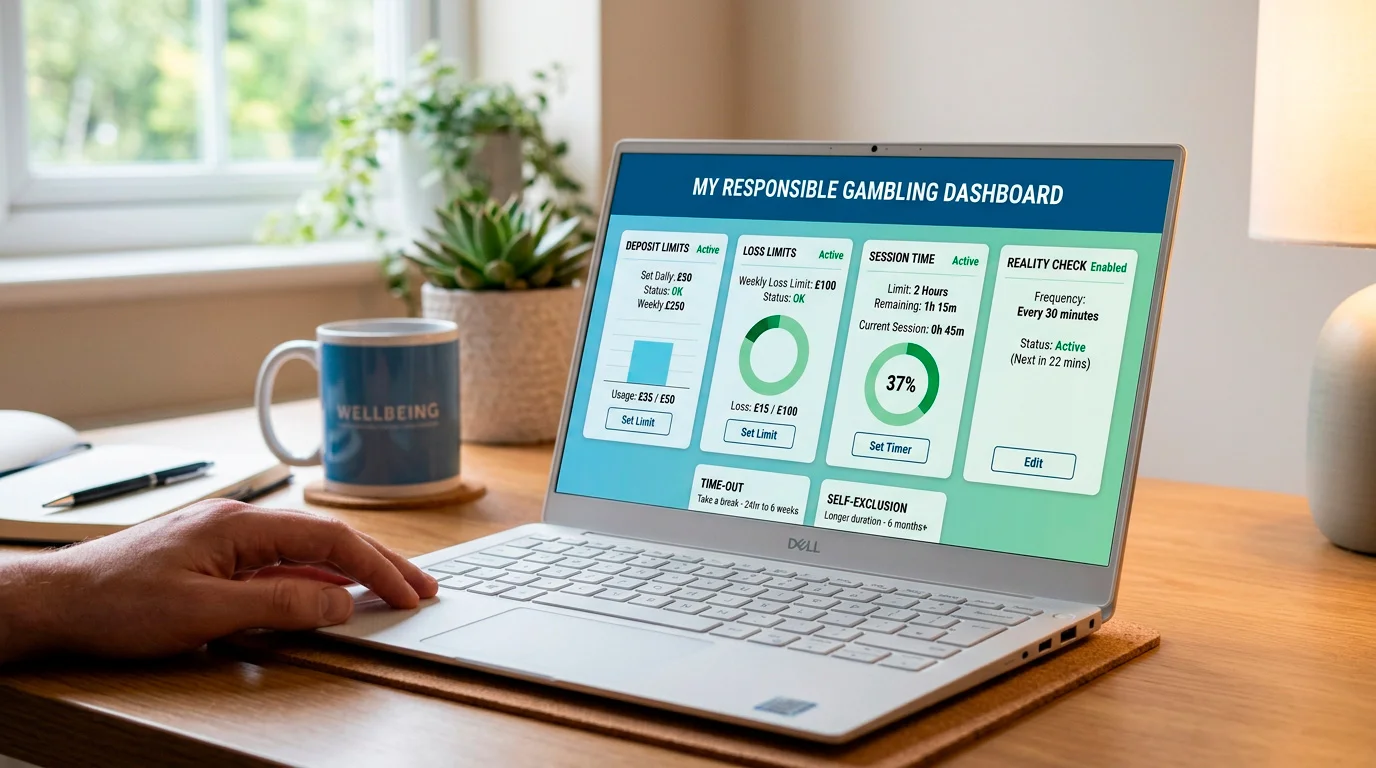
Self-exclusion through GAMSTOP is the nuclear option — total lockout from all UKGC-licensed sites. Deposit limits set a financial ceiling. But between unrestricted play and full exclusion sits a layer of tools that most players never use, largely because operators bury them three clicks deep in account settings. Time-outs, reality checks, session duration limits, and activity statements exist at every UKGC-licensed casino, and after reviewing how they function across dozens of platforms, I can say that their effectiveness depends entirely on whether you set them up proactively and whether you take them seriously when they activate. The Gambling Survey for Great Britain recorded a problem gambling rate of 2.7% — but the larger story is the gradient of players between “fine” and “in trouble,” where these intermediate tools can intervene before the situation escalates.
The national scheme they sit beside: GAMSTOP.
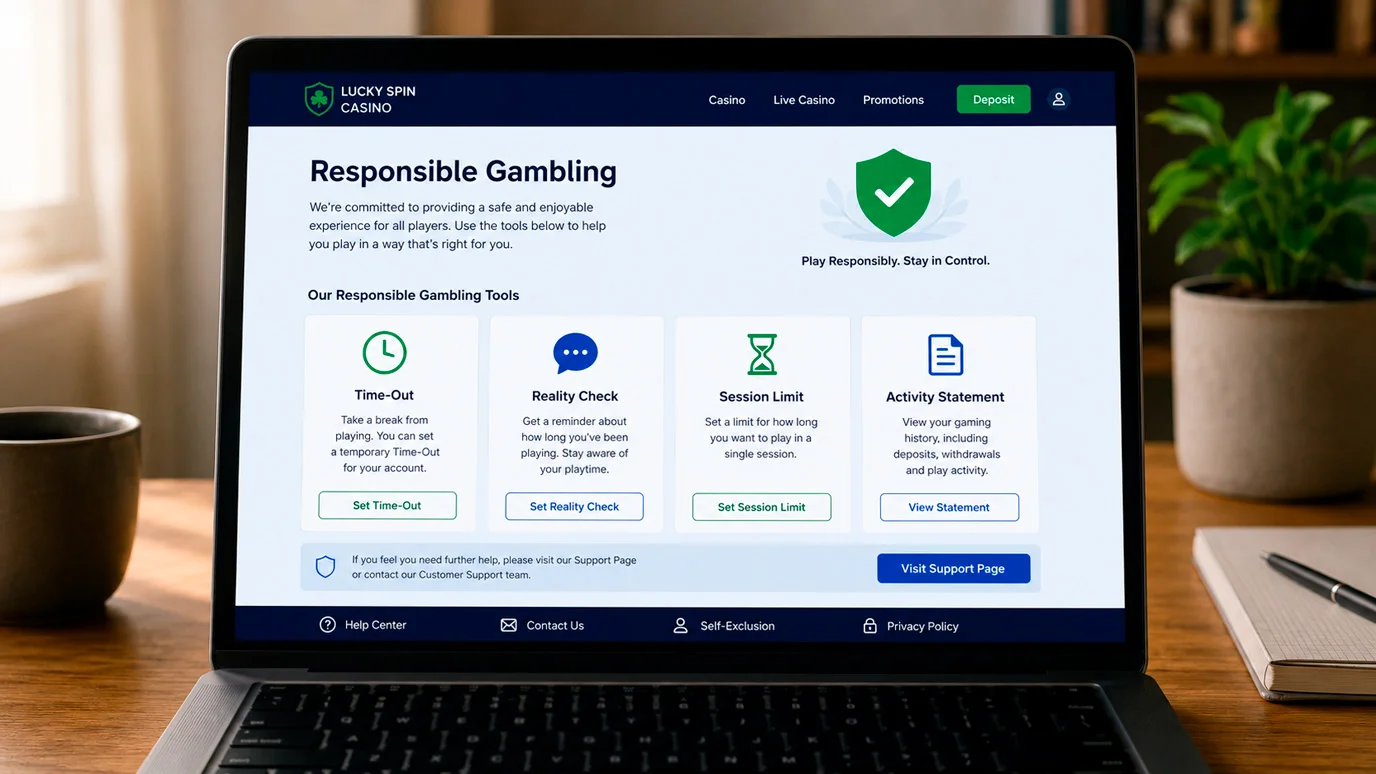
Time-Outs, Cool-Off Periods, and Reality Checks Explained
A time-out is a temporary self-exclusion. Unlike GAMSTOP, which covers all UKGC-licensed operators, a time-out applies only to the single operator where you activate it. Durations vary — most operators offer 24 hours, 48 hours, 7 days, or 30 days. During the time-out, your account is frozen: you cannot log in, deposit, or play. Withdrawals of existing balances may or may not be permitted depending on the operator’s implementation.
The key difference from GAMSTOP is reversibility and scope. A 24-hour time-out ends automatically after 24 hours. You do not need to request removal from a register. You are not blocked from other sites. It functions as a breathing space rather than a hard barrier — useful when you feel your play is escalating during a single session and want to step away without triggering a multi-site lockout.
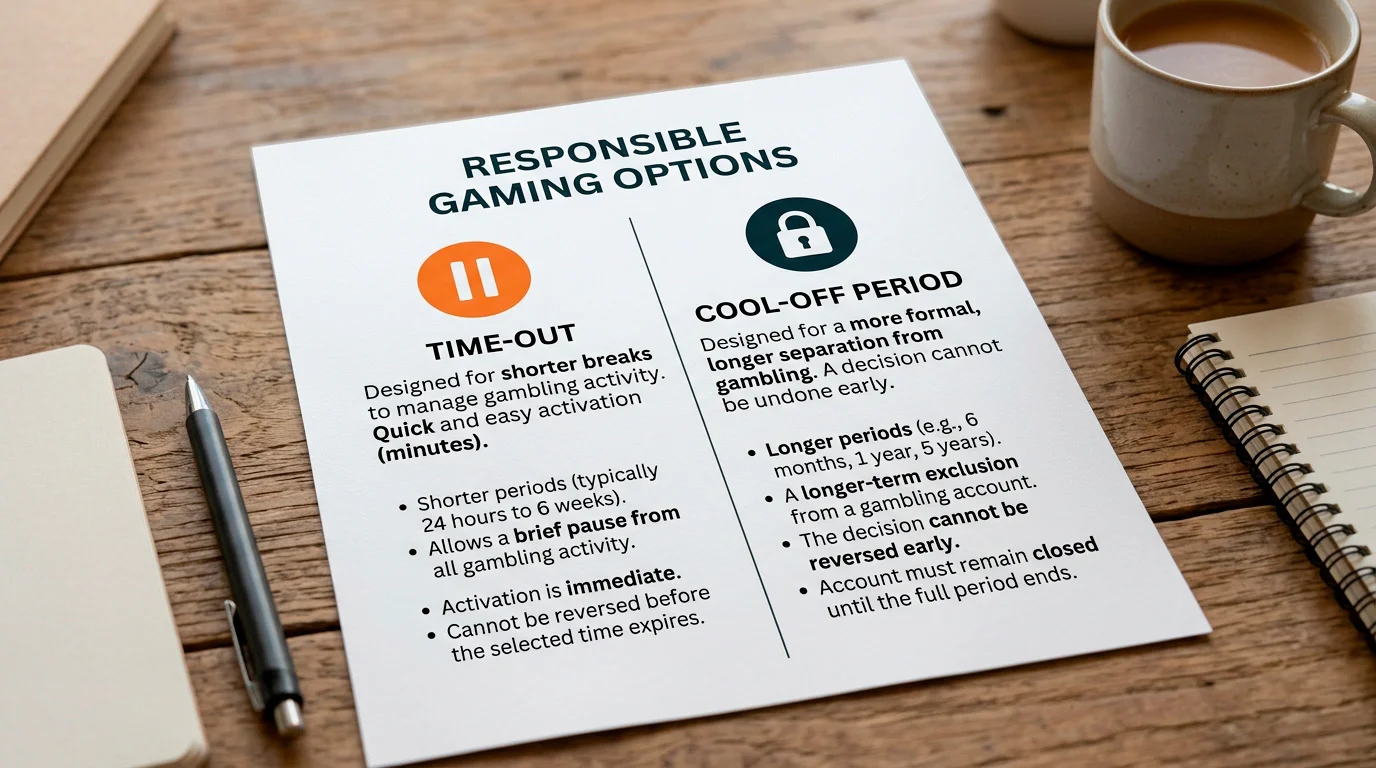
Cool-off periods overlap with time-outs in terminology but typically refer to the waiting period that applies when you modify a responsible gambling setting. As discussed in deposit limit mechanics, raising a limit triggers a mandatory cool-off period. The same principle applies to cancelling a time-out — if you set a 7-day time-out and want to end it early, some operators impose a 24-hour delay before reactivation. The design philosophy is consistent: make restrictive actions instant, make permissive actions delayed.
Reality checks are prompts that interrupt your session at set intervals — typically every 30, 60, or 120 minutes — with a notification showing how long you have been playing and how much you have deposited and wagered during the session. The prompt does not force you to stop. It simply surfaces information that the immersive design of casino games is engineered to obscure. I have watched players genuinely surprised by a reality check telling them they have been playing for three hours — time distortion during gambling sessions is well-documented, and reality checks are the regulatory response.

The UKGC requires operators to offer reality check functionality, but the default settings vary. Some operators set a 60-minute default that requires the player to opt out. Others offer no default, requiring the player to manually enable the feature. The disparity means the tool’s reach depends on the operator’s implementation choices, and players who do not explore their account settings may not know the feature exists.
The full picture is in our guide to UK real-money online casinos.
Session Duration Limits and Activity Statements
Only 61% of people referred for gambling addiction treatment completed their course between 2021 and 2025 — down from 68% in the previous five-year period. That declining completion rate underscores why early intervention tools matter: once a gambling problem reaches the treatment stage, outcomes are uncertain. Session controls aim to intervene earlier, before the problem reaches crisis level.
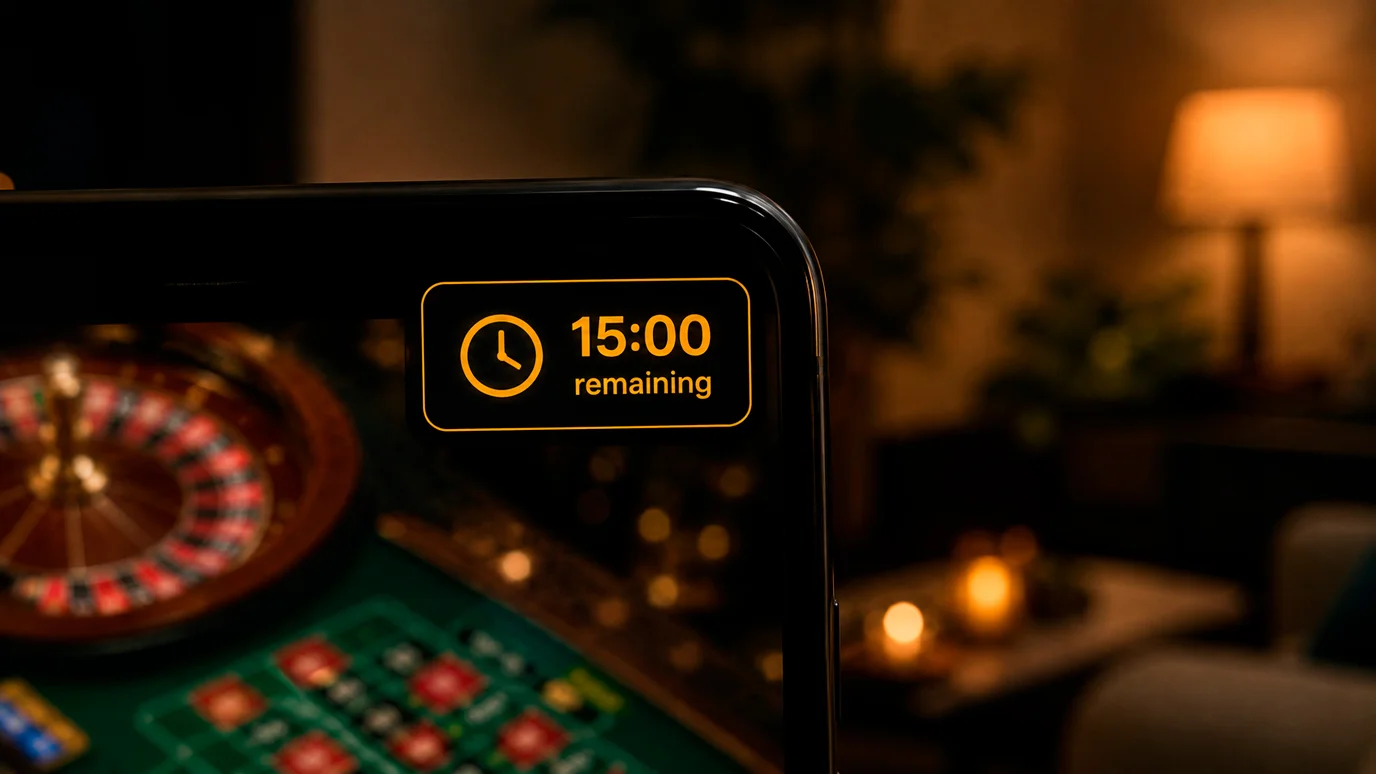
Session duration limits allow you to set a maximum time you can spend logged into the platform in a single session. When the limit expires, you are logged out automatically. Unlike reality checks, which are informational, session limits are enforceable — the system does not ask whether you want to continue. It ends your session. Implementations vary in strictness: some operators allow you to log back in immediately after a forced logout, while others impose a mandatory gap (typically one hour) before you can start a new session.

Activity statements are the retrospective counterpart to real-time controls. UKGC licence conditions require operators to make activity data available to players — total deposits, total withdrawals, net position, and time spent gambling over defined periods (weekly, monthly, annually). Some operators push this information proactively via email or on-site notification. Others make it available only on request through account settings.
The utility of activity statements is in aggregate — seeing that you deposited £600 over the past three months and withdrew £180 creates a concrete picture of your net cost that feels very different from recalling individual sessions. The data is factual, not judgmental, and it grounds decision-making in numbers rather than memory, which is notoriously unreliable when it comes to gambling losses.
How to Activate and Configure Each Tool at a UK Casino
The navigation path varies by operator, but the general structure is consistent. Look for a section labelled “Responsible Gambling,” “Safer Gambling,” “Player Protection,” or similar in your account settings or profile menu. Some operators place it under a dedicated tab in the main menu. Others bury it within general account settings.
Within that section, you will find options for deposit limits, time-outs, session limits, reality checks, and self-exclusion (which typically links to GAMSTOP for the full multi-site option). Each tool can usually be configured independently. Set your reality check interval first — it is the lightest-touch option and the one with the least downside. A 60-minute reminder costs you nothing and provides useful data even if you never act on it.
Next, consider session duration limits. If you know from experience that your play tends to deteriorate after two hours — higher stakes, riskier bets, chasing losses — a two-hour session limit enforces the boundary you know intellectually but struggle to apply in the moment. The forced logout is not punishment; it is a structural substitute for willpower, which is a depleting resource during extended gambling sessions.
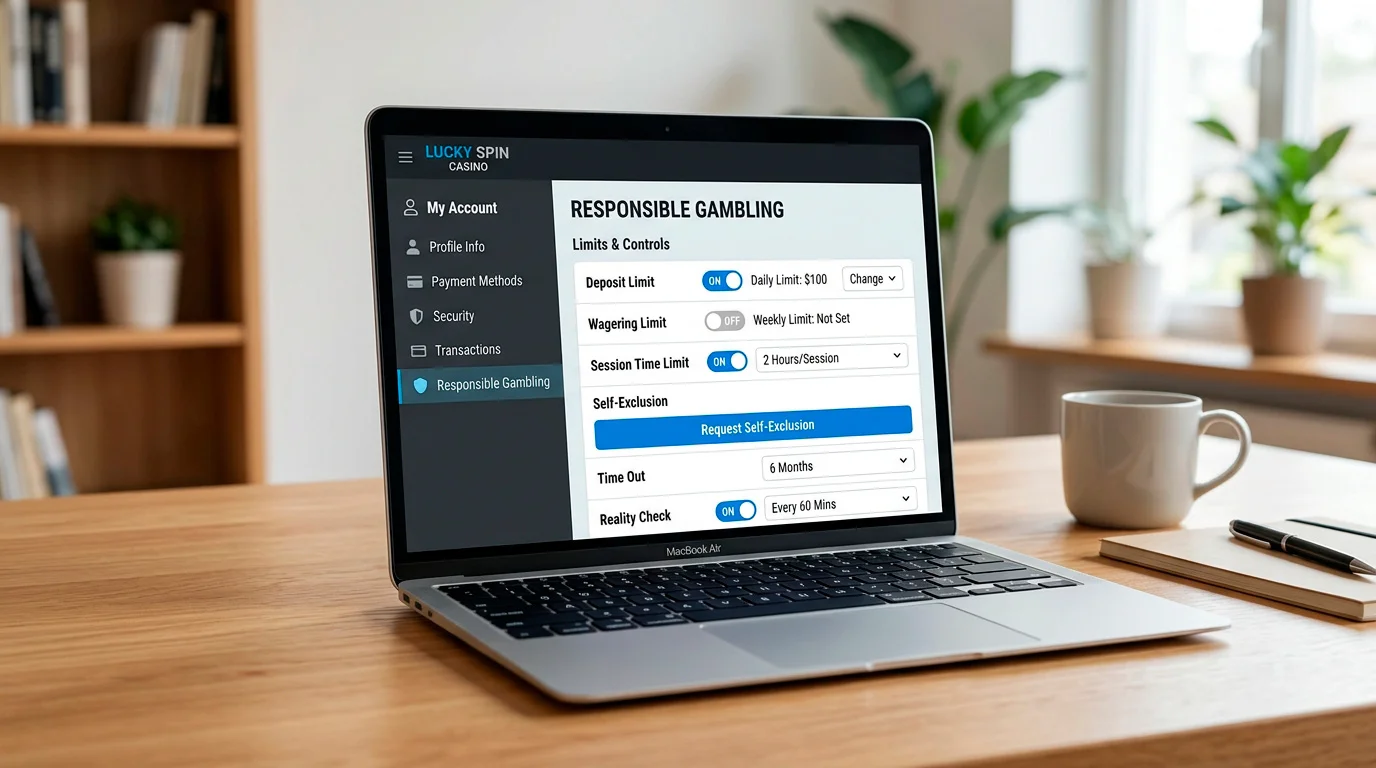
Time-outs are best used situationally. If you have had a bad session and feel the urge to deposit more, a 24-hour time-out is faster and simpler than modifying deposit limits (which take effect immediately but require navigating settings during a moment of heightened emotion). Tap the time-out, close the app, and the decision is made. Tomorrow, you can assess whether you want to continue or whether the impulse has passed.
All of these tools are complementary. You can have a deposit limit, a reality check, and a session duration limit active simultaneously. They operate on different dimensions — money, information, and time — and the combination is more effective than any single tool alone. For players who feel these measures are insufficient, the financial risk assessment guide explains the operator-imposed checks that activate at higher spending levels.
Articles
Prepared by the onlinecasinorealmoneyuk.com editorial staff.