

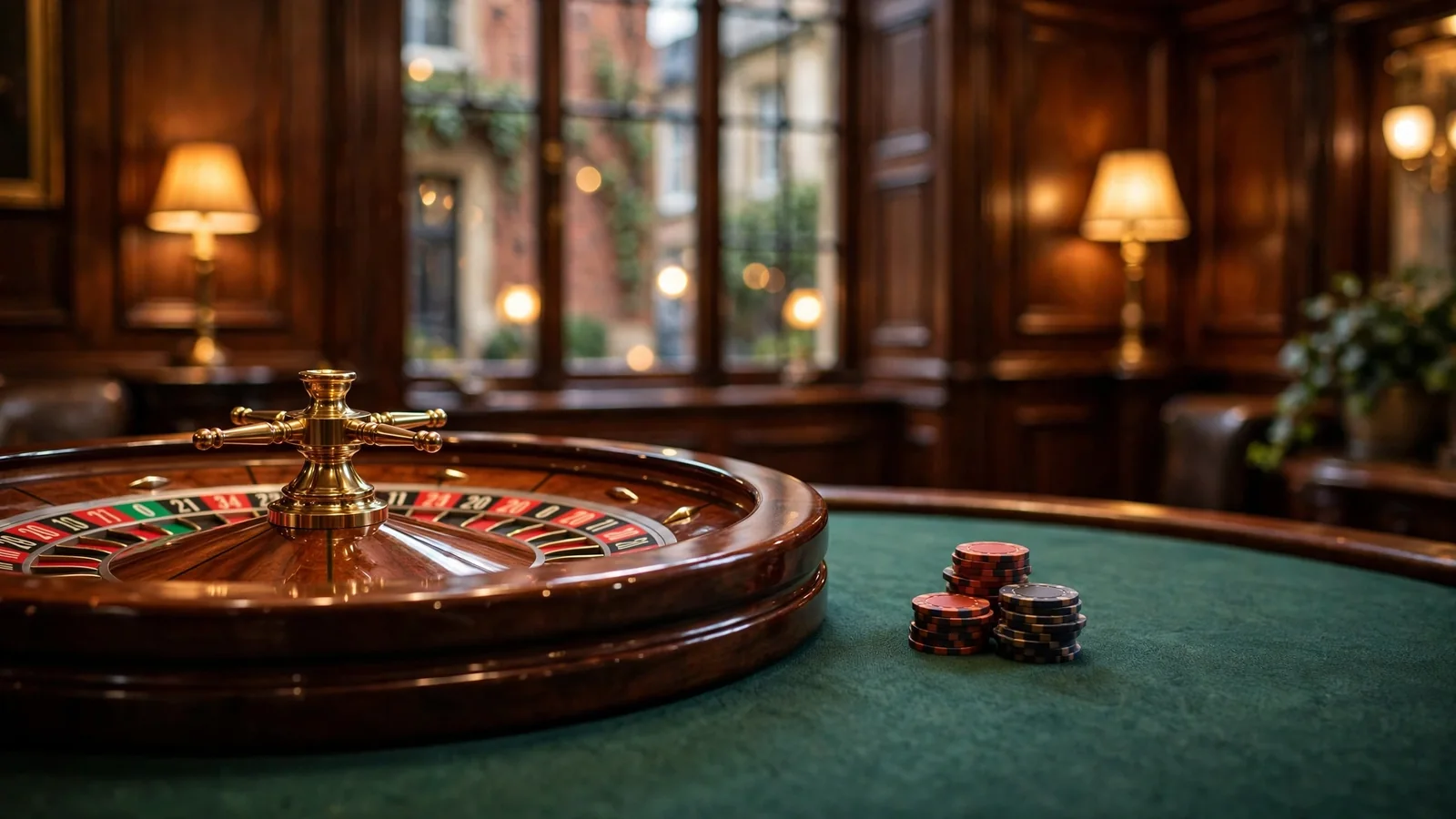
See how the single zero shapes roulette odds, table bets and payouts, and what to expect from online and live games.
How European Roulette Works: 37 Pockets and a Single Zero
A European roulette wheel has 37 pockets: one marked zero and 36 numbered from 1 to 36. When the ball settles, it rests in one pocket, and that pocket determines the result. Each spin is a separate event; the number that appeared on a previous spin does not change the probabilities of the next one.
The numbered pockets are split evenly between red and black: 18 of each. The zero is green and sits outside those two colour groups. This matters because a colour bet has 18 winning pockets out of 37, not 18 out of 36. The zero is not a red or black result, but it remains a possible outcome on every spin.
Why the single zero affects the odds
If all 37 pockets are equally likely, a bet on one specific number has one winning outcome among 37. A bet covering a group of numbers has more ways to win, but it also commits the stake to a broader set of outcomes. The same pocket count underlies every wager: the wheel does not change its probabilities to favour a particular bet type.
The zero creates the gap between a fair return and the standard return offered by the game. For instance, a fair game on red would pay enough to balance the chance of red against all other outcomes. In roulette, red wins when the ball lands in one of the 18 red pockets, while black and zero both make it lose. The return is set so that the zero gives the house a mathematical advantage over repeated play.
For European roulette, that house edge is 2.70%. It describes the game’s long-run expected loss as a proportion of stakes, not a prediction of what will happen in an individual session. It does not mean that each spin removes that proportion of your bet. A single spin can produce a win or a loss; the percentage describes the average effect across many wagers under the game’s standard rules.
Games: Casino Slots, Live Games and More
What the number order does—and does not—tell you
The wheel’s pockets have a fixed sequence around its rim, but the numbers do not run from 1 to 36 in numerical order. That sequence is part of the wheel’s arrangement, while the betting choices are based on which numbered pockets your wager covers. The order can help you identify a pocket on a displayed wheel, but it does not make nearby numbers more likely to land together or make one number “due”.
This distinction is useful when you encounter an online European roulette game. A digital display may show a spinning wheel, a ball animation, or simply the winning result, but the underlying European wheel still has the same 37 possible outcomes. The visual presentation does not add pockets or alter the role of zero. To understand the odds, count the possible results rather than relying on the animation or on recent spins.
The same reasoning applies to repeated results. If red has appeared several times, the wheel has not used up its red pockets: a new spin again has 18 red outcomes, 18 black outcomes and one zero. A run of one colour can feel like evidence that another colour should follow, but no such balancing mechanism is built into independent spins. Past results describe what has already happened; they do not set the next result.
A European roulette casino therefore offers a game whose basic probability can be read directly from the wheel: 37 equally possible pockets, with one green zero and 36 numbered results. The single zero is the structural detail that sets European roulette’s standard house edge. Once you keep that pocket count in view, the odds are easier to interpret without treating a sequence of results as a signal.
European Roulette Bets and Payouts
A roulette bet names an outcome, or a group of outcomes, that will win if the ball finishes in the selected pocket. Its payout states what a winning wager returns at the stated odds; it does not indicate how likely the ball is to land on that outcome. A higher payout is attached to a narrower selection, while a bet covering more outcomes pays less when it wins.
Payout Ratio Example
Example: 35:1 × £1 = £35 in winnings plus the £1 stake returned.
The odds are written as a ratio. A payout of 35:1 means the winning bet returns 35 units for each unit wagered, plus the original stake. If you stake £1 on a straight-up bet and win, the payout is £35 in winnings and the £1 stake is returned. If the bet loses, the stake is lost. The same distinction applies to other payout ratios: the ratio describes the return on a win, not a forecast or a guarantee.
Inside bets
Inside bets select specific numbers or small groups of numbers. A straight-up bet selects one number. On European roulette, it pays 35:1 if the ball lands on that number. The bet covers only one possible result, so the payout is larger than for a selection that includes several numbers.
A split bet selects two adjacent numbers and pays 17:1 if either is the winning result. The return is lower than for a straight-up bet because two outcomes qualify instead of one. The bet’s name refers to the selected pair, not to a prediction that the ball will fall between them.
These payouts apply to the relevant winning selections; they do not change the roulette result or make a particular number more likely. Before placing an inside bet, confirm which numbers the game has registered. Online interfaces may show a selection on the table after you click or tap, but the displayed selection—not the place you intended to press—is what determines the wager.
Live Casino Lightning Roulette in the UK
Outside bets
Outside bets cover broader categories of outcomes. Red or black, even or odd, and high or low each pay 1:1 when the selected category wins. For a £1 winning wager, that means £1 in winnings and the original £1 stake returned. The categories are different ways of grouping results; the equal payout does not make their outcomes certain.
When you play European roulette online, the betting controls show the amount assigned to each selection. Check the total stake before the spin: placing chips on more than one option creates several wagers, and each is settled against the result separately. A winning selection receives its stated payout; a losing one does not. If you are practising in a free game or staking real money, the payout ratio works the same way, though only a real-money game places an actual cash stake at risk.
To compare European roulette payouts, read both parts of the bet: what outcomes qualify and what the ratio returns if one of them wins. A narrow bet can produce a larger return relative to its stake, but it also wins only when its specified outcome occurs. No payout table can identify the next result: roulette outcomes are determined by chance, and past wins or losses do not alter the odds of the next spin.
Single-Zero Roulette: Reading the Wheel and Placing Inside Bets
A European roulette wheel has one green pocket, marked zero, alongside the numbered pockets from 1 to 36. The betting grid uses the same outcomes, but arranges the numbers in rows and columns rather than in the wheel’s circular order. This difference matters when you place an inside bet: you choose a position on the grid, and the bet covers the number or neighbouring numbers indicated by that position.
Grid vs Wheel
The betting grid is a tool for arranging wagers, but its layout does not match the physical sequence of numbers around the roulette wheel rim.
The wheel’s sequence is not the grid’s sequence. On the wheel, numbers follow a fixed order around the rim; on the table, they appear in three vertical columns. A number next to another on the grid is therefore not necessarily next to it on the wheel. Inside bets are defined by the grid, not by physical proximity around the wheel.
Finding an inside bet on the grid
The simplest inside bet is a straight-up bet. You place the chip within a single number’s square, so only that numbered outcome wins. To cover two adjacent numbers, place the chip on the line they share. This is a split bet. Its position identifies the pair; it does not mean that the numbers are adjacent on the wheel.
A street bet covers a complete horizontal row of three numbers. Place the chip at the outer edge of that row, where its position marks all three. The grid also lets you select larger groups through shared lines or corners. In each case, the chip’s location specifies which numbers are included, so check the highlighted selection before confirming an online wager.
Zero occupies its own green square at the end of the numbered grid, rather than belonging to any of the three number columns. You can select it directly for a straight-up bet, or include it in a combination where the layout offers one. A chip placed on a boundary that touches zero may cover zero together with the adjacent number or numbers shown by that boundary. The interface’s marked selection is the clearest guide to what the wager covers.
Online Casino Tournaments UK: Offers and Rules
The 37 possible outcomes are not equally represented by the colours and groups on the betting grid. A red or black selection, for instance, does not include zero. Even-money outside bets are placed in separate areas beyond the number grid, while inside bets sit on the numbered squares or their dividing lines. The positions serve different purposes: inside selections identify specific numbers or small groups; outside selections group outcomes by a shared property.
The single zero is also why the grid’s betting options do not remove the game’s mathematical disadvantage. European roulette has a house edge of 2.70%. Changing the location of a chip changes which outcomes make that bet win, but it does not change the wheel’s pockets or turn a layout position into a prediction. Before placing an inside bet, verify the numbers highlighted by the game and treat that selection as a way to define coverage, not to forecast the next result.
How the European Roulette Table Layout Maps to the Wheel
The European roulette table presents the wheel’s possible outcomes as a betting surface. Its numbered grid is arranged for placing wagers, not as a diagram of the wheel’s physical order. On the layout, numbers appear in three columns, while the wheel places them around a circle. The single zero has its own green space at one end of the grid.
This distinction matters when you move between the wheel and the table. A number’s position in a grid row does not mean it sits beside the other two numbers on that row on the wheel. The grid groups outcomes by betting position; the wheel’s sequence is a separate arrangement. If a screen shows both, use the betting layout to select an outcome and the wheel display to follow the spin.
Reading the Table
The table layout presents the wheel’s outcomes on a betting surface. The main grid contains numbered spaces for inside bets, while outside-bet areas group numbers by properties like colour or parity.
A digital interface may highlight your selected area to show exactly which outcomes are covered before you confirm your wager.
Reading the betting surface
The main grid contains the numbered spaces. You can place an inside bet directly on a number or across boundaries between spaces, depending on the wager offered by the table. A chip positioned on a single numbered space refers to that number; a chip placed on a shared line or corner refers to the numbers adjoining that point. The interface may highlight the covered space or spaces when you select a wager.
Outside-bet areas sit around the grid. They group numbers by properties such as colour, parity, low or high range, or column and dozen. These areas do not represent extra wheel pockets: each wager still resolves against the number where the ball stops. The zero remains separate from the numbered groups, so do not assume that it belongs to an even-money category or a numbered range.
On a digital European roulette casino table, clicking or tapping a marked area places the chip there. Before the spin, check the table’s highlights or bet summary: they show which outcome or group your selection covers. If you are using a physical-style layout, the same principle applies, though the chip is placed on the printed felt rather than a touchscreen.
A table layout can make the wheel easier to operate, but it cannot change the result or make nearby grid positions more likely to land. Treat the grid as an input map: identify the area you intend to cover, confirm the indicated selection, then follow the ball on the wheel. That is a more reliable way to navigate the interface than treating the table as a prediction tool.
French Roulette Online Casinos in the UK: Rules and Play
RNG, Auto-Roulette and Speed Roulette: How Online Wheels Differ
An online European roulette game may use a simulated spin or a physical wheel. With RNG roulette, a random number generator selects the result and software displays the spin. This removes the need to wait for a ball to travel around a physical wheel, so rounds can be quicker. RNG tables may also have lower entry stakes: some set a minimum of 10p.
Auto-roulette uses a physical wheel, but the betting and spin sequence is automated rather than presented as a live dealer game. Speed roulette is another faster format, with shorter intervals between rounds. The distinction is operational: RNG roulette generates the result digitally, whereas auto-roulette and speed roulette use a physical wheel. The available format can affect how quickly you can place another bet, but it does not make outcomes predictable.
Round rates illustrate the difference. A standard roulette table is reported at 80–100 spins per hour, while a specialist review gives speed roulette a rate above 150 spins per hour. Treat those as format comparisons, not a promise about the pace of every table: betting windows, presentation and interruptions affect how many rounds actually finish. Faster rounds mean you can make decisions more often, so the same session can involve more bets if you do not set a stopping point.
Minimum stakes vary by table and format. A UK live table may list a minimum of 10p; an operator’s own review gives 5p as a possible minimum for auto-roulette and speed roulette. These are examples of stated entry points, not fixed prices across casinos. Check the individual table before you join, since a low minimum does not determine how long a session lasts or how much you may spend.
Roulette Formats
RNG Roulette
A digital format where a random number generator selects the result, often allowing for quicker rounds and lower minimum stakes.
Auto-Roulette
A format using a physical wheel where the betting and spin sequence is automated rather than being live.
Speed Roulette
A faster version of the game with shorter intervals between rounds, providing a higher number of spins per hour.
When comparing an online casino with European roulette, separate the wheel mechanism from the pace and stake settings. RNG describes how the result is generated; auto-roulette and speed roulette describe faster ways of running a physical-wheel game. The number of rounds available per hour and the minimum bet affect the practical rhythm of play, not the chance involved in each spin.
Live European Roulette: What the Dealer and Camera Show You
In a live European roulette game, the camera streams a physical wheel from a studio. A human dealer sets the round in motion, releases the ball and allows it to settle into a pocket. You watch those actions as they happen, rather than receiving a result generated by a random number generator or seeing an automated wheel operate without a dealer.
The stream gives you a view of the wheel and ball drop, while the game interface handles your wager. These are separate parts of the experience: the wheel produces the result, and the interface records your selection. If the camera view is unclear or the connection interrupts the stream, use the game’s displayed status and rules to understand what happened before placing another wager. A live feed does not alter the role of chance in the result.
A live European roulette casino should also be assessed as a regulated gambling service, not just as a video stream. In Great Britain, the UK Gambling Commission (UKGC) is the regulator for online casino activity. A platform without a valid UKGC licence cannot legally offer real-money live roulette to British residents. Before depositing, verify the operator’s licence on the Commission’s public register.
Online Casino Without ID UK: What Checks to Expect
UKGC-licensed operators must provide tools that let you manage gambling activity. These include deposit and loss limits, session time reminders, reality checks and cool-off periods. They must also offer self-exclusion through GamStop. New customers must be prompted to set a financial limit before their first deposit, and account-level controls must remain accessible. These protections apply to the operator, not to the camera or dealer, so you should be able to find them in account settings or the operator’s responsible-gambling information.
Check that the stream, table rules and account controls are available before you play. A convincing studio presentation is not evidence of a UKGC licence, and a live dealer does not replace the operator’s obligations. If you need to pause, use the available limit or cool-off controls rather than relying on the pace of the broadcast.
European Roulette Bonuses: Wagering Contributions and Limits
A roulette bonus can come with a wagering requirement: a condition that sets how much qualifying play must be recorded before bonus funds, or any winnings attached to them, can be withdrawn. The amount you wager does not necessarily count in full. The operator applies a game weighting, so the same stake may make different progress depending on whether you use an RNG roulette game or a live table.
Bonus Weighting
Attention Roulette wagers often contribute only a fraction (such as 10% to 20%) toward wagering requirements, especially for live casino games.
Published terms show why the distinction matters. Most UK operators count roulette wagers at 10% to 20% of the requirement. An operator’s terms may assign RNG roulette a 100% contribution while live roulette counts at 10% or 20%; these are examples of operator-specific rules, not a universal rate. Some operators exclude live roulette from a particular offer. Check the terms for the exact game and bonus before betting: a game’s roulette label alone does not establish that its wagers qualify.
To interpret the weighting, separate the amount staked from the amount credited toward the requirement. If a wager has a 10% contribution, only one tenth of that stake is counted; at 100%, the whole stake is counted. A lower contribution means more qualifying stake is needed to make the same progress. It does not change the roulette game’s rules or make a result more likely.
The stated requirement also matters. Since January 2026, UK regulations cap bonus wagering requirements at 10 times the relevant bonus amount for UKGC-licensed operators. That cap limits the multiplier, but it does not mean every wager counts fully or that every bonus has the same conditions. Game weighting still affects how quickly qualifying play accumulates, and other terms determine which games and funds are included.
How to read the offer terms
Before accepting an offer, identify the bonus amount, the wagering multiplier, the qualifying period if one is stated, and the weighting assigned to each roulette format. Then look for exclusions, maximum-bet conditions and any distinction between bonus funds and cash funds. These terms can determine whether a spin contributes at all, even when the game is available in the casino.
Online Bingo UK: Rooms, Tickets and Slot Games
If the wording gives a single roulette contribution rate, check whether it covers both live and RNG games. If the rate is shown in a game table, confirm that the specific roulette title appears there. A general statement that roulette is eligible may not settle how a particular format is treated.
Do not treat wagering as a route to predictable profit. It is an offer condition: meeting it does not remove the chance-based nature of roulette, and losses during play can reduce your balance before the requirement is complete. A large contribution rate can make progress faster per pound staked, but it does not make the underlying wager safer.
If the conditions are unclear, ask the operator to explain how the game weighting is applied before opting in. Keep the answer with the offer terms, and check whether it applies to the exact bonus and roulette game you intend to use. This makes it easier to compare offers on their actual conditions rather than on the headline bonus alone.
European Roulette Demo Games and Roulette-Themed Slots
A European roulette demo is a simulation of a roulette table, while a roulette-themed slot is a separate type of game. The visual theme can make the two look related, but their rules and outcomes are not interchangeable. Before you play, identify whether the game presents a wheel and roulette betting interface or a slot reel interface.
A demo version of roulette lets you practise using the table interface without staking real money. You can follow how a simulated round proceeds and learn where to place a wager. It does not turn the outcome into a prediction: roulette results are determined by chance, and a practice session cannot show what a later real-money spin will produce. Check that the demo is for the European version if you want to practise that specific format.
Do
- Use a roulette demo to practise the table interface without risking real money.
- Check the game’s information panel to confirm how a slot’s rules and wins are determined.
Don’t
- Assume that roulette bets or payouts carry over to roulette-themed slots.
- Treat a practice session as evidence that a specific result is due on a real-money spin.
A roulette slot may use wheel imagery, numbers or casino styling, but it follows the slot’s own rules. A title such as European Roulette Gold, European Roulette Platinum or a three-dimensional European roulette slot does not, by its name or artwork alone, establish that it uses a roulette wheel. Read the game’s information panel to find out what determines wins, what features apply and how a round is resolved. Do not assume that roulette bets, wheel outcomes or payouts carry over to a slot.
The distinction also matters for UK rules. The ban on autoplay and the minimum spin duration of 2.5 seconds apply to online slots in Britain. They do not describe how a roulette table operates. A slot’s spin is not a roulette spin, even when the interface borrows a roulette look.
If you are considering a real-money slot or roulette game, use a UKGC-licensed operator. A platform without a valid UKGC licence cannot legally offer real-money live roulette to British residents. For a slot, check its own rules rather than relying on a roulette demo or on a familiar-looking name. For roulette practice, choose a genuine table simulation and treat it as a way to learn the controls, not as evidence that a particular result is due.
European vs American Roulette: What the Extra Zero Changes
The key difference between European roulette and American roulette is the number of green pockets. The European wheel has one zero alongside numbers 1 to 36. The American wheel adds a double zero, making 38 pockets in total: numbers 1 to 36, zero and double zero.
That extra pocket changes the chance that a bet loses without changing its selection. On an American wheel, a red bet, for instance, loses if the ball lands on either green pocket. The European wheel has only one green pocket, so the same type of bet faces fewer losing outcomes. This is why the house edge is higher on the standard American version: 5.26%, compared with 2.70% for European roulette.
The Main Difference
The number of green pockets is the fundamental distinction between European and American roulette.
Some American roulette tables offered by UK online casinos include a third green pocket marked 000. A specialist review reports a 7.69% house edge for that version. Treat it as a distinct table format rather than assuming every American wheel has 000; check the displayed wheel and rules before you play.
A further exception is the American basket bet, which covers zero, double zero, 1 and 2. Its house edge is 7.89%, higher than the standard American figure. The comparison shows why the number of covered outcomes alone is not enough: the bet’s relationship to the wheel’s full set of pockets matters.
If you are choosing between the two standard wheels in an online European roulette casino game, compare the displayed rules, not just the game name. A table labelled American may have different green pockets from another American table, while European roulette keeps the single-zero structure. The wheel type determines the baseline odds; it does not make any individual result predictable.
Assessing a UK Casino for European Roulette
When assessing European roulette casinos in the UK, start with the conditions under which real-money play is offered, rather than a table’s name or presentation. The UK Gambling Commission (UKGC) is the sole regulator of online casino activity in Great Britain. A site offering real-money gambling to customers in England, Scotland or Wales must hold the relevant UKGC operating licence; a platform without a valid UKGC licence cannot legally offer real-money live roulette to British residents.
Check the operator’s licence on the UKGC public register before depositing. Match the registered business and licence details with the casino you intend to use; do not treat a licence logo on a page as proof by itself. The licence matters because it brings the operator within the UK regulatory system, including requirements for age checks, payment restrictions, account controls, complaints handling and safer-gambling tools.
Live Dream Catcher Casino UK: What to Know
Check game and account information
A UKGC-licensed operator should make the roulette game’s RTP information accessible. Look for it in the game information panel or the operator’s help pages, and make sure it refers to the specific game or version you are considering. RTP describes a game’s theoretical return across play; it is not a forecast of what you will receive from an individual session. Roulette odds are determined by chance, so an RTP figure cannot identify the result of a future spin.
Age verification is another basic condition, not an optional account feature. Operators must verify a customer’s age before allowing them to deposit into a gambling account. If a site permits deposits before completing that check, treat that as a warning sign and do not proceed.
Before your first deposit, a remote operator must prompt you to set a financial limit. It must also provide accessible account-level controls so you can set or change limits. Check where those controls are in the account area and whether the options cover the limits you need. A control that is difficult to locate is less useful when you need to act promptly.
Understand payment restrictions
UKGC licensees cannot accept credit cards for gambling. The restriction also covers credit-card funds routed through a money service business, and operators cannot accept wallet payments where that wallet allows credit-card funds to be used for gambling. A payment method appearing in a cashier does not override these rules: the relevant issue is whether the funds used for gambling come from a prohibited credit-card route.
Best Online Slots Payout Percentages Explained
Review the payment terms before funding an account, especially if you use a digital wallet or another intermediary. If the operator’s explanation is unclear about whether a payment route is permitted, ask its support team before depositing rather than assuming that a successful transaction makes it acceptable.
Check recourse and safer-gambling tools
UKGC licensees must provide an internal complaints process and access to an approved Alternative Dispute Resolution (ADR) service. Find the complaint procedure and the named ADR route before you need either. The operator’s terms should explain how to raise a complaint and how the dispute can move to independent resolution if it remains unresolved.
UKGC-licensed live casino operators must offer deposit limits, loss limits, session time reminders, reality checks, cool-off periods and GamStop self-exclusion. Casinos must also provide responsible-gambling tools, including self-exclusion. Check that these controls are available from the account area, not merely mentioned in general information. GamStop self-exclusion is particularly important if you want to block access to gambling accounts across participating operators rather than rely on a single casino’s controls.
Operators are also required to contribute to the Research, Education and Treatment levy. This is part of the regulatory framework, not a substitute for the personal controls available to you. Assess the operator by checking that its account tools, complaints route and licence details are accessible before you play.
These checks provide a practical way to assess online casinos with European roulette without treating a “best” label or VIP offer as evidence of suitability. A VIP table or a roulette-themed product does not change the operator’s legal obligations. Confirm the licence, understand the account and payment conditions, and make sure you can reach the controls and support routes you may need.
Should I play American or European roulette if I’m in the UK?
European roulette gives you the lower house edge: 2.70%, compared with 5.26% for American roulette. Some American tables add a third zero, raising the edge to 7.69%; a basket bet has a 7.89% edge.
Can I use a casino bonus to play American roulette?
You may be able to, but bonus contribution varies by operator and game type. Check the bonus terms: roulette wagers may count at different rates, and live roulette may contribute less than RNG roulette or be excluded from some offers.
How does roulette actually work?
You place a bet on a number or group of outcomes, then a ball lands in one pocket and determines whether your bet wins. European roulette has 37 pockets and American roulette has 38, and each spin is a separate chance event.
What are inside and outside roulette wagers?
Inside bets cover specific numbers or small groups: a straight-up bet pays 35:1 and a split bet on two adjacent numbers pays 17:1. Outside bets cover broader groups such as red or black, even or odd, and high or low, and pay 1:1.
Are real-money roulette sites in the UK safe?
For online casino roulette in Great Britain, choose an operator regulated by the UK Gambling Commission, which oversees online casino activity there.
Games
Written by the editors at onlinecasinorealmoneyuk.com.